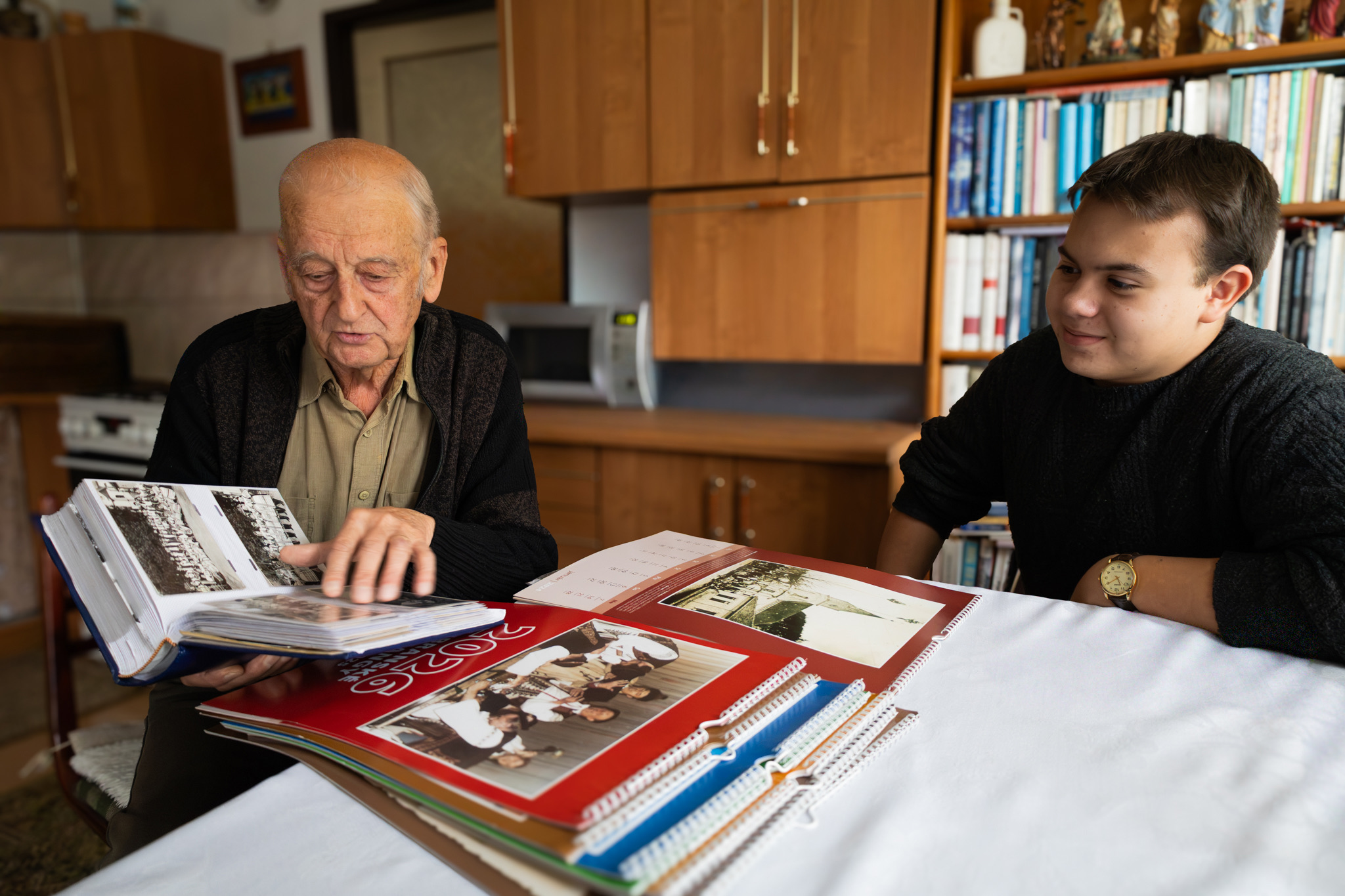
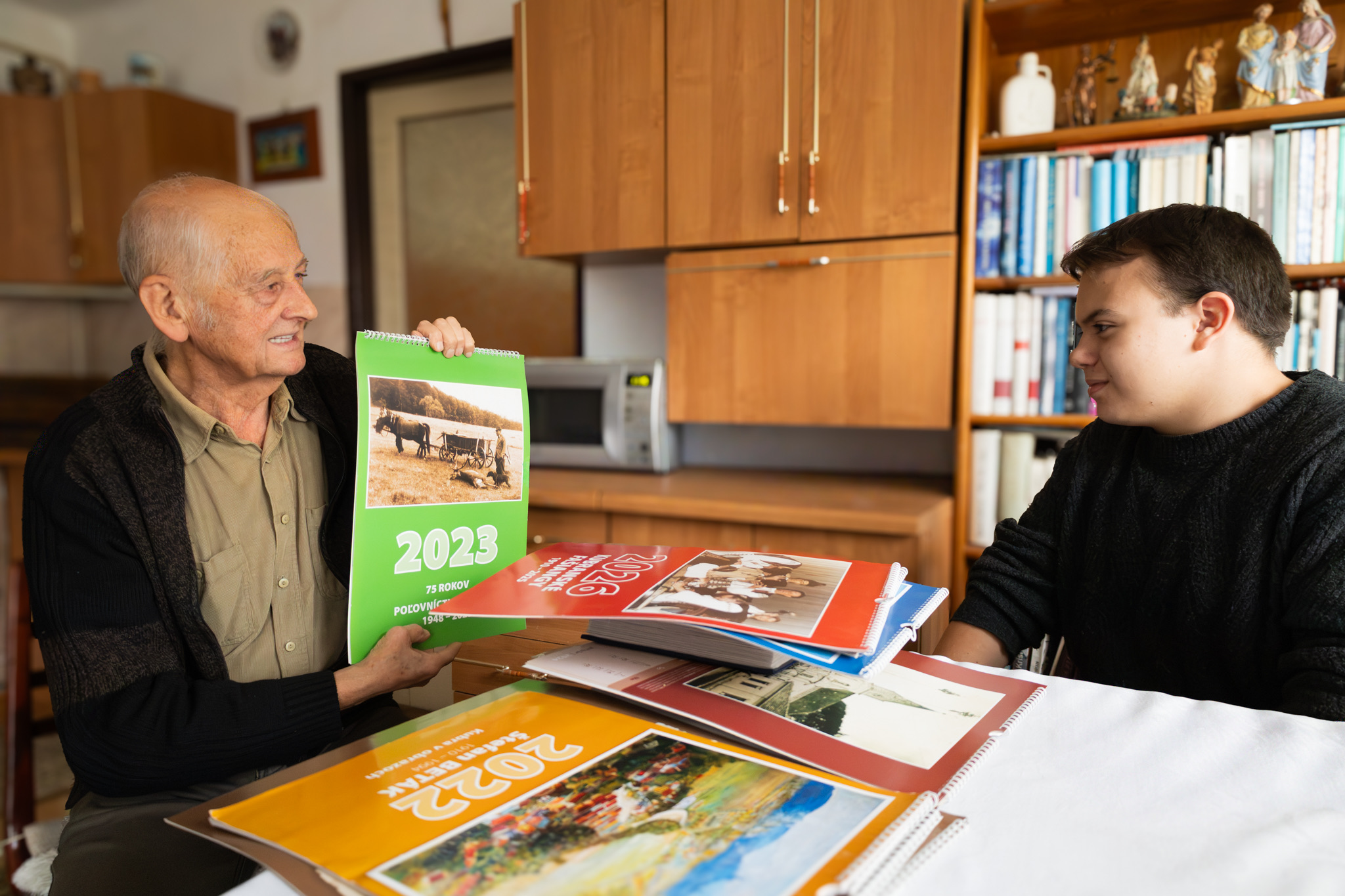
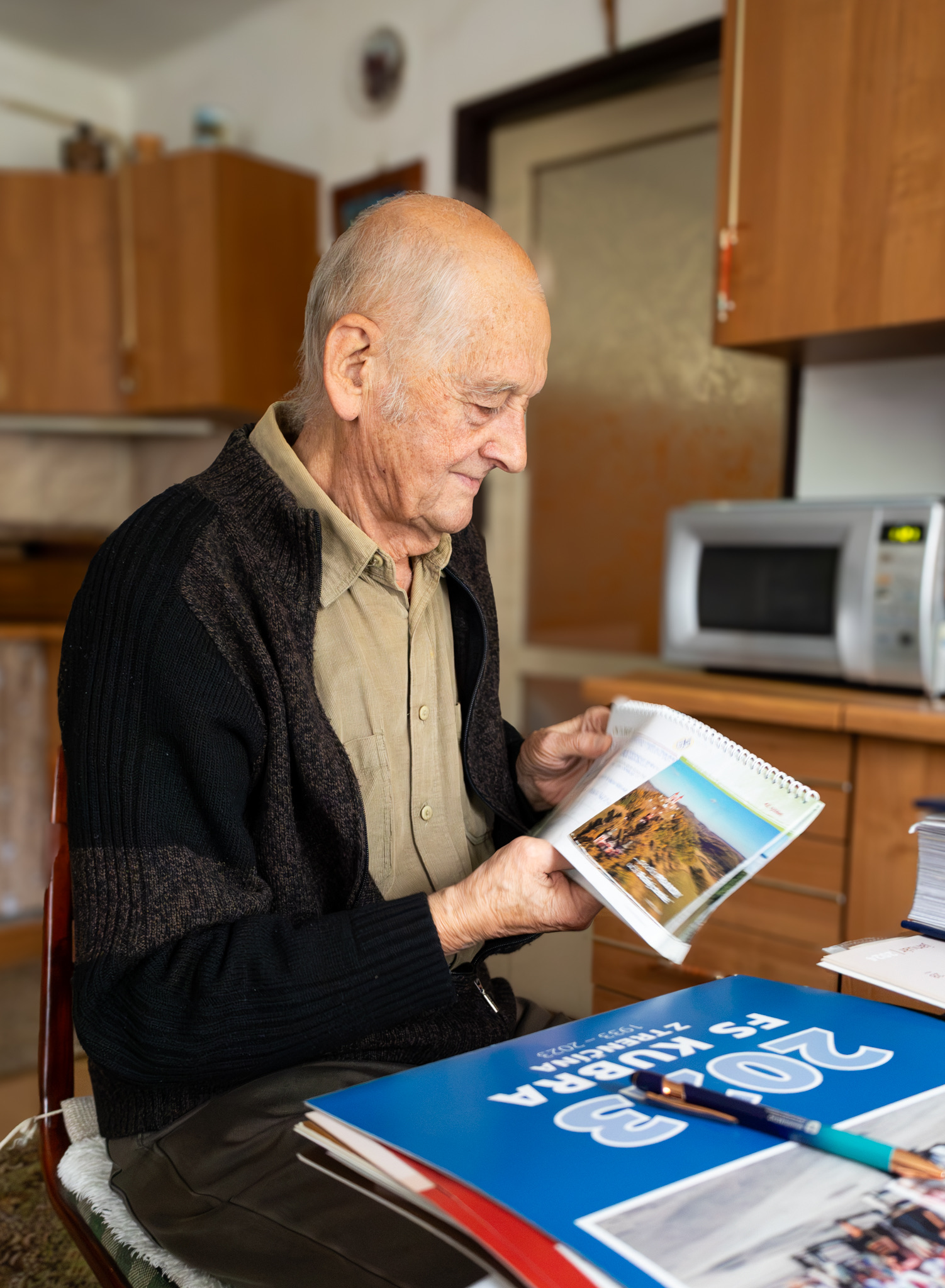
Interviews

Interview with the project’s creator, Kateřina Šedá
Art that builds no monuments but brings people together: In Trenčín, we are honouring the invisible heroes of everyday life
A census usually reveals demographics, but trenČIN, a project by Czech artist Kateřina Šedá, uncovers the real web of human relationships. As part of European Capital of Culture Trenčín 2026 (TN26), she decided to turn conventional marketing on its head – instead of looking for celebrity faces, she is searching for “offline influencers” who, through small deeds, make life better for those around them every day.
Your projects aren’t made in a studio but right out among people. What draws you to working with people and their everyday lives more than to conventional art-making?
I come from a working-class family where nobody had any art education and there were no paintings hanging on our walls at home. Ever since I was a teenager, it has bothered me that the traditional art world so often closes in on itself. What has always shaped me most in life is ordinary people – the ones nobody writes about in the papers, who don’t have thousands of likes on social media, yet who fundamentally affect how you feel in a particular town. Most cultural events cast the audience in the passive role of recipient. What I enjoy is creating situations in which people become, from one day to the next, direct participants and co-authors of a work, even if it would never occur to them to set foot in a gallery.
You came back to Trenčín for the European Capital of Culture 2026 project. What caught your interest about Trenčín, and what was your main motivation?
With European Capital of Culture projects, I’ve been noticing the same thing for a long time: at first glance you’re practically swimming in culture, yet many local residents are frustrated because they don’t feel part of it. Everything starts with a grand opening ceremony, and when the project ends, all that’s left is silence. When the TN26 team approached me, I decided to do the exact opposite – to stage a closing ceremony instead of an opening one. I wanted to find what the city was missing and focus on an invisible layer of residents who build community every day but whom official culture overlooks.
With trenČIN, you’re not looking for the best-known personalities but for invisible heroes. When do you look at someone and think: this is exactly the person worth showcasing?
When we talk about influencers, most people picture the world of social media. We’re looking for influencers who operate offline. These are people who brighten your day with small deeds – the lady outside a shop who hands out sweets to children, a formerly homeless man who got back on his feet and spreads good cheer by handing out a magazine on the street, or a doctor who, twenty years into retirement, is still working for others. What fascinates me is that there’s no category for these people, no official award. When our ceremonial hosts turn up, what they all share is enormous modesty – their first reaction is usually: “I don’t deserve this, you’d do better to notice my colleague.” These people simply can’t think about themselves; they only think about others.
What has this unconventional view of Trenčín shown you so far about the city and its people?
In both Slovakia and the Czech Republic, people keep talking about a “foul mood in society”. I set myself the goal of working in Trenčín exclusively with a positive network. My husband says I’m naive, but I’m convinced that positive people are the majority in society – you just don’t see them. trenČIN has shown that a city’s most important asset isn’t its renovated bridges or buildings but human relationships. Significant things happen here quietly, right out on the streets and in the neighbourhoods.
The project’s symbolic setting is Trenčín Castle. What happens when, instead of historical rulers, you put ordinary people up there?
Trenčín Castle naturally dominates the city and is associated with power, prestige and “big names”. For me it was crucial that the work of ordinary people wasn’t acknowledged with a pat on the back somewhere down at the foot of the castle. The journey up to the castle stands for official, symbolic recognition. We want to put these people right on the stage. The city is like a play, and for the first time in their lives these people find themselves in the spotlight, in a place that has historically belonged to the most eminent.
You jolt people out of their routines. What changes in a person when your ceremonial hosts unexpectedly turn up?
There’s an incredible moment of emotion and gratitude – people regularly cry in front of our cameras. The whole system works like this: the nominators have to write a nomination letter stating exactly why they value the person. The ceremonial hosts then read that text aloud to them. These are words of thanks that, in the rush of life, people have often never said to each other. Seeing how it breaks down barriers in people, how they find a fresh appetite for carrying on with their work – for me, that’s the most powerful moment of the whole project.
Is there anything that strikes you as particular about the people of Trenčín, or about our society – something that has surprised or irritated you?
I’m surprised by how automatically we treat good deeds. Lots of people take it for granted that the bus driver smiles at them or that the shop assistant is nice, as if it were something they’re entitled to. We don’t praise one another; we don’t cultivate the habit of saying something nice to a stranger in the street. And at the same time I was surprised by the huge level of frustration among some people who feel that nobody has noticed their work in decades.
Your projects sometimes shake people out of their comfort zone. What matters more to you – the disruption itself, or what happens to people afterwards?
Definitely what happens afterwards. I didn’t want to make a project that would slide into some kind of “gushing goodness”, where we all just get misty-eyed over people’s hard lives. The range of deeds has to be varied. I have one rule: those who are most opposed at the start become the most enthusiastic once the ice is broken. If we manage to change the attitude of someone who was sceptical about the whole ECoC, then art has real meaning.
Do you see participation as a fashionable trend? What has working in the field taught you about how communities work?
Yes, sadly participation has become an empty cliché. These days artificial intelligence will generate thousands of “participatory” ideas for you, but in reality they don’t involve anyone. Most of these projects keep reaching the same small group of active people who would be active even without any grant. The really hard discipline is coming up with a mechanism that draws in people who have no time, aren’t interested in culture and feel it has nothing to do with them. Real community comes about when the participants become co-authors of the whole system.
The trenČIN project ran in secret for a long time. What’s coming up next, and when will the people of Trenčín get to see the results?
The fact that you haven’t read about the project on posters until now was intentional – we wanted the news to spread among people through surprise and word of mouth. But now the second, public phase is coming. We’re publishing a special newspaper with portraits and stories of all of the more than 200 award recipients from Trenčín. Large-format banners featuring profiles of selected individuals will appear on the square, and we’ve also brought in students from two secondary schools to work on the stories. It will all culminate at the end of November with a symbolic closing ceremony at Trenčín Castle.
You step into people’s lives with a script planned in advance. Where, in your view, is the line between artistic intervention and manipulation?
I reject any kind of negative manipulation – I don’t lie to anyone, I don’t hold anyone by force, I don’t pay anyone to take part, and everything is based on being entirely voluntary. When sociologists talk about “positive manipulation” in connection with my work, they mean that I can create a format so absurd and so engaging that people forget their egos, step out of their routine and happily do something that would never otherwise have occurred to them. The line lies in transparency, and in whether you’re taking something from people or giving them an experience and a sense of community they won’t forget as long as they live.
What should remain in Trenčín after trenČIN, once the banners and the ceremonial hosts have disappeared from the streets?
I’d like a lasting network of positive relationships to remain here. For the people of Trenčín to realise that a city isn’t made only of institutions, but above all of how we treat each other in everyday life. If people are left with the feeling that it’s worth noticing and appreciating someone else’s work, then the project will truly have succeeded.
Prepared by Veronika Š. Pilátová
This interview was originally published in issue 10/2026 of the monthly INFO Trenčín; our thanks to the editorial team and the author for permission to republish it.
Interview with Zuzana Punová
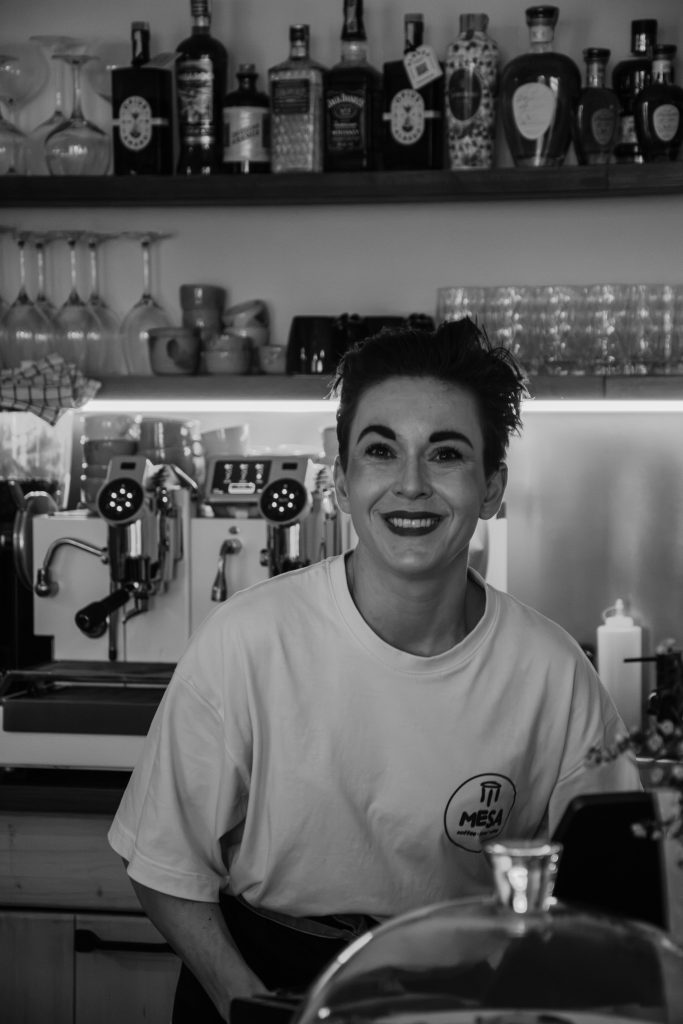
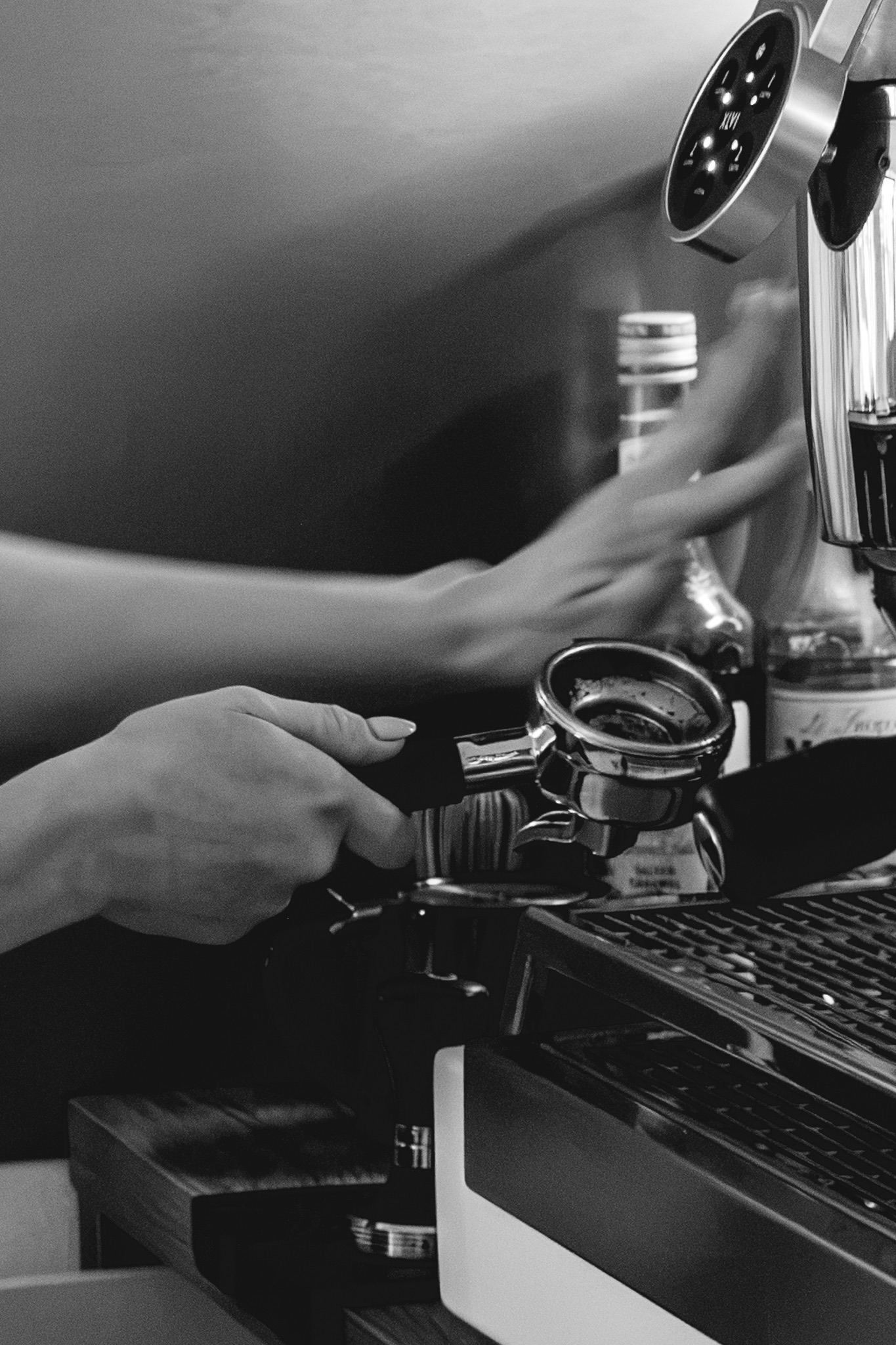
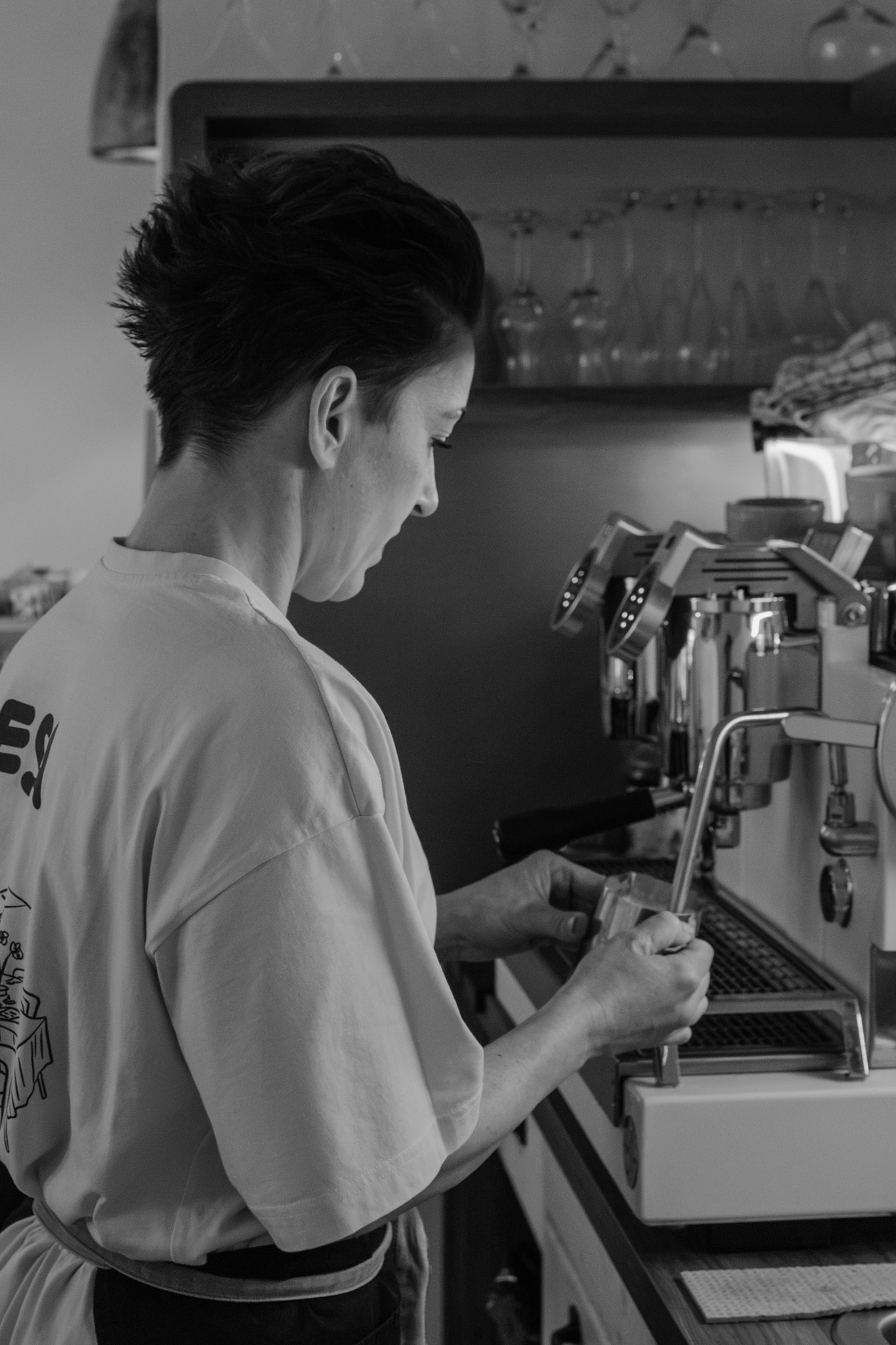
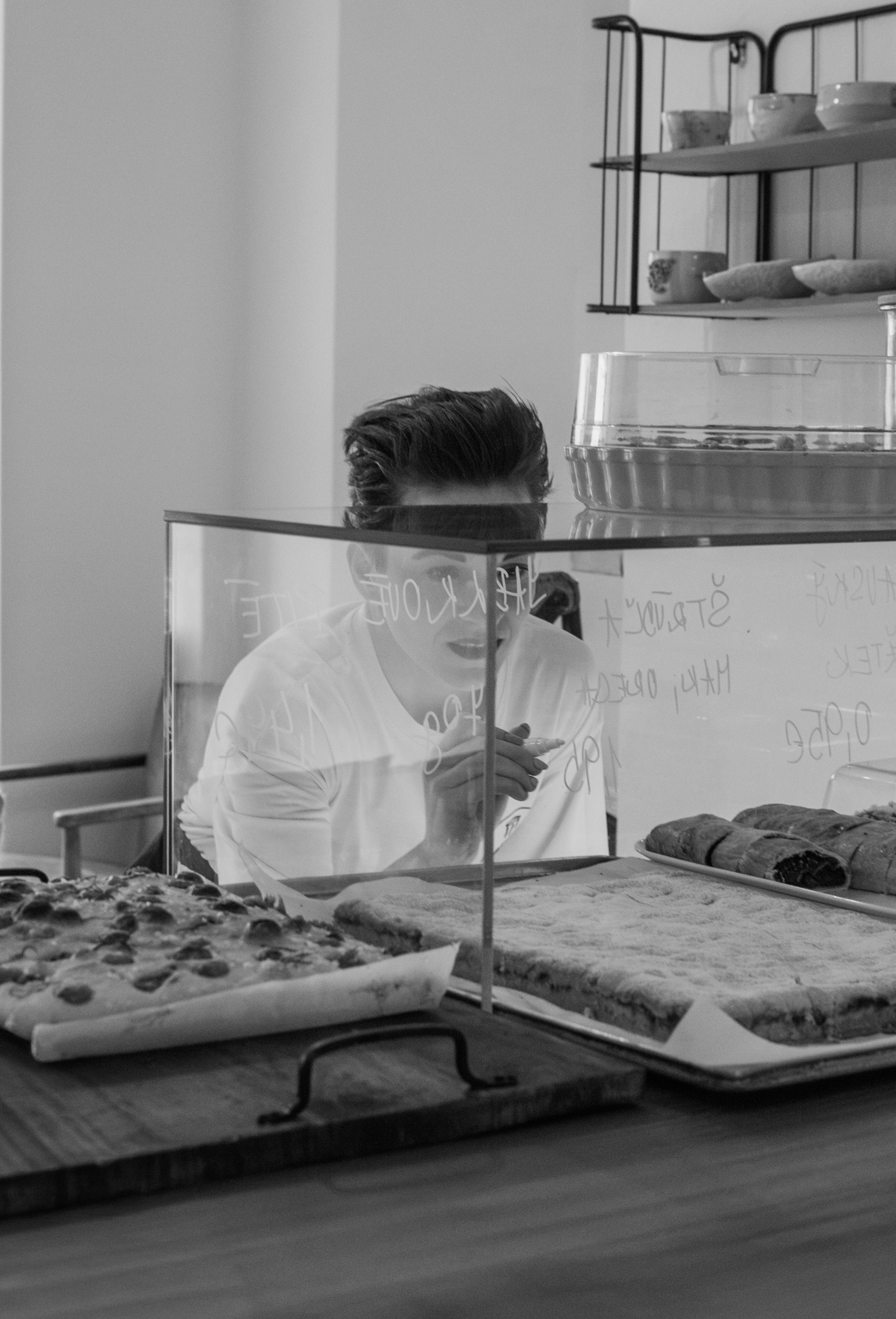
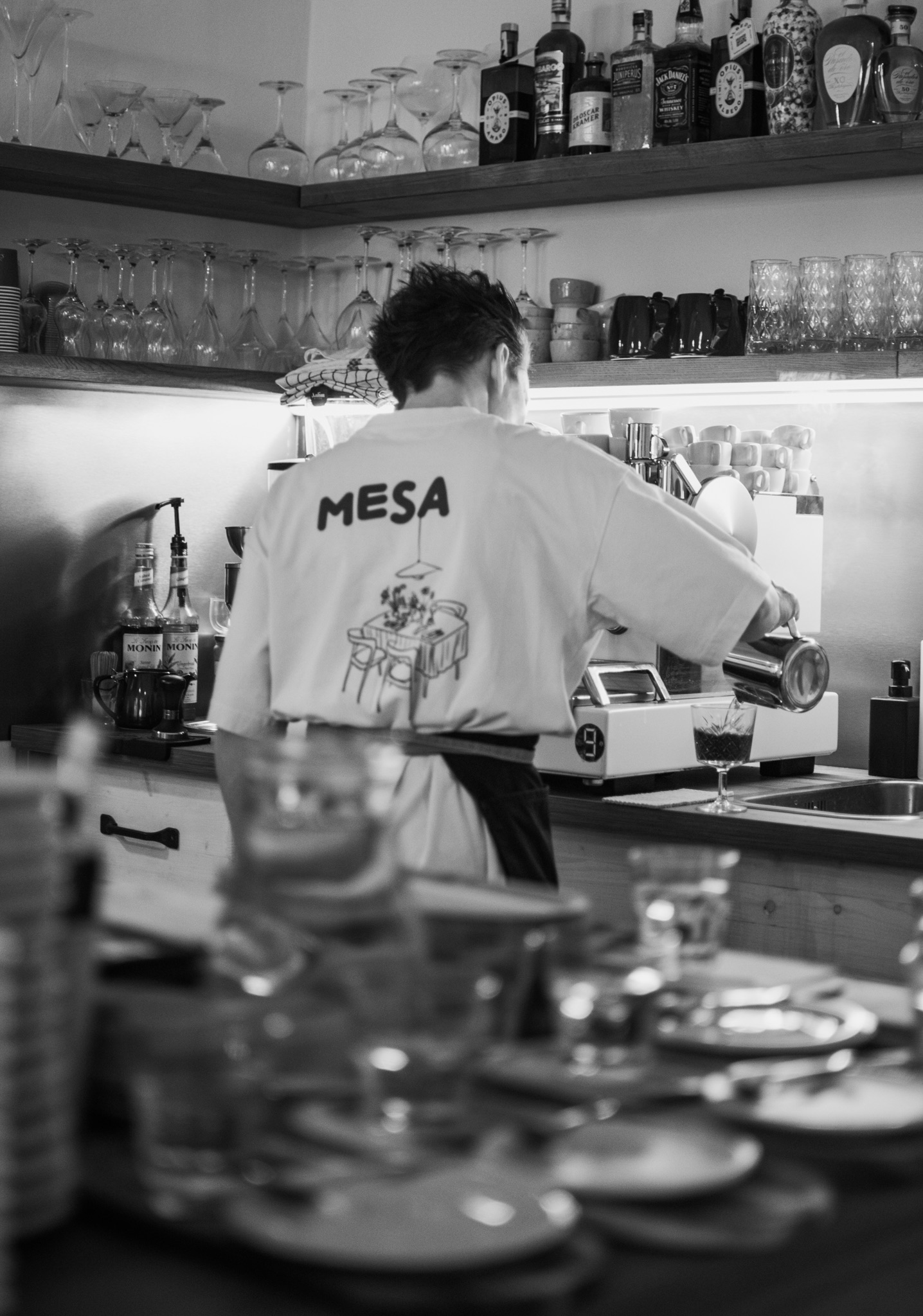
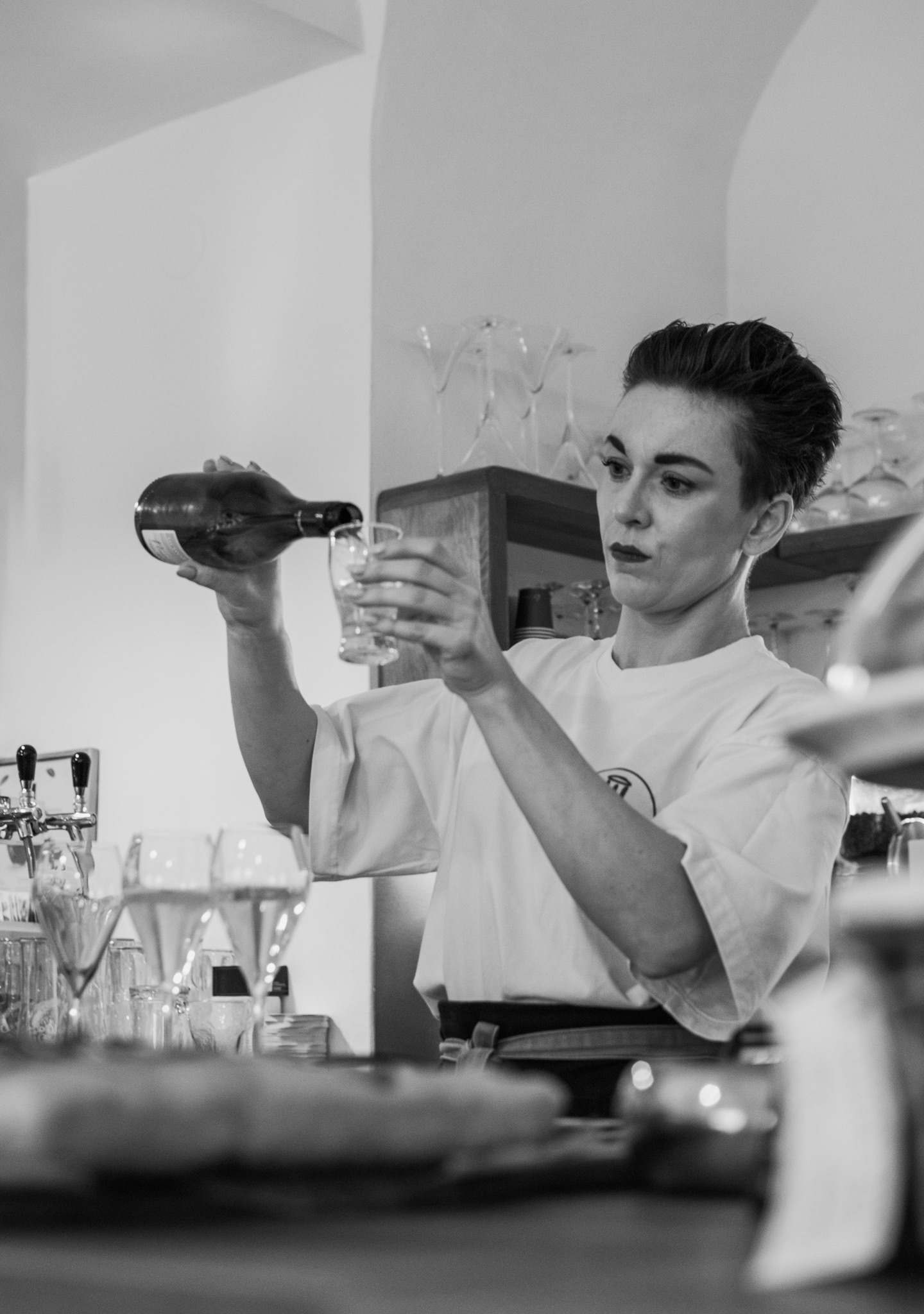
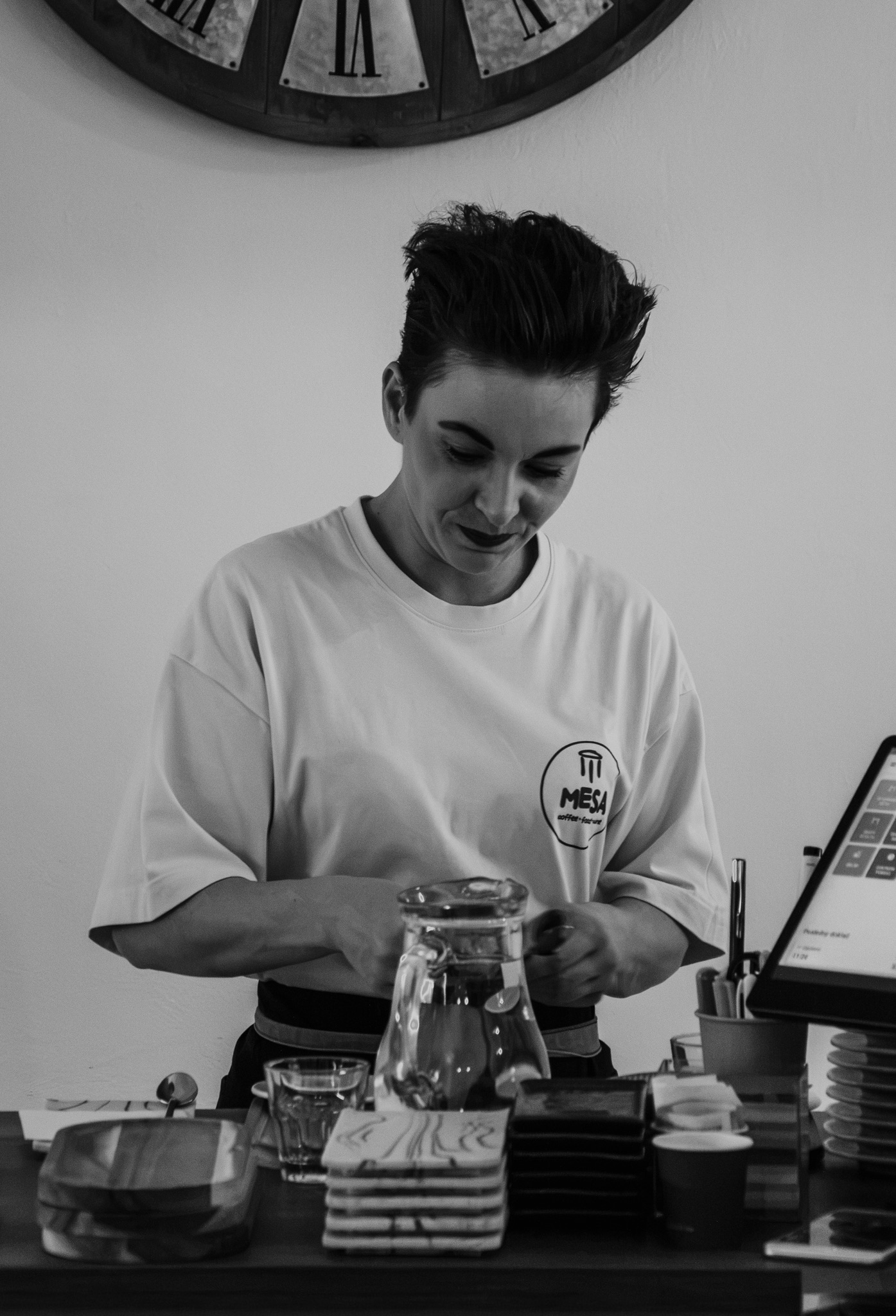
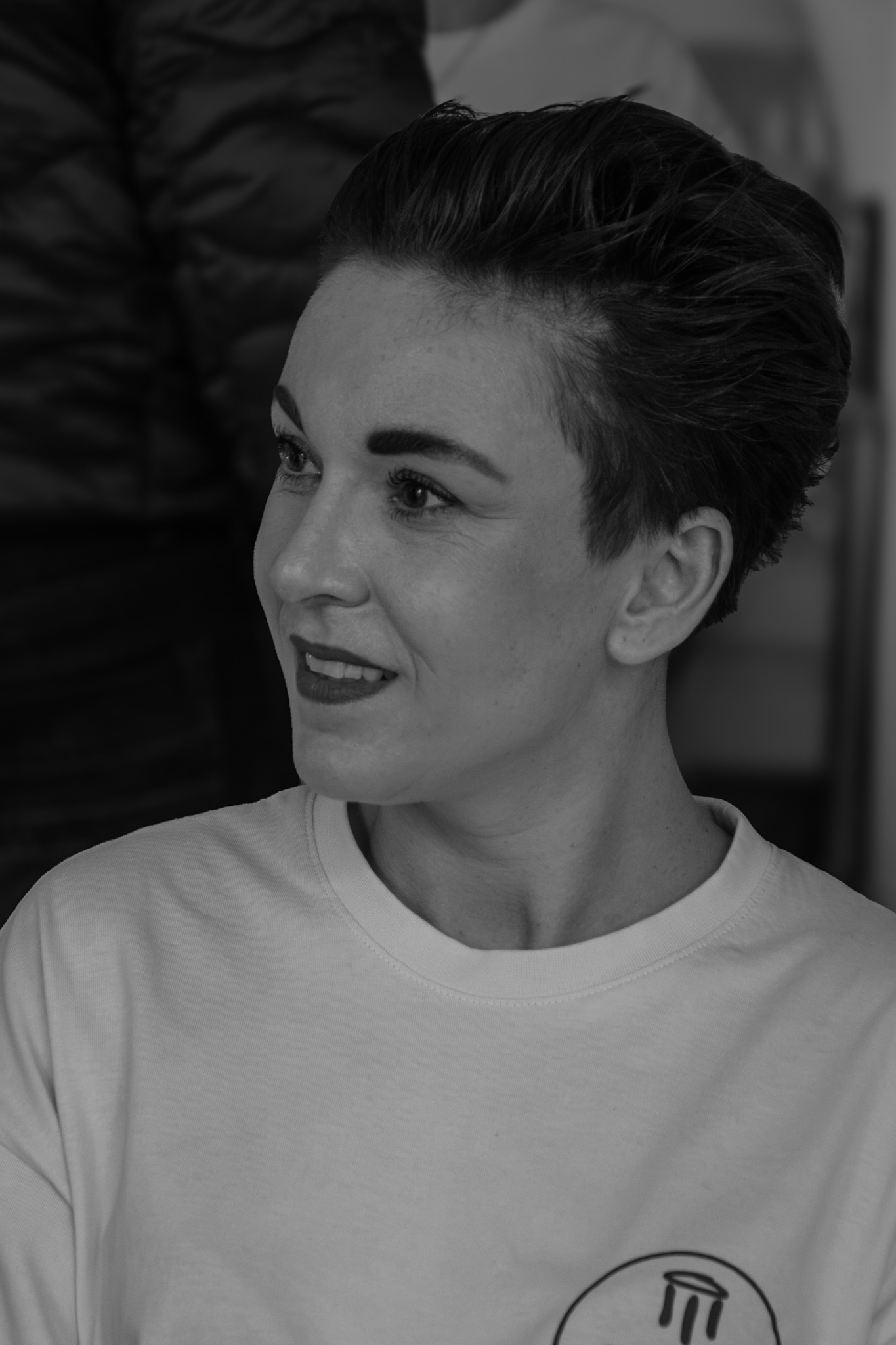
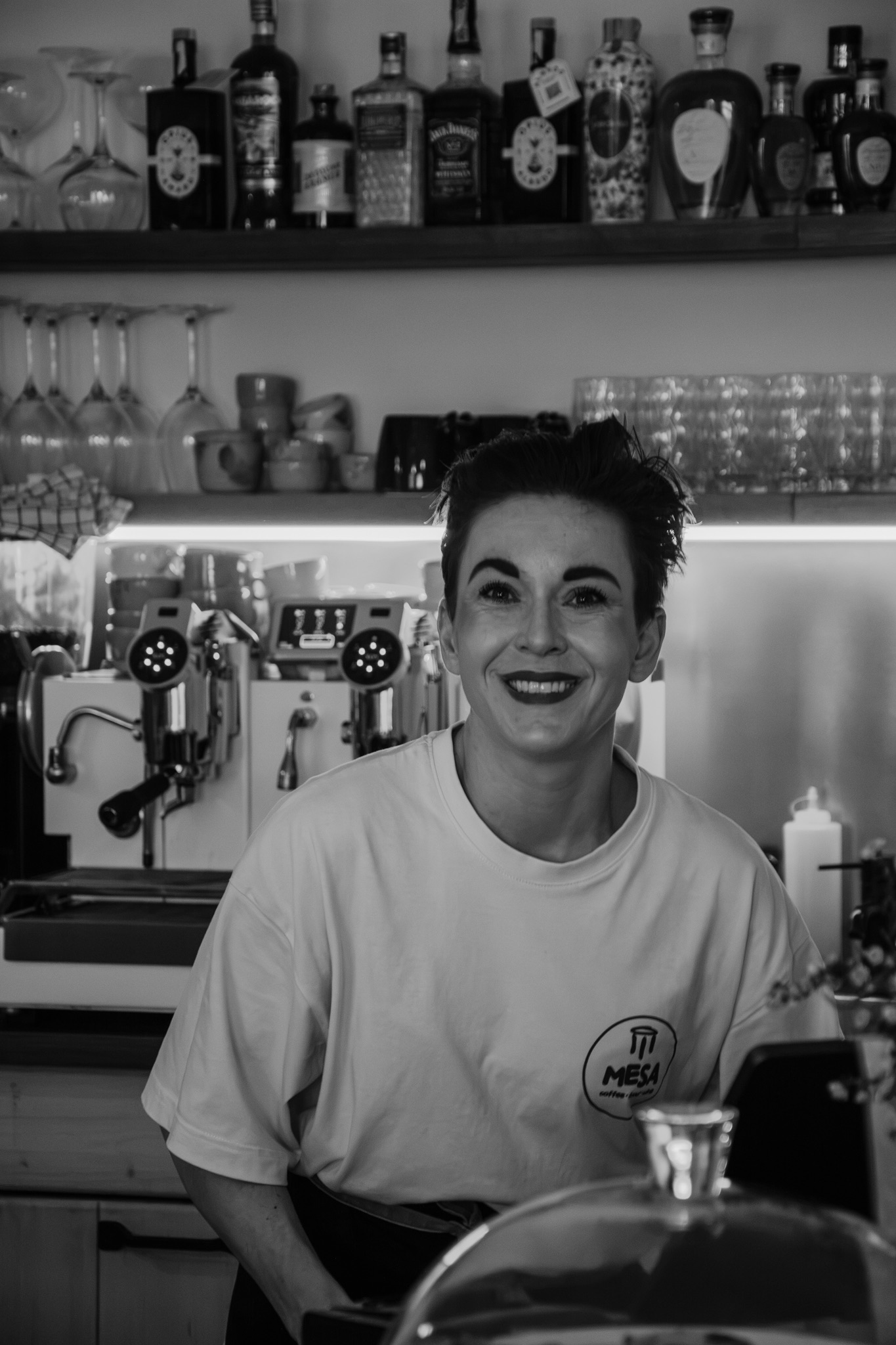
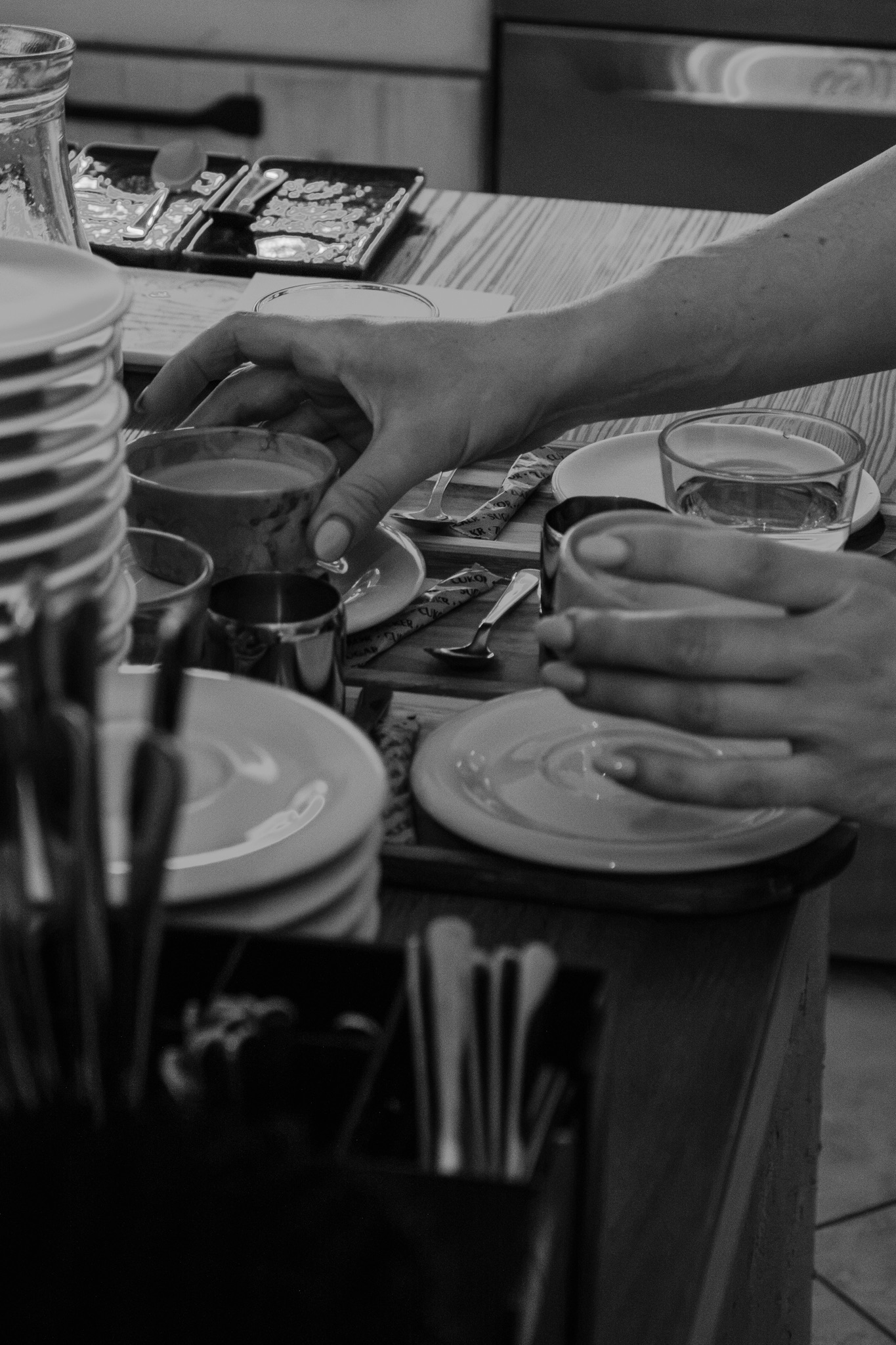
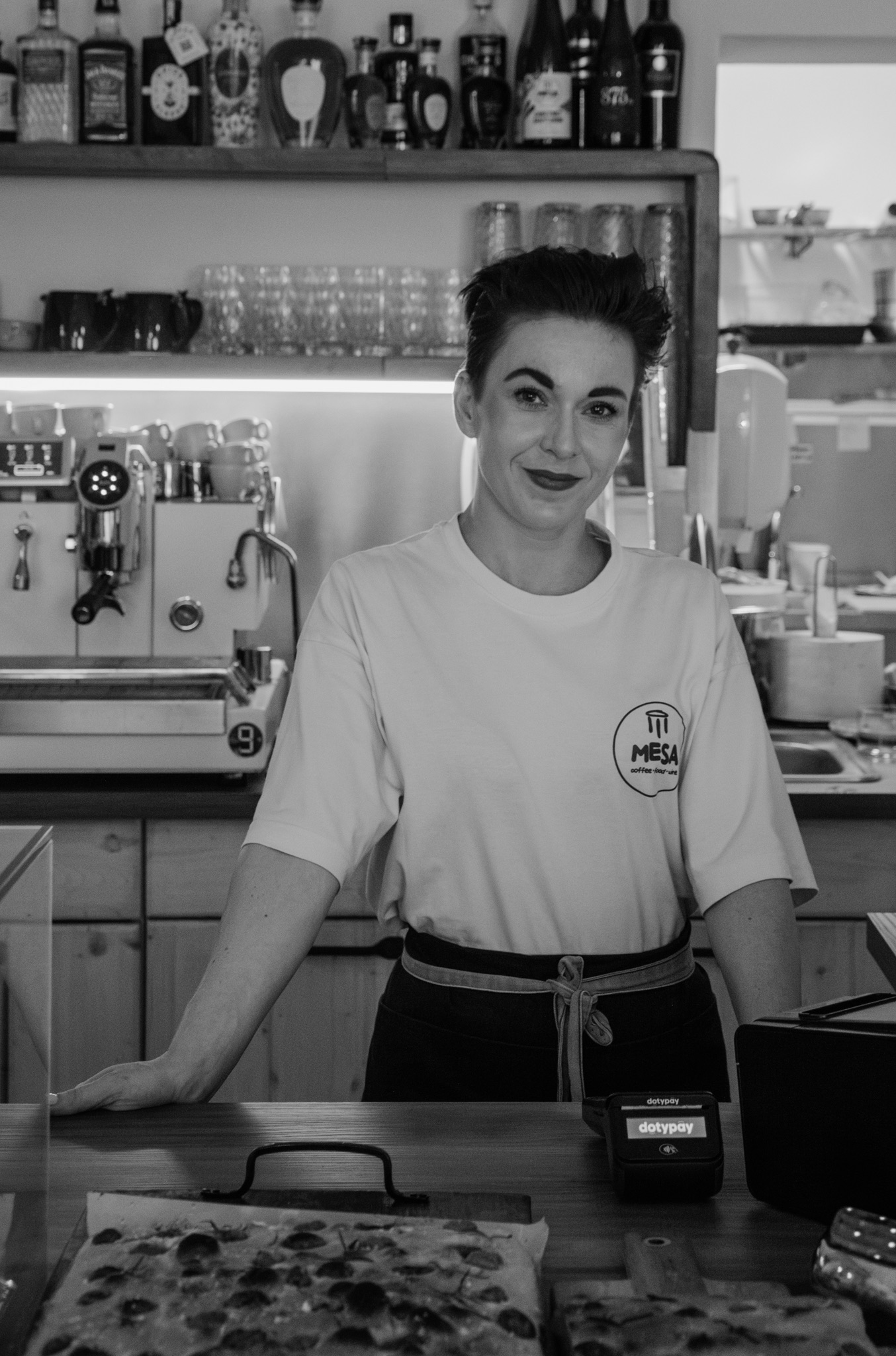
On Wednesday morning I headed to a newly opened little patisserie in the heart of Trenčín, where I had arranged to meet Ms Zuzana Punová. The moment I walked in, I was greeted by a cosy atmosphere and a lovely smell. But the first thing you noticed wasn’t the shelves full of tasty little sweets – it was the waitress I had come to see. Even though it was only morning and the tables were more or less empty, Zuzana Punová was constantly on the move, which not just anyone manages so easily before lunch. She welcomed me with a smile, we shook hands, and before I’d even had time to take my coat off, my breakfast had been ordered. The open sandwich was really tasty, but I was far more interested in the short-haired, energetic waitress who brought it to me.
Someone nominated you as a person who inspires others. Did you know you’d been nominated?
Yes, I knew. One of the shop assistants from the Dobrota patisserie nominated me.
Do you know each other?
We do – she actually works at the branch by the polyclinic, where I work too.
How did you feel when you found out she’d nominated you? Were you surprised?
Yes, very [laughs]. I was surprised that anyone would nominate me, of all people. I’d never have expected it.
That’s exactly what this project is about – people don’t expect others to notice what they do. Which brings me to my next question. What do you think people notice about you most?
Mm, I don’t know. Maybe my good mood, or that I’m always willing to help.
What does a typical day at the patisserie look like for you?
We open up, set out the terrace, switch on the machines and the till. Mornings are still a bit less hectic, more relaxed, so it’s all quite manageable.
Is there a customer or a moment that comes to mind when someone says, “this is why I do it”?
Definitely. It applies to more or less every customer, every day. There are new customers, and there are favourite ones too.
Do you enjoy working with people?
Yes, very much [smiles]. I can’t imagine an office job, for instance. I’ve always known I wanted to work with people. Ever since I finished school, I’ve worked only in hospitality.
Let’s move away from work a little. Have you always lived in Trenčín, or did you move here?
I moved here from Dubnica and I’ve lived here for 12 years now. At first I lived in Juh, but about a month ago my husband, my son and I moved to Sihoť.
Was there something specific that brought you here?
Work, definitely. After finishing school I worked at the Elizabeth, where I stayed for 9 years. Then I went on maternity leave, and since it ended I’ve been working here at the patisserie – this is actually my fourth year.
What do you love most about Trenčín?
I really love the evening atmosphere, the castle, and above all the people.
When it’s a tough day or you’re in a bad mood, how do you cope with having to smile for the customers?
Mainly I tell myself I’ll just have to get through it. I somehow get myself into the mindset that I’m at work, it’s how I earn my living, so I set myself up to function and I keep going all day.
Is there anyone who inspires you?
My husband and my son – family comes first for me. My husband works abroad, but that’s how we make it work. Our son is six now, in his first year at school, so he’s a real joy to us both.
Interview by Adela Markechová, student at Ľudovít Štúr Grammar School in Trenčín
Photos by Nella Cíbiková, student at the School of Applied Arts in Trenčín

Sport, community and the joy of movement: the story of a man for whom helping others comes naturally
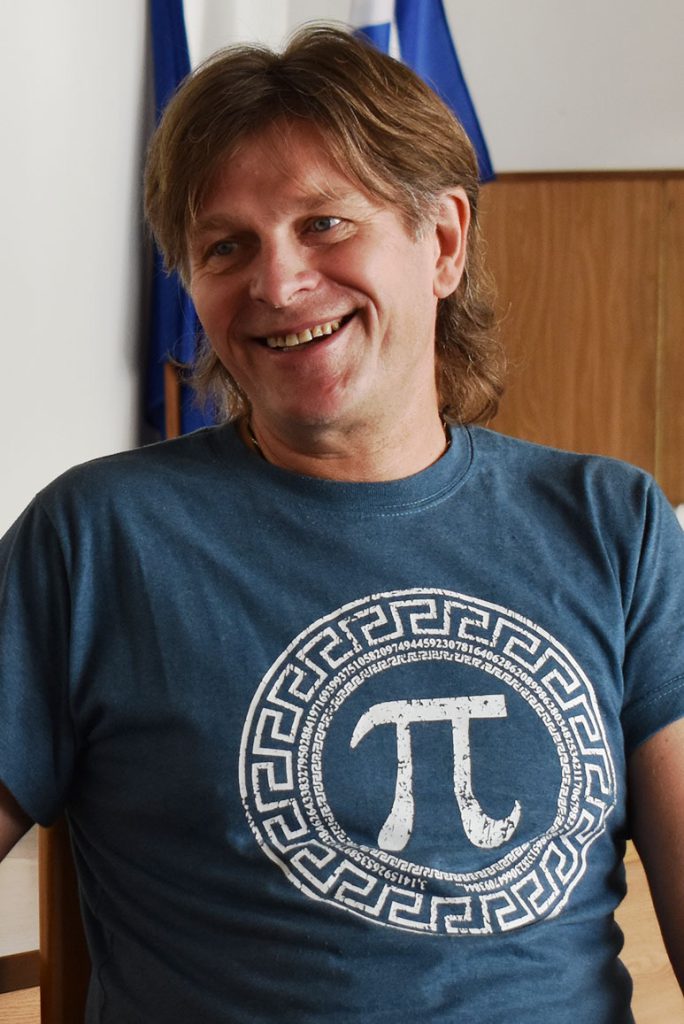
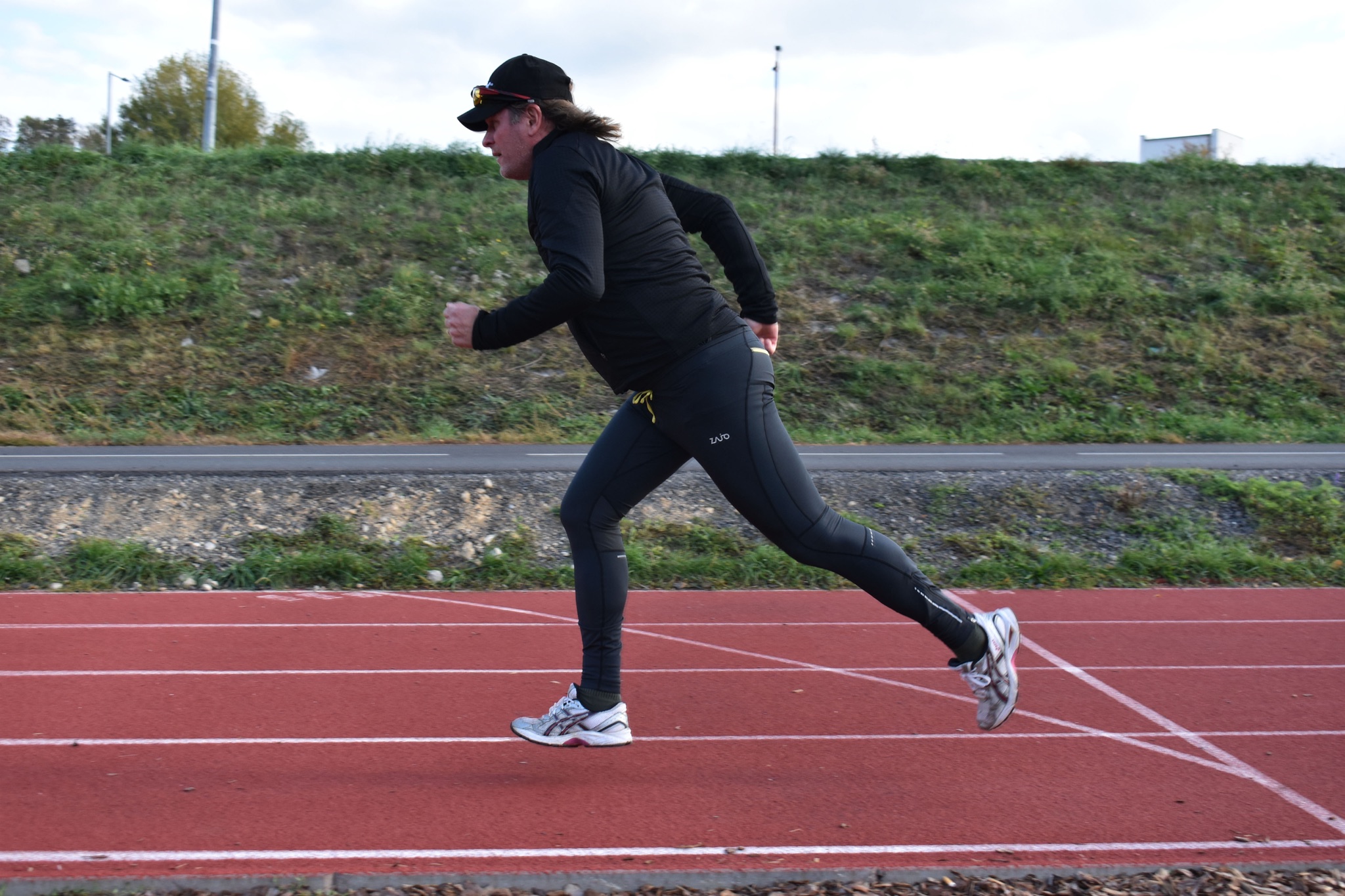
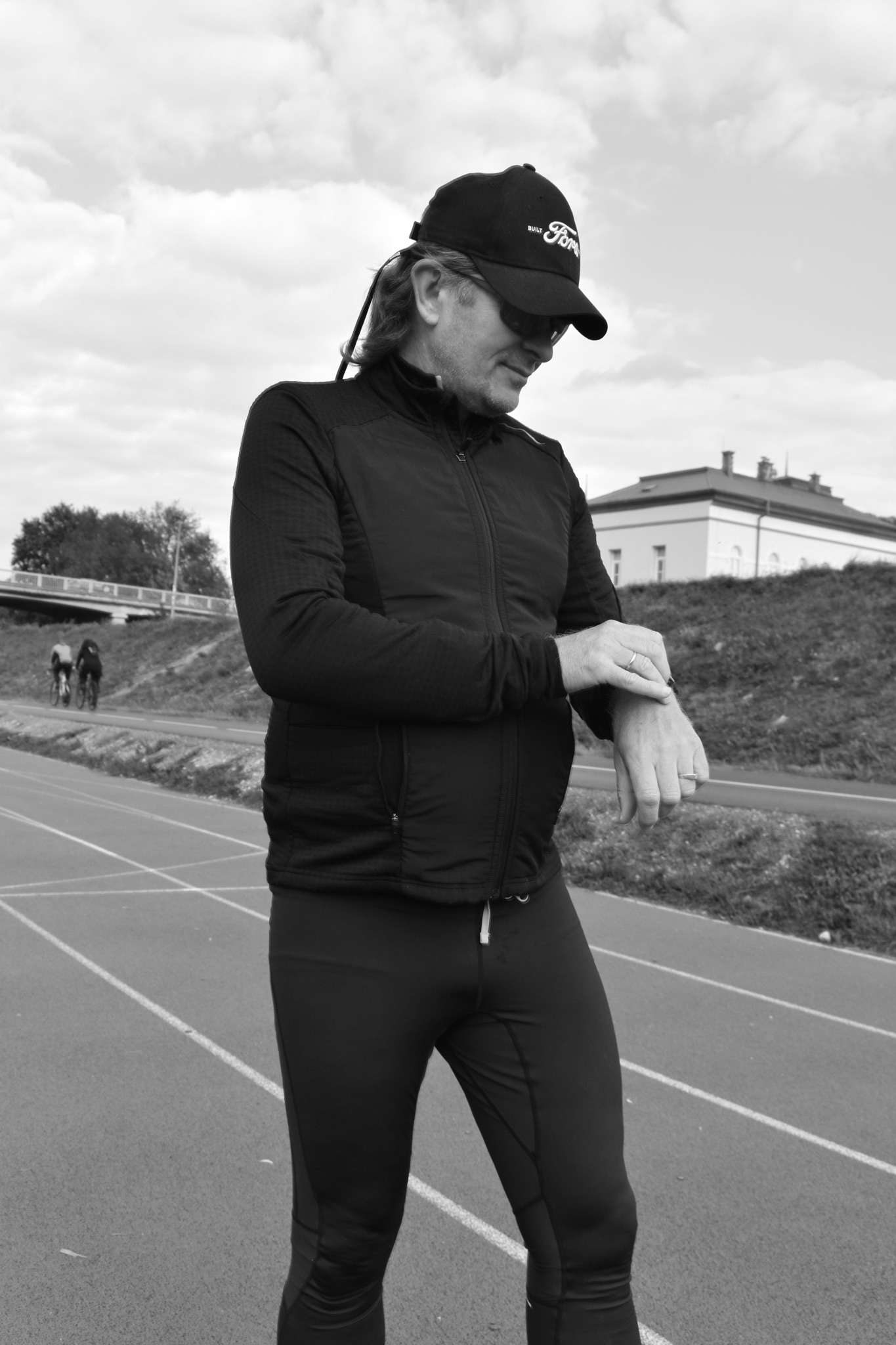
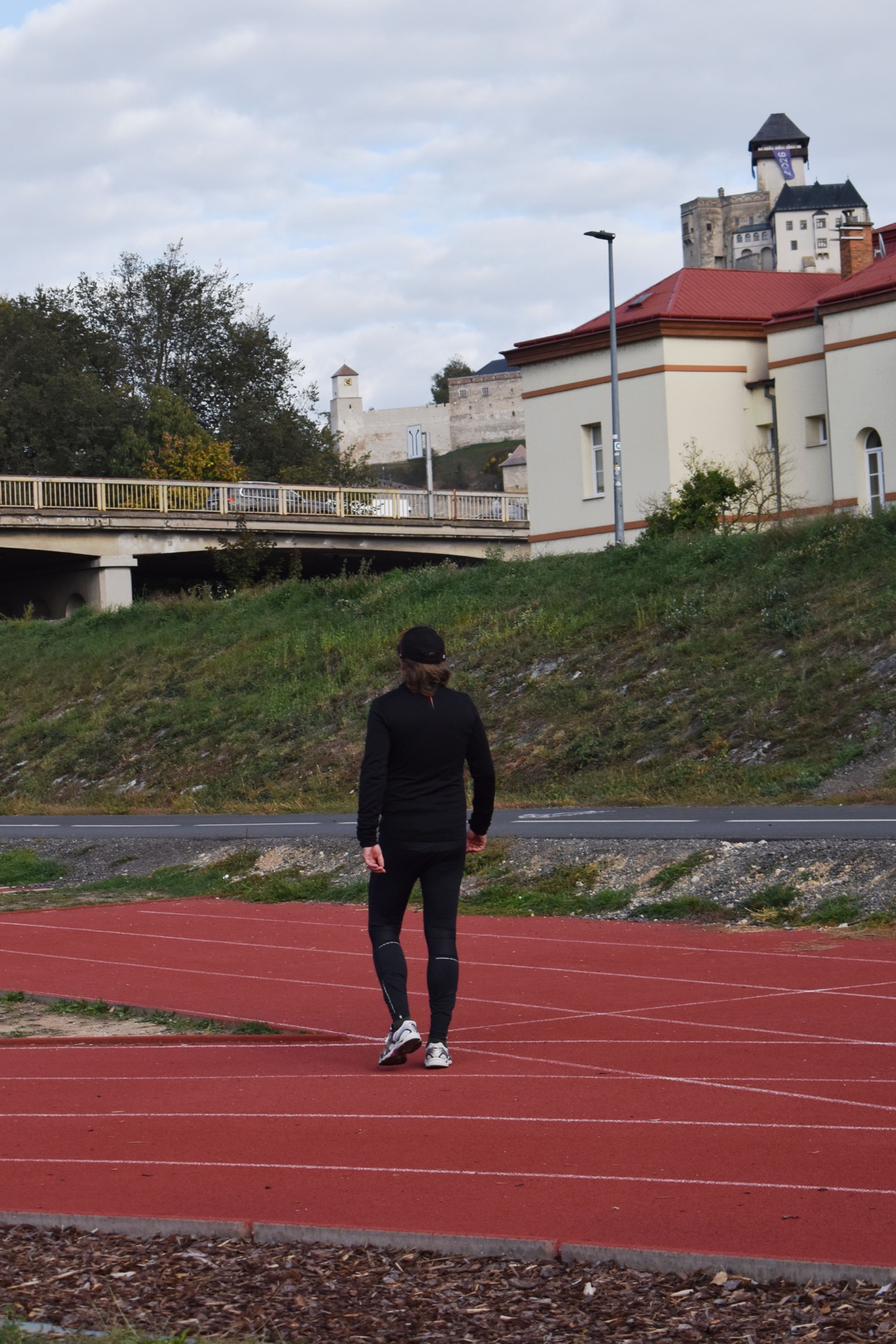
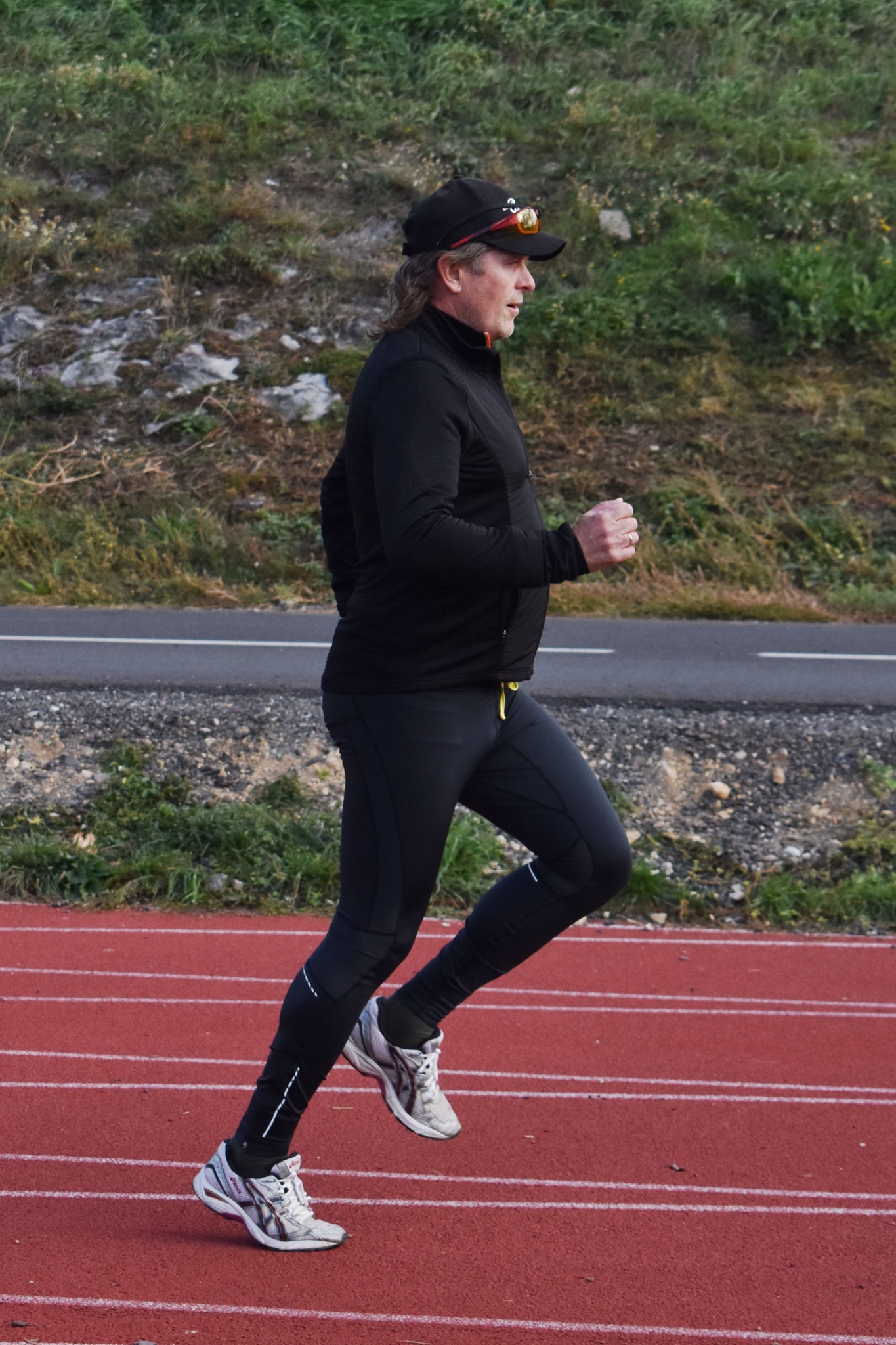
Mr Juraj Hudák welcomed us to his workplace one Friday morning with a smile and a warmth that radiated from him from the very first second. Even before the interview proper began, he was already chatting with the photographers – he asked them about their school, which his son had once attended too, and that instantly broke any formal ice. A moment later we moved to the common room, where we found the best light for the photographers, made ourselves comfortable, and the conversation could begin.
There are people for whom exercise and building community are such a natural part of life that even their own nomination for the award comes as a surprise. One of them is Juraj Hudák, originally from the Horehronie region. Sport has been part of his life since early childhood. Among the sports he tried was ice hockey, for instance, but in the end it was athletics that stuck. Today it saddens him to see how attitudes to physical activity have changed – especially among children. He looked back on the “socialist days”, when school PE was built on a solid grounding in gymnastics, whereas children today often struggle to do even a simple forward roll. That is partly why he feels such a strong need to steer the younger generation in particular towards sport.
Working with people and at events, he has experienced a great many powerful and funny moments. One of his favourites is an amusing, even touching story about children from Kremnica – specifically, from a school for the hearing-impaired. Ironically, the children won MP3 players at a competition. Even though they couldn’t use them in the usual way, their pure, unalloyed joy at winning the prize was unforgettable.
On good neighbours and the microphone
As a resident of Trenčín, or more precisely of the Juh housing estate, he attaches great importance to relationships between people. Being a “good neighbour” is, for him, essential in this day and age. While you can steer clear of your family if relations are bad, you run into your neighbours every day. He fondly remembers the old days, when everyone sharing an entrance, or even a whole block of flats, knew one another and people helped each other as a matter of course. To him, that is a value worth keeping alive today, too.
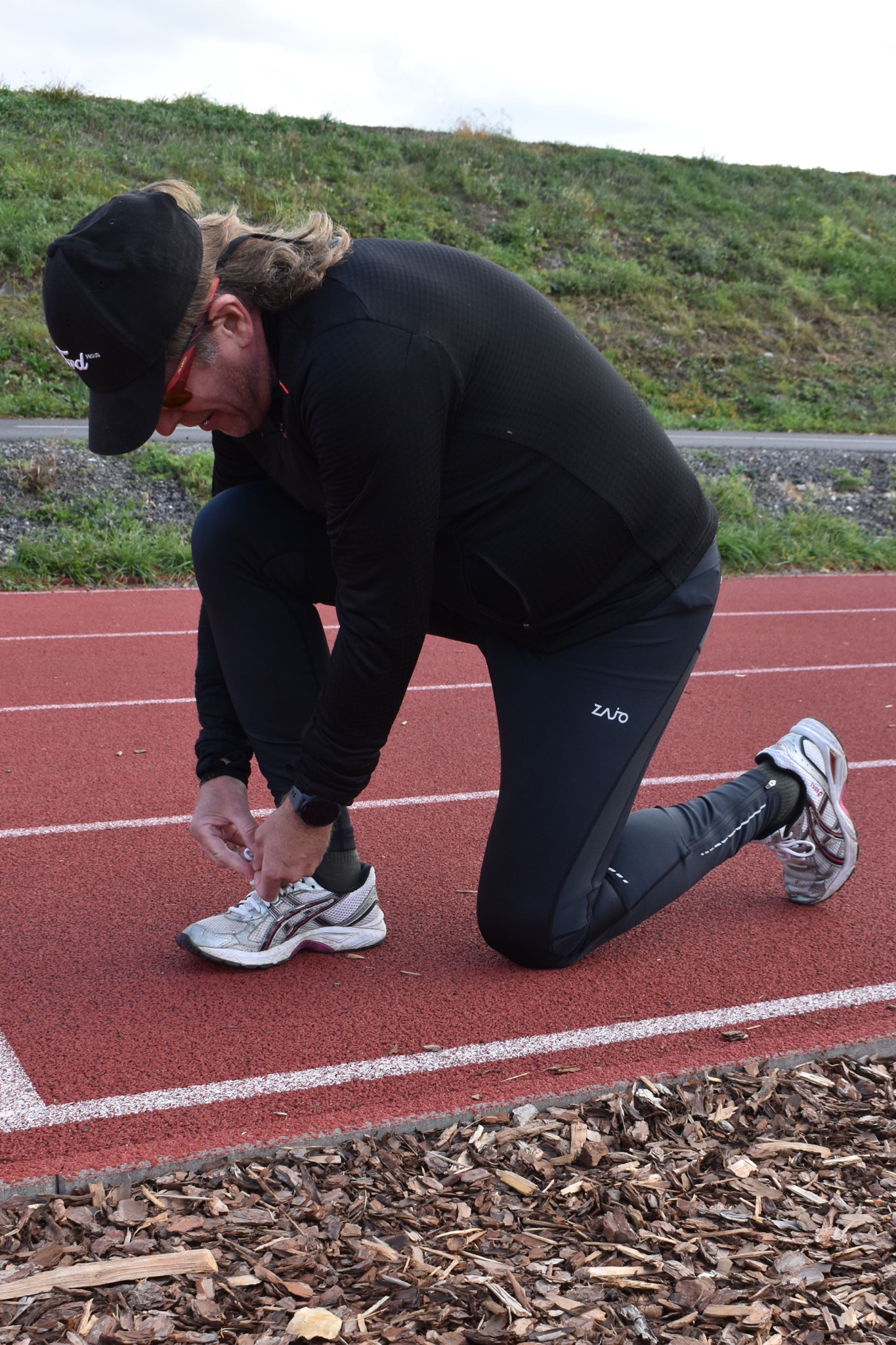
In his view, though, helping others doesn’t always have to take the form of big projects or charity runs. It can also be the smallest of things, the kind that go unseen by the public. Not so long ago, out on the street, he simply helped a young woman with a disability tie her shoelace, while the other passers-by just looked on.
At sporting and community events people often see him with a microphone in his hand, but it wasn’t always that way. He got into compering partly thanks to his brother, who works as a host in the cultural sphere. When his brother turned down one particular offer, he decided to have a go himself. By his own account, the early days were a bit “stammery” at times, but today his greatest reward on stage is when he manages to make people laugh from the heart and put a smile on their faces. He says he has always been the kind of person who “says what’s on his mind”, which is certainly an advantage when you’re holding the mic. So he often lightens the mood around the races with a well-aimed quip – about a runner with a striking moustache, for example, whom he summed up perfectly: “Here comes the gentleman with the finest moustache,” or about the professional race walkers who took part in one of the runs: “The walkers have just outrun the runners.”
A city changing for the better
He has lived in Trenčín for more than twenty years now and won’t hear a word said against the surrounding countryside. One of his favourite places to run is Brezina, not far from where he lives. He loves having nature “a stone’s throw away”. He has also noticed how the city has moved forward over the years. He remembers a time when Trenčín was considerably dirtier and people didn’t lose much sleep over litter. Once, when he pulled up a family who had simply dropped their rubbish on the ground, instead of thanks all he got was contemptuous looks. He pointed out that even the Balkans, often talked about as a dirtier region, used to be cleaner than we were.
Mr Hudák likes travelling by car best, so he has run at all sorts of events in the countries around Slovakia – in Austria, the Czech Republic or the Balkans mentioned earlier. He remembers races in the Balkans where, as the only foreigners, they were once a huge attraction and the locals welcomed them with great enthusiasm. His love of running and of bringing people together eventually led him to create events of his own: together with a friend he even founded the Czechoslovak Friendship Run, which is held right on the shared border.
How to start – and not take yourself too seriously
For anyone who is only toying with the idea of helping others or taking their first running steps but lacks the courage, he has a clear message: start slowly and sensibly, and above all don’t go feeling like a world champion straight away. Once you put your own ego on the start line, sport loses its point. It saddens him to see runners at events trying with all their might to overtake everyone around them, even though their own bodies are sending out clear warning signals. Excessive ambition in sport often leads only to injuries, needless strain and pain. As he points out, exercise shouldn’t be about constantly pushing your limits at any cost. Running, and sport as a whole, should above all be approached with a sense of perspective, a sense of humour and no unnecessary pressure to perform.
At the end of the interview he joked that cyclists are probably the worst thing for the economy – they don’t buy cars, they don’t make money for petrol stations, and since they’re healthy, the doctors lose out too. At a time when everyone is chasing medals and results, he is a reminder of the power of the simple joy of moving. Because what he likes best is to run simply for the fun of it… and, ideally, for a good pint once he’s crossed the finish line.
Text by Timea Beláková, student at Ľudovít Štúr Grammar School in Trenčín
Photos by Nela Hajdínová, student at the School of Applied Arts in Trenčín
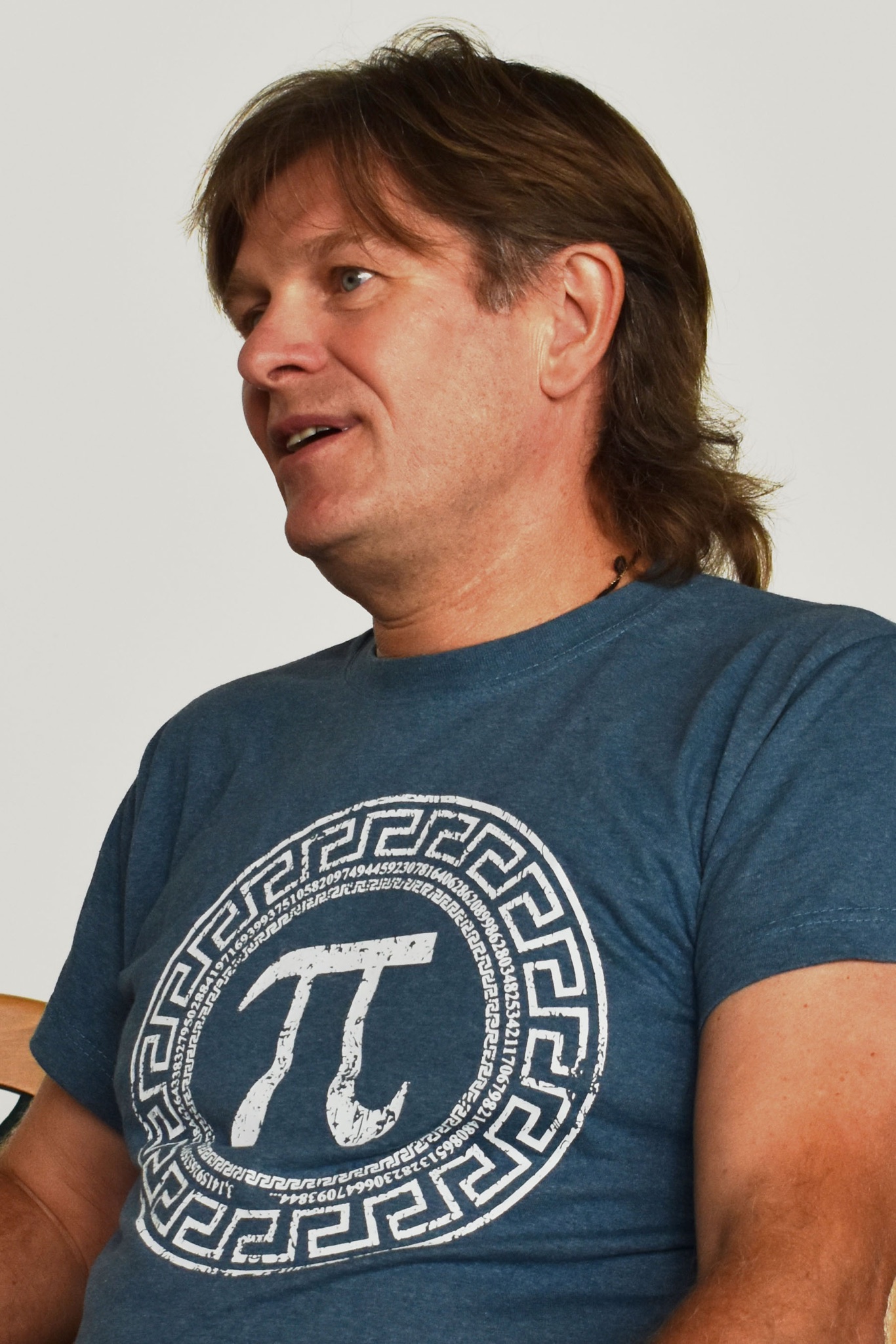
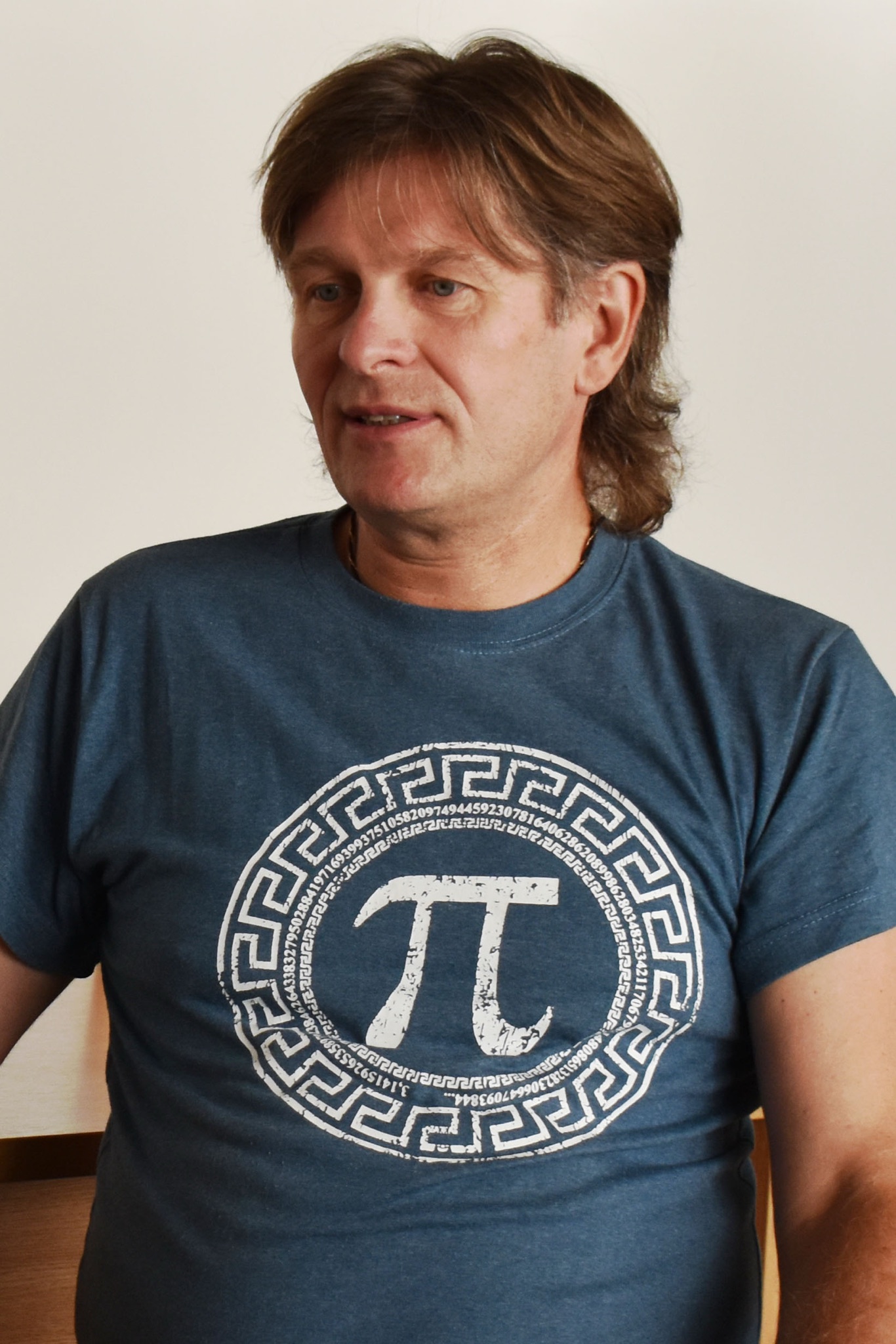
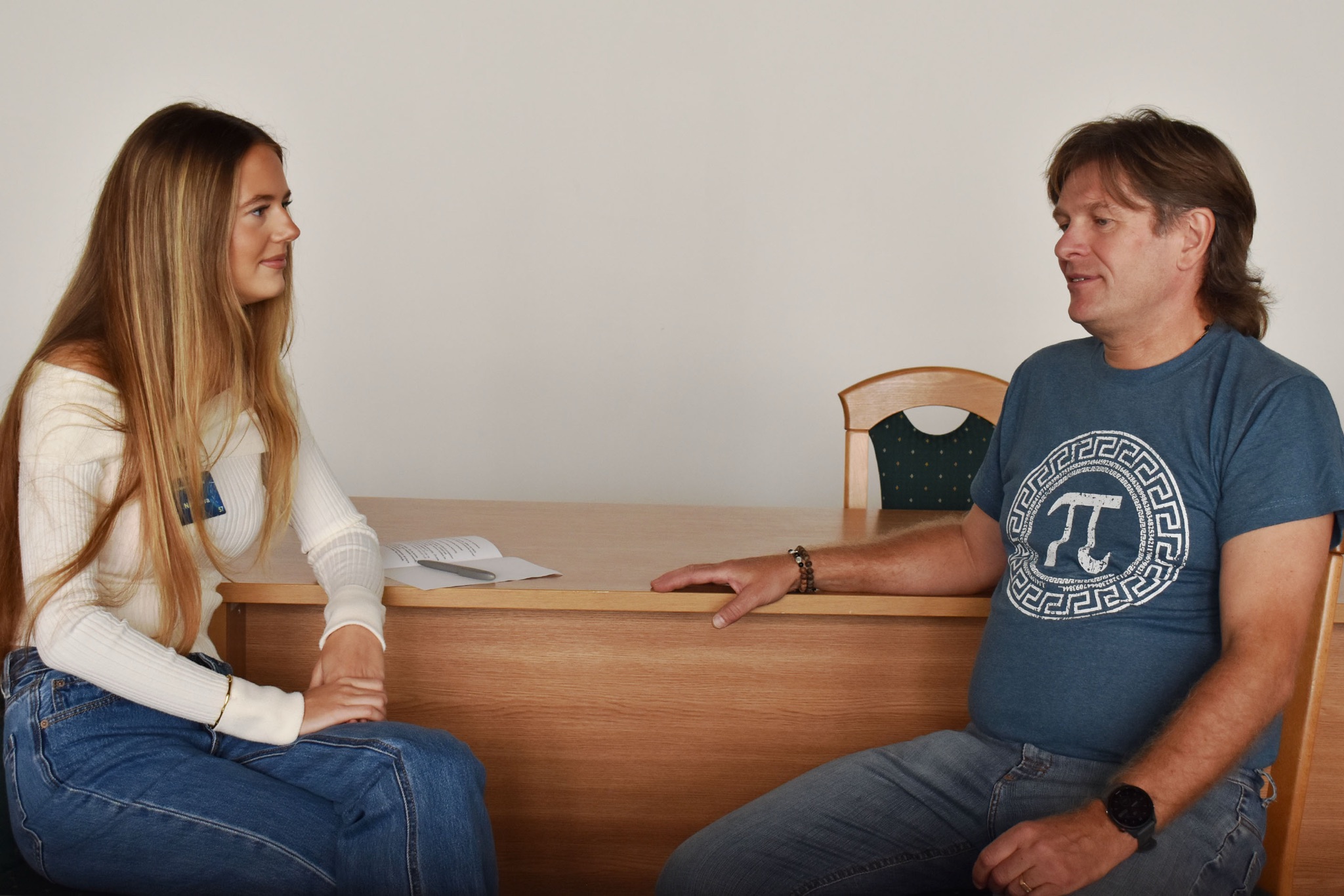
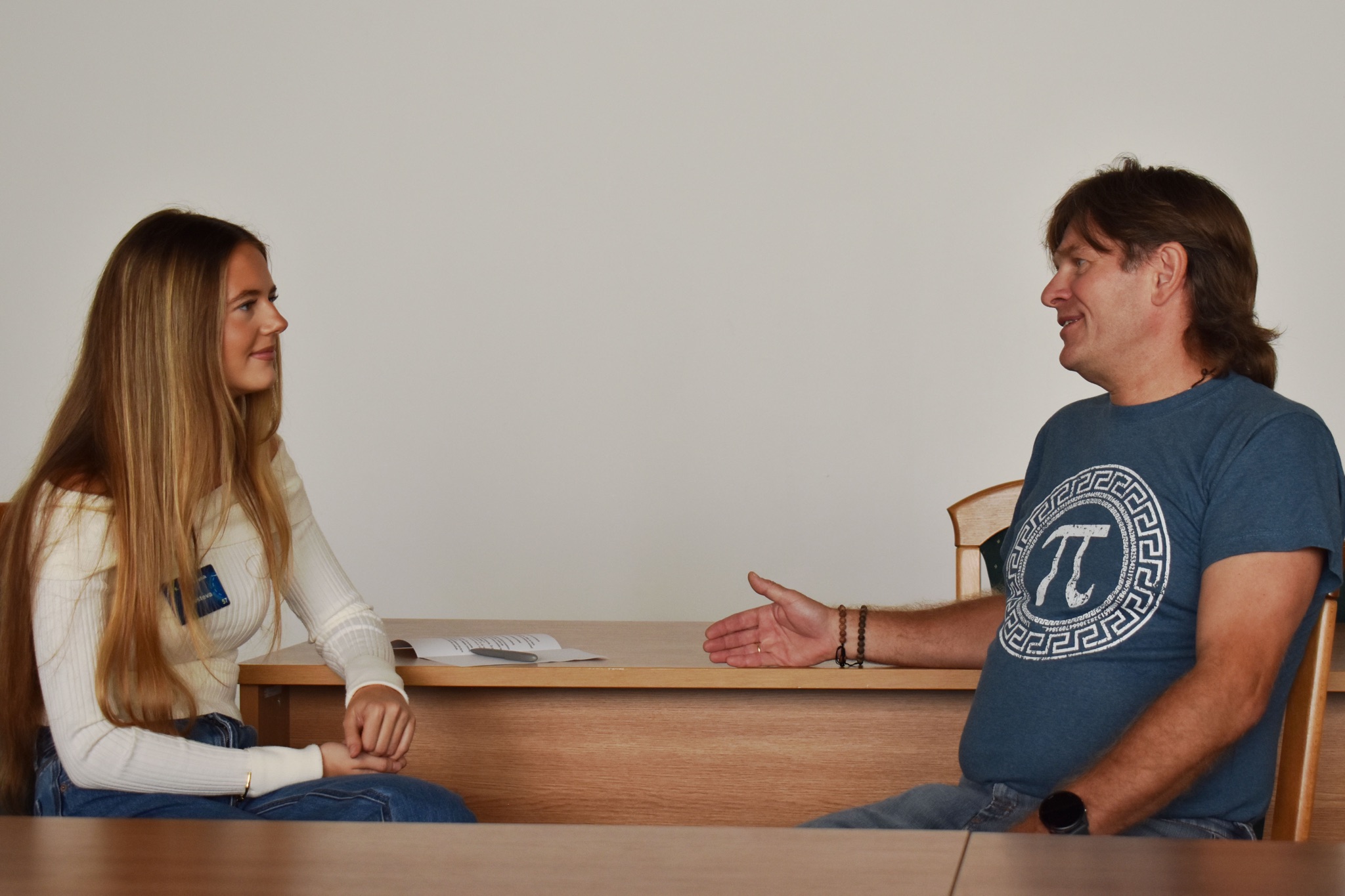
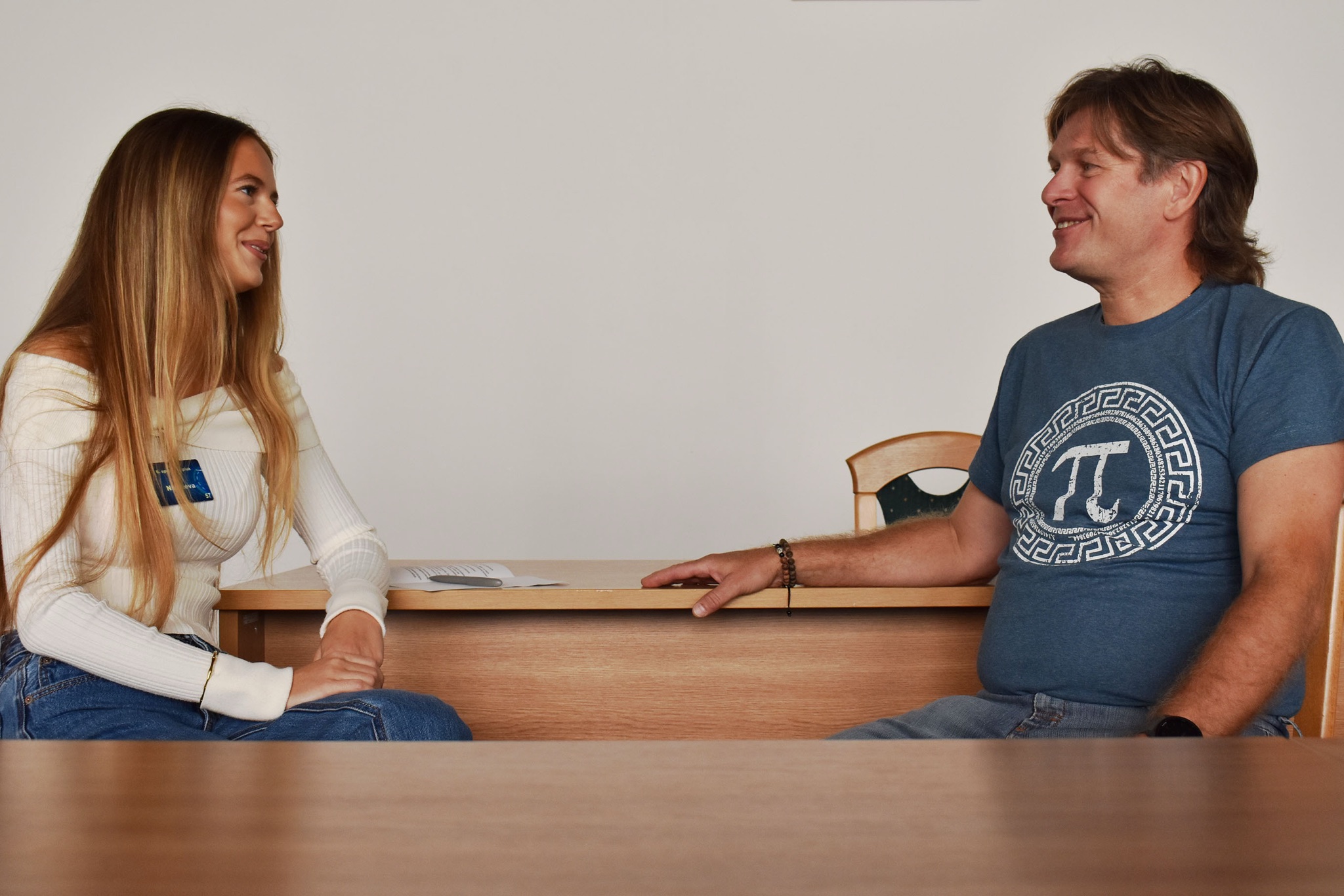
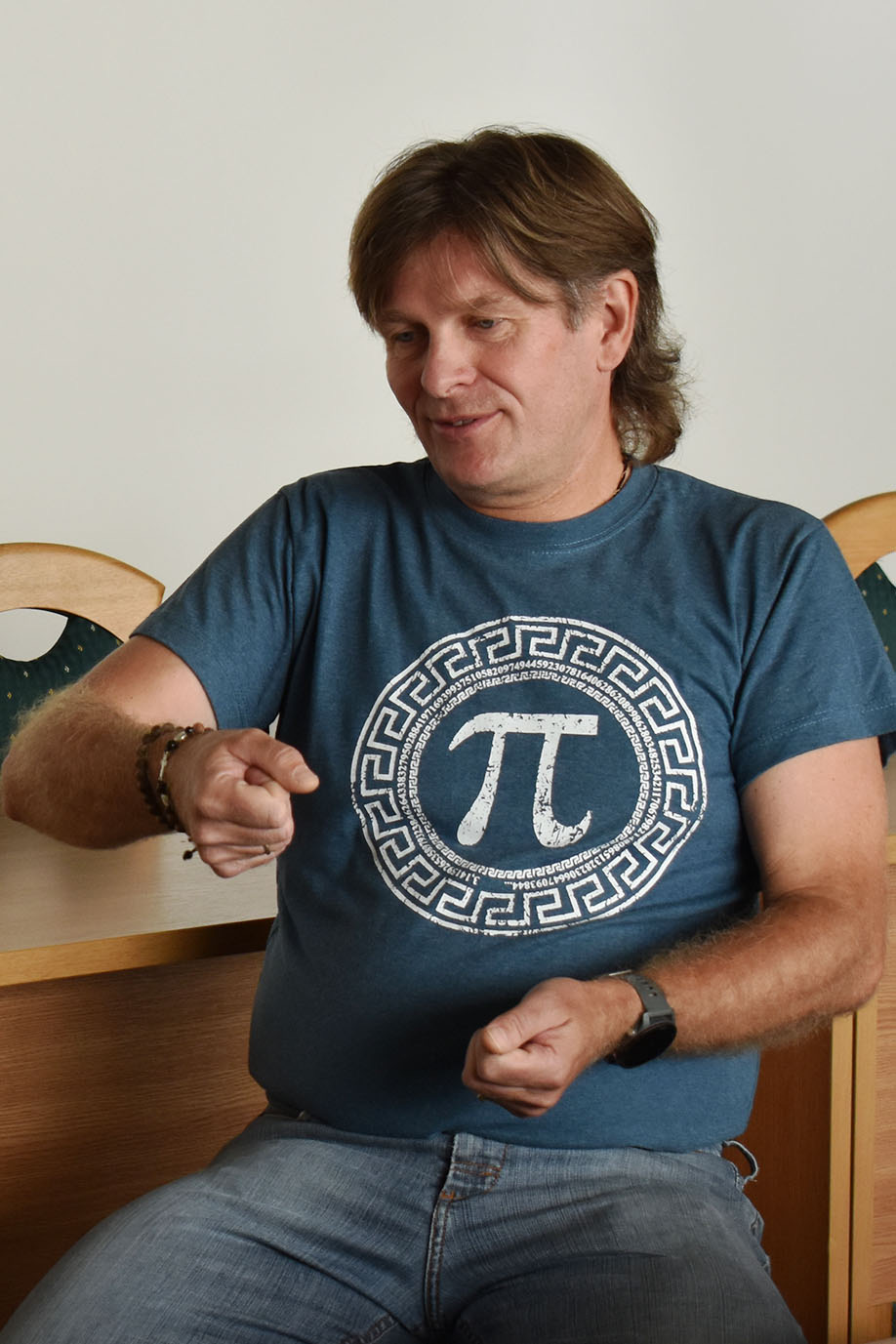
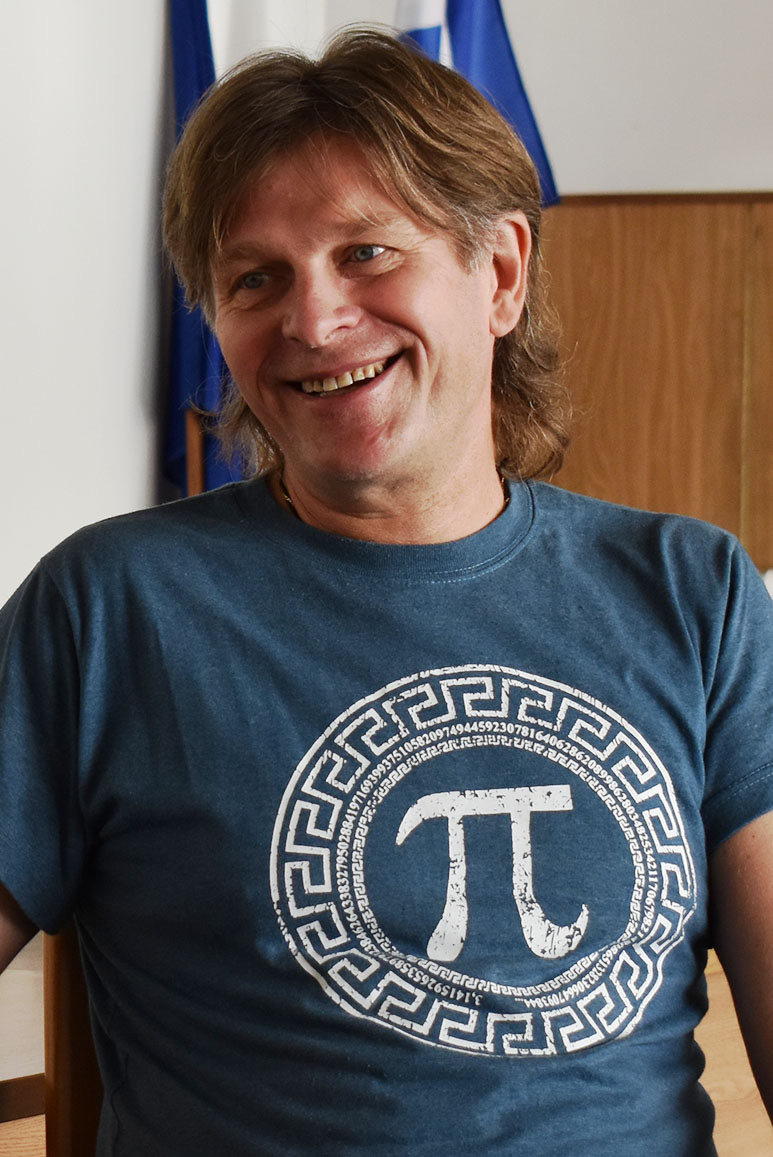
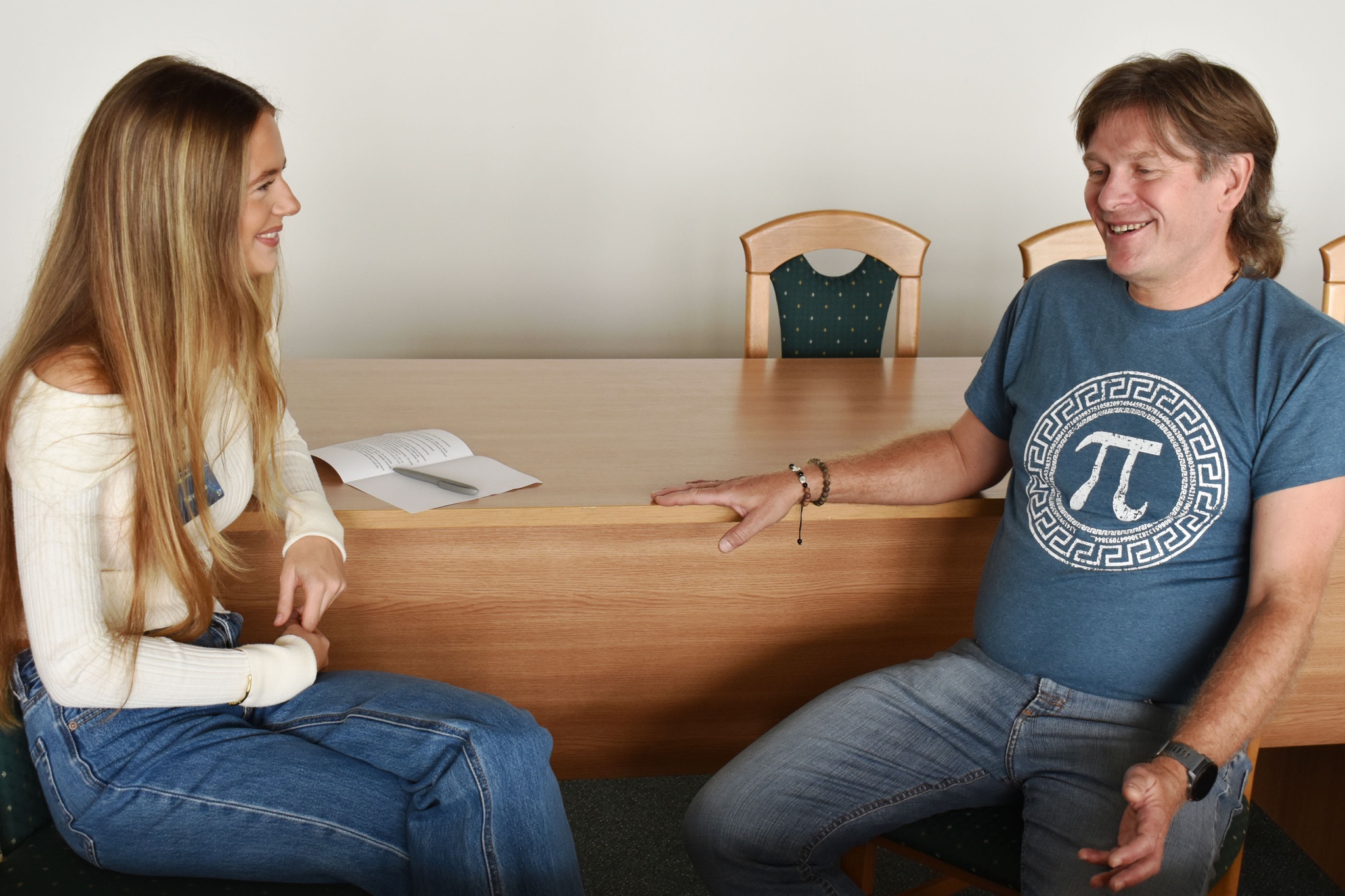

Interview with Mária Dutková, organiser of the HoryZonty festival
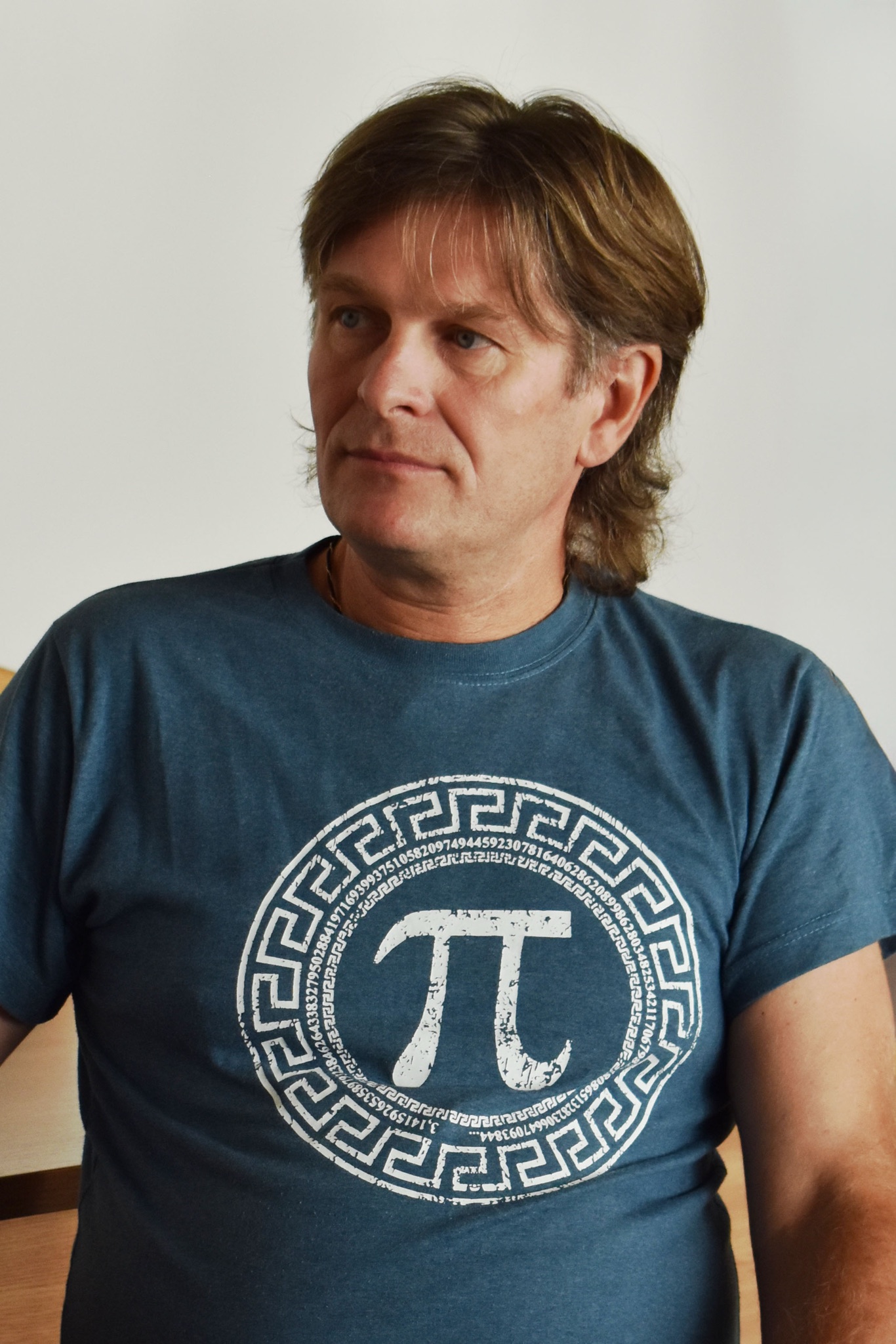
Behind successful events there are often people whose work doesn’t happen only in front of the public, but above all behind the scenes. People who, through their enthusiasm, perseverance and personal commitment, manage to create something that matters to the wider community too. One such person is Mária Dutková, the organiser behind HoryZonty, the adventure film festival in Trenčín. Her career began in schools, but over time it also led her to an event that brings the world of mountains, sport and adventure closer to people. In the following interview we talked about her life’s journey, the festival’s beginnings and the work that lies behind its success.
1. Your career began at the front of the classroom, teaching PE and English. You taught at the primary school I went to as a child, and later at the Secondary Technical School of Civil Engineering in Trenčín. How did you get from the world of schools to organising a successful adventure film festival, HoryZonty?
I think it was a more or less natural path. As a PE teacher I’d always been close to sport, and I was actively into outdoor pursuits myself. At the same time I was part of a community of people who shared a passion for mountains, travel and adventure. And it was precisely out of the wish to share experiences and stories from their travels and sporting expeditions that the idea for the HoryZonty festival gradually took shape.
So together with our friend Alan Formánek, who organises the Hory a mesto festival in Bratislava, we decided to try something similar in Trenčín. The very first edition was a big success, which motivated us to carry on. And we’re still going today.
2. Sport seems to be an inseparable part of your life. Which sports have appealed to you most? Which do you still do today? What does sport mean to you, and what does it give you in your personal and professional life?
My parents didn’t particularly steer me towards sport, but I suppose it was just in me. I enjoyed moving, simply being active. At primary school I did athletics and handball, then came hiking with my parents. But since that wasn’t enough for me, I took up climbing, which became my lifelong passion and is still a priority for me today. I’m the sporty type. Just as some people have to go for a coffee, I need to go and work out. Apart from climbing, I like cycling, swimming, running, skiing in winter…
3. Organising a festival takes a great deal of time and energy, and often sacrifices too. Does your family support and understand your sporting activities and your festival work? Has anyone in your family followed in your sporting footsteps?
Without a doubt. A project as big as HoryZonty has been practically since its first edition couldn’t rest on one person’s shoulders. In the early days our whole family got involved in organising it. I had help from my daughters, who were still living at home then, and of course from my husband, who is still a great support to me today. The girls have their own lives away from home now, so from the family it’s mainly the two of us left organising the festival. Besides that, I have a great team of people around me. There are eight of us altogether, and everyone has their own area they’re responsible for. Together we create the festival in the form visitors know today.
4. Let’s go back to the beginnings of the HoryZonty festival. What idea and ambitions was the project founded on, and what helped it grow into what it is today?
At the beginning we didn’t have any big ambitions. It was a leap in the dark, as they say – we had no idea what to expect. We simply wanted to see whether our idea would appeal to people. But the very first edition was a big success, which motivated us to carry on. Gradually the festival began to grow. Various side events were added alongside the films and guests, and as the festival got bigger, our organising team naturally grew too.
5. Today the festival offers adventure films from many different countries and cultures. How well represented are Slovak films compared with foreign ones? And where do you think HoryZonty stands among European and world mountain film festivals?
Unfortunately, I have to say that in Slovakia we don’t have a very broad base of outdoor film-makers, which the directors themselves have confirmed to me in conversation. So Slovak films make up roughly a fifth of our festival programme. Of course, we’d love to give them more space, but since domestic production is fairly limited, we don’t have that wide a choice. That’s why most of the programme is made up of foreign films.
As for our standing among European and world festivals, we have no ambition to compare ourselves with them. HoryZonty is above all a regional festival and speaks mainly to a Slovak audience. We know our audience; we know what interests them and what they appreciate. That’s also why, when choosing guests, we don’t necessarily look for world-famous names, but above all for interesting people who have something to say and whose stories can really reach people. That’s exactly where I see the strength and uniqueness of our festival.
6. Behind every successful festival there’s a huge amount of work that the audience often doesn’t see. What’s the hardest part of organising HoryZonty for you, and what, on the other hand, keeps you motivated to carry on despite all the obstacles?
I don’t think I could say what’s hardest. It’s continuous work. One festival ends and within a week we’re already starting to prepare projects for the following year. Sometimes you don’t even get the chance to fully savour the atmosphere of what we’ve just been through, to process all the impressions and experiences, and we already have to move on to the next edition. Preparing the festival is really a lot of small tasks that together make up one big whole. It has its separate stages, but I don’t think you could say that any one of them is particularly harder, and that once you’ve got through it everything will be easier. Unless some more serious problem comes along from outside, it’s above all non-stop work that never quite ends.
7. The festival has several successful editions behind it, during which a great many films from all corners of the world have been shown. But the film-makers, athletes and other interesting guests are also an integral part of the event. Which guests do you value most, and which are you especially proud to have welcomed to the festival?
Being a climber myself, I have a special place among our guests for people from the mountaineering world. I really value the fact that such big names as the Polish mountaineer Piotr Pustelnik and the Slovenian alpinist Silvo Karo accepted our invitation. Among Slovak figures I’d certainly mention Peter Hámor, one of our most important mountaineers, the documentary film-maker Pavol Barabáš, and Viktor Beránek, the long-time hut warden at Chata pod Rysmi.
But I wouldn’t like to single anyone out. Each of our guests brings something exceptional to the festival, and I’m always genuinely pleased when people we respect and want to introduce to our audience accept our invitation.
8. As preparations for this year’s HoryZonty festival reach their peak, could you let us in on some juicy, funny or as yet unknown titbit that would show the audience the other side of the festival?
I don’t know that we have such juicy stories from the preparations (smiling). It’s a job like any other. But perhaps it would be interesting to reveal how our team actually works. I’m the only one who works on the festival full-time; the others have their own jobs and work on HoryZonty in their free time. So festival business often gets sorted out during perfectly ordinary activities. I go running with one friend and we talk festival as we go. With another friend we’ll arrange to pop out for “a bit of cake”, and we end up back on festival matters again. Another friend has a little daughter, so when they come round, we play with the little one and sort out organisational matters in the meantime.
So it’s not the case with us that I, as the boss, call a meeting and hand out tasks. In today’s hectic times we try to fit festival duties around each person’s work and personal life. And it’s precisely thanks to the willingness and enthusiasm of these people that we manage to put HoryZonty together every year.
9. What side events can the audience look forward to this year?
The side events, which traditionally take place on Saturday morning in the town centre, are staying more or less the same. The festival run will be there, celebrating its fifteenth edition this year, and so will the popular Nosičov sen. FestArt will be running workshops for children and adults alike. And after about three years, the dog sled teams are back – we couldn’t organise them while the square in front of ODA was being renovated. We hope the weather will be kind to us and visitors will be able to enjoy all these activities to the full.
10. And to finish, a question about personal success: which of this year’s guests or participants do you consider your biggest “catch” – in other words, the person you managed to bring to the festival and are especially pleased about?
I’m always delighted with every guest we manage to welcome to the festival. It really isn’t as easy as it might seem. Some are often away travelling, for others the date doesn’t suit, and for people who aren’t used to appearing in front of an audience, stage fright can also get in the way.
This year, though, I’m especially pleased that Anička Slancová is taking part – she’ll be our first guest with a disability in the main programme. She’s a sportswoman who was seriously injured in a cycling race three years ago and was left in a wheelchair. Despite that, she’s managed to get back to doing sport actively. She rides a bike again, plays basketball and does kiteboarding too.
Getting her here wasn’t exactly straightforward either. For a long time I couldn’t get hold of her contact details, and when we finally got in touch, she wasn’t sure she felt up to appearing in front of an audience. On top of that, she had to fit the festival dates around her training. That makes me appreciate all the more that she accepted our invitation in the end, and I’m really looking forward to her meeting the audience.
I think I can safely say the audience has plenty to look forward to, whether it’s the side events or the adventure films and guests. Is there anything else you’d like to say to the audience in closing?
I’m really looking forward to us meeting again and enjoying that unique HoryZonty atmosphere of ours together. I trust the audience will enjoy the festival as much as we enjoy preparing it.
Interview by Nella Kotláriková, student at Ľudovít Štúr Grammar School in Trenčín
Photos by Natália Jablončíková, student at the School of Applied Arts in Trenčín
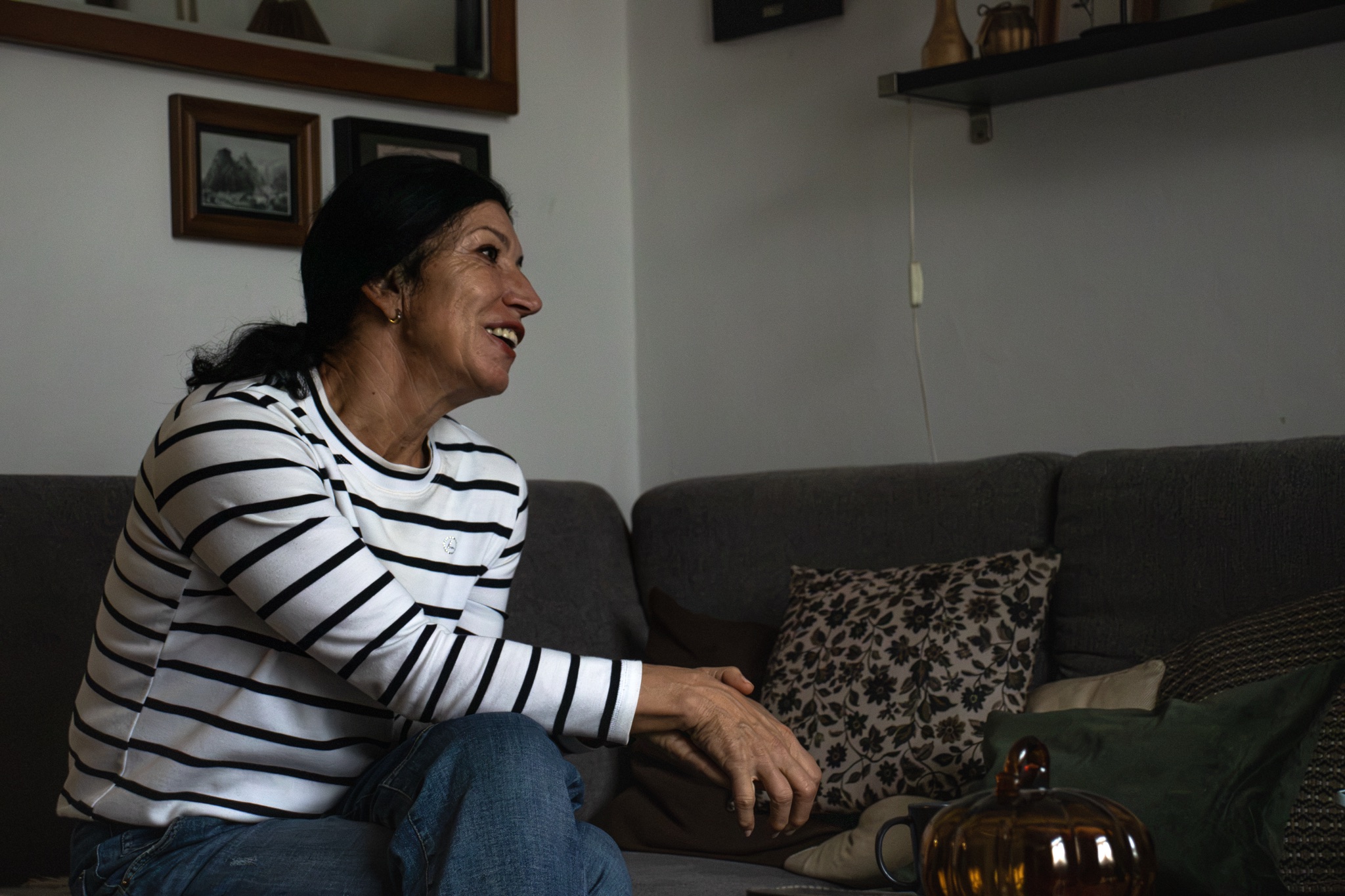
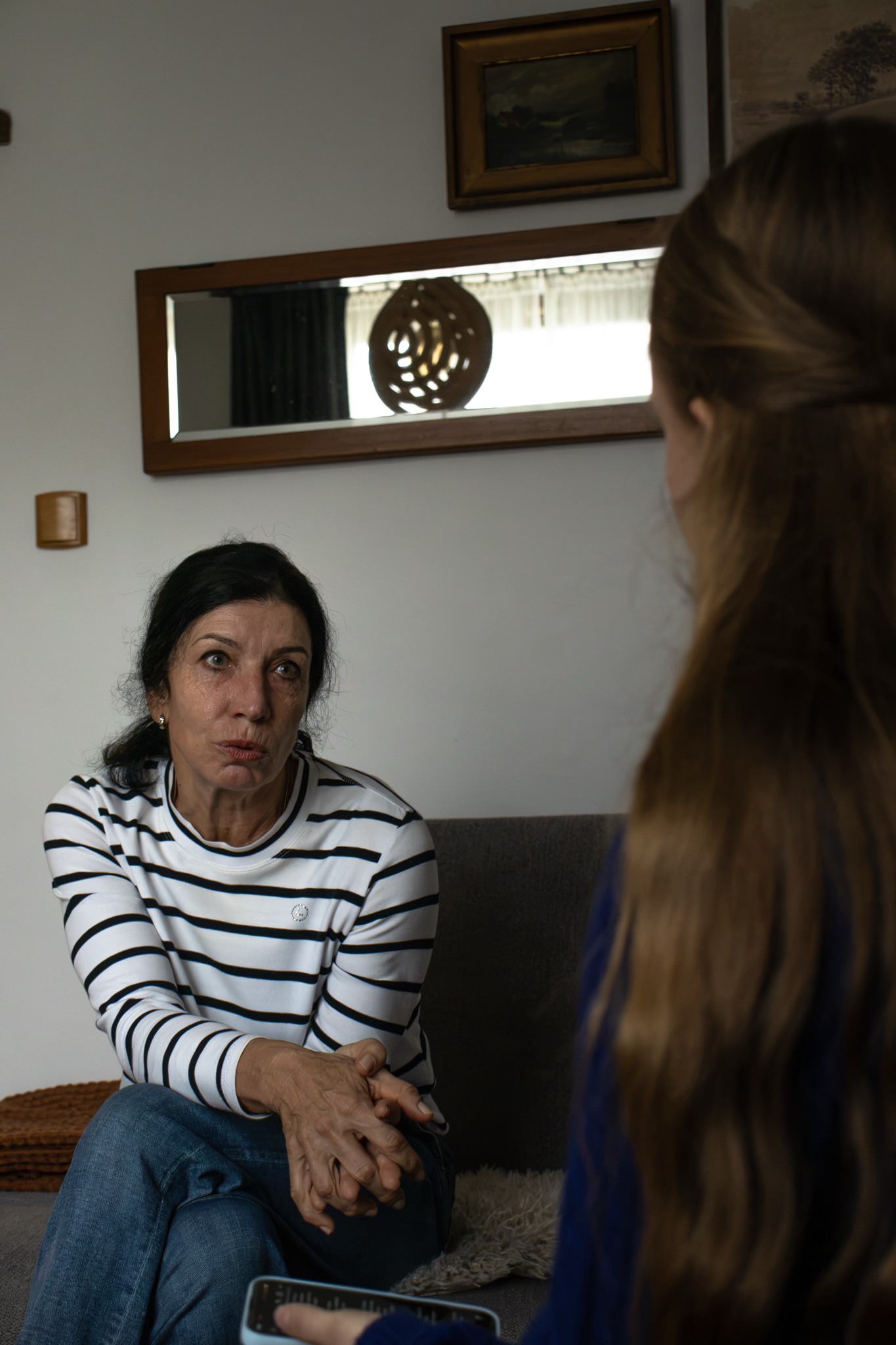
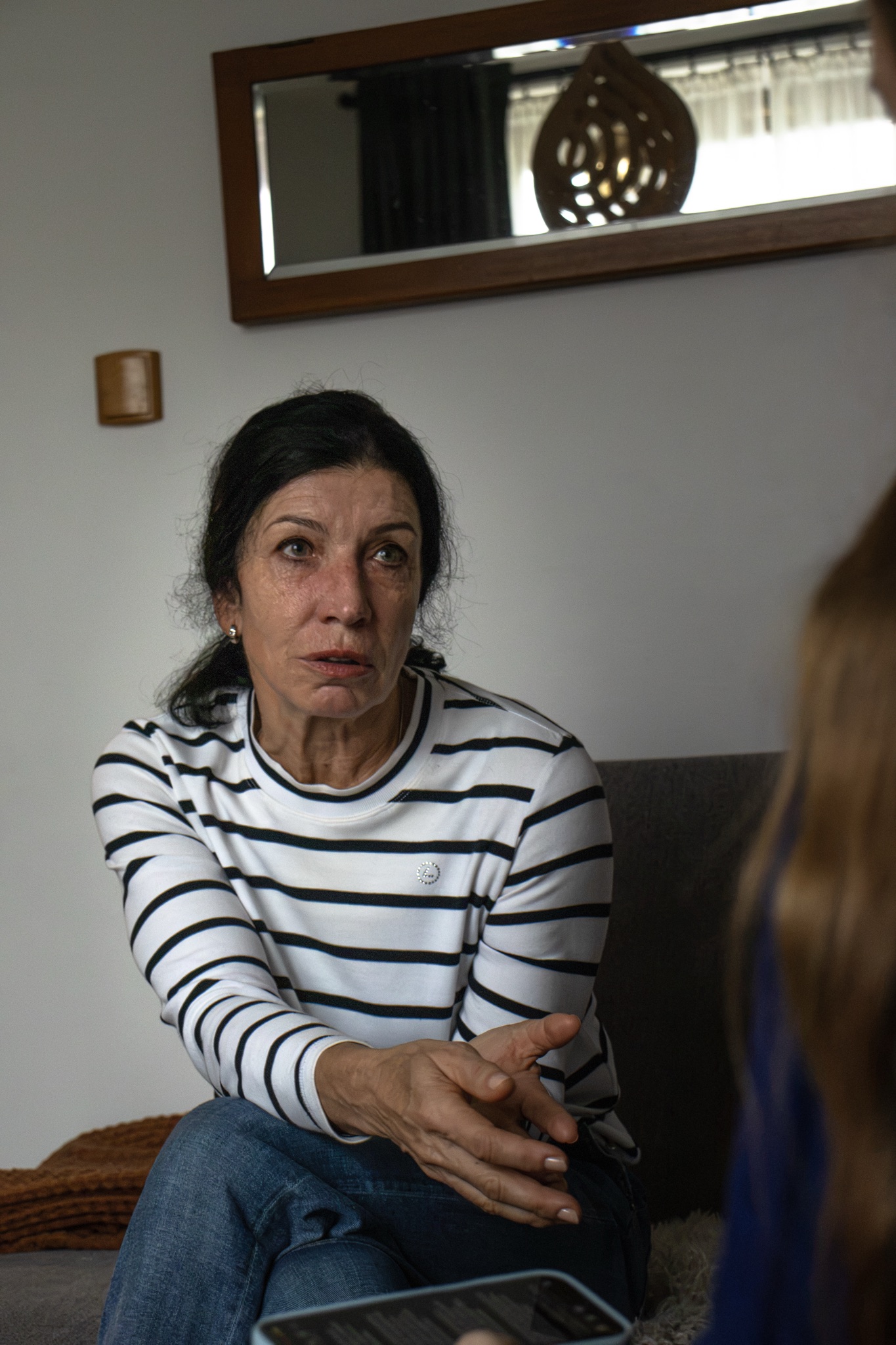
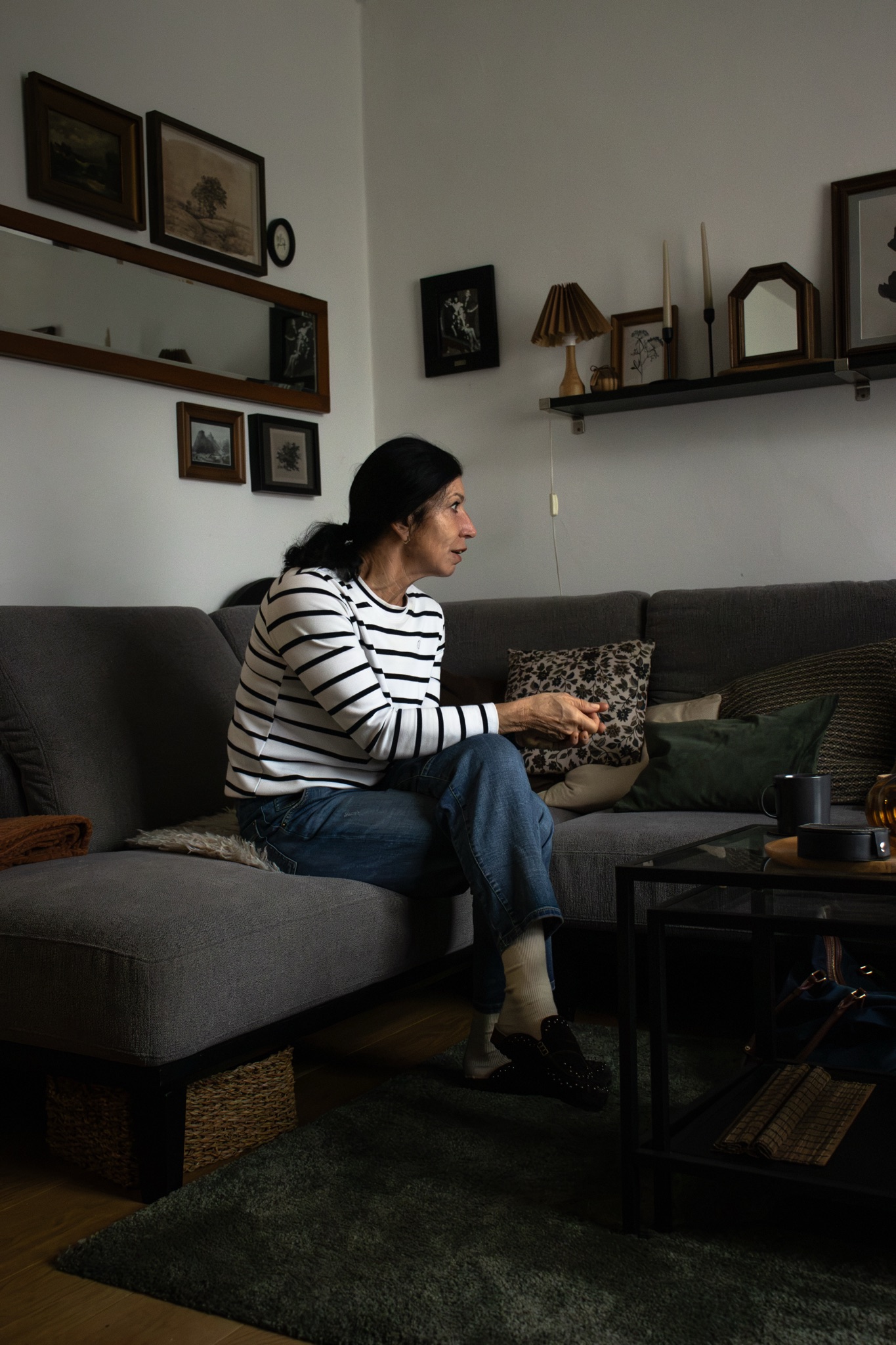
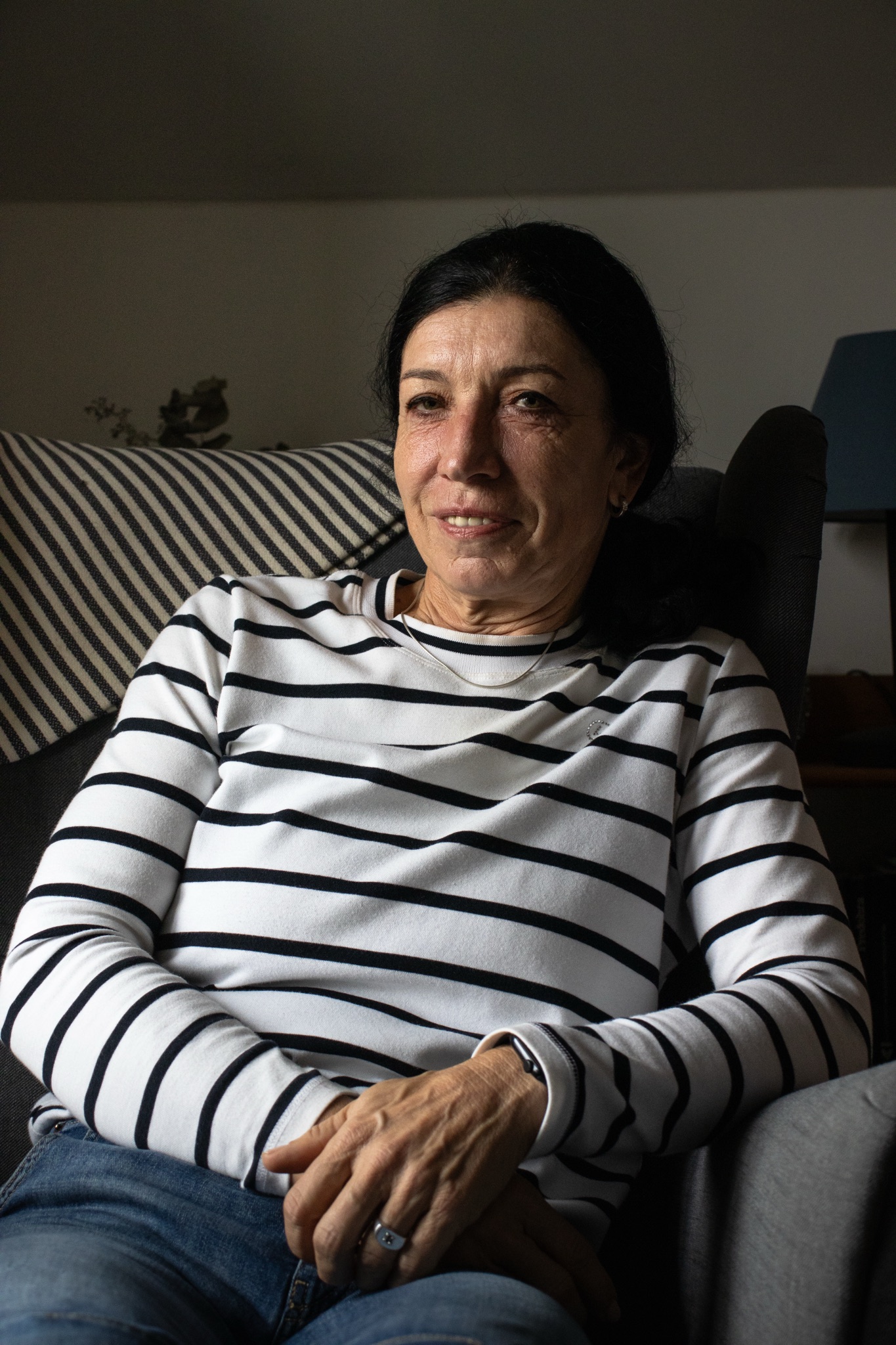
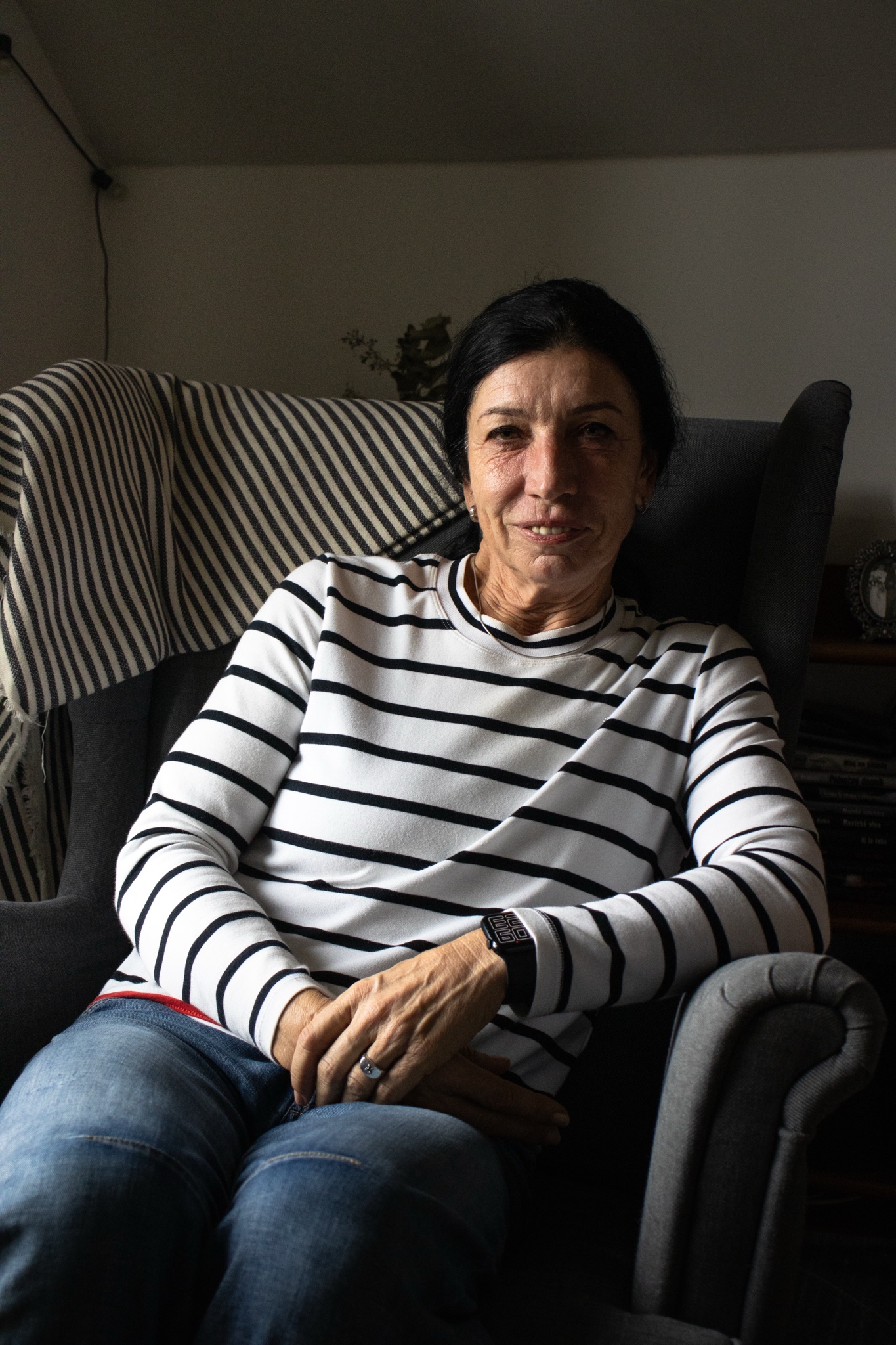
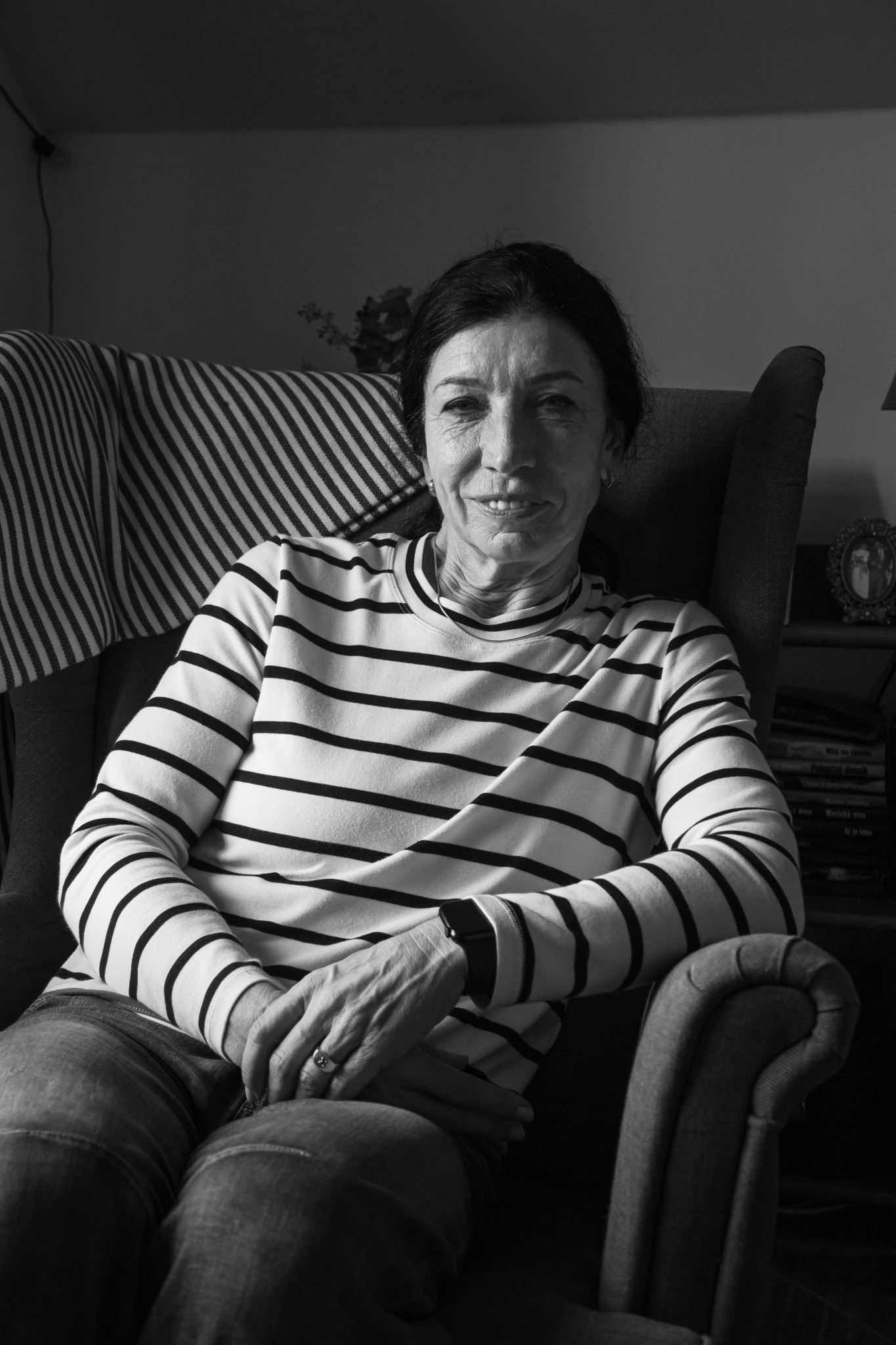
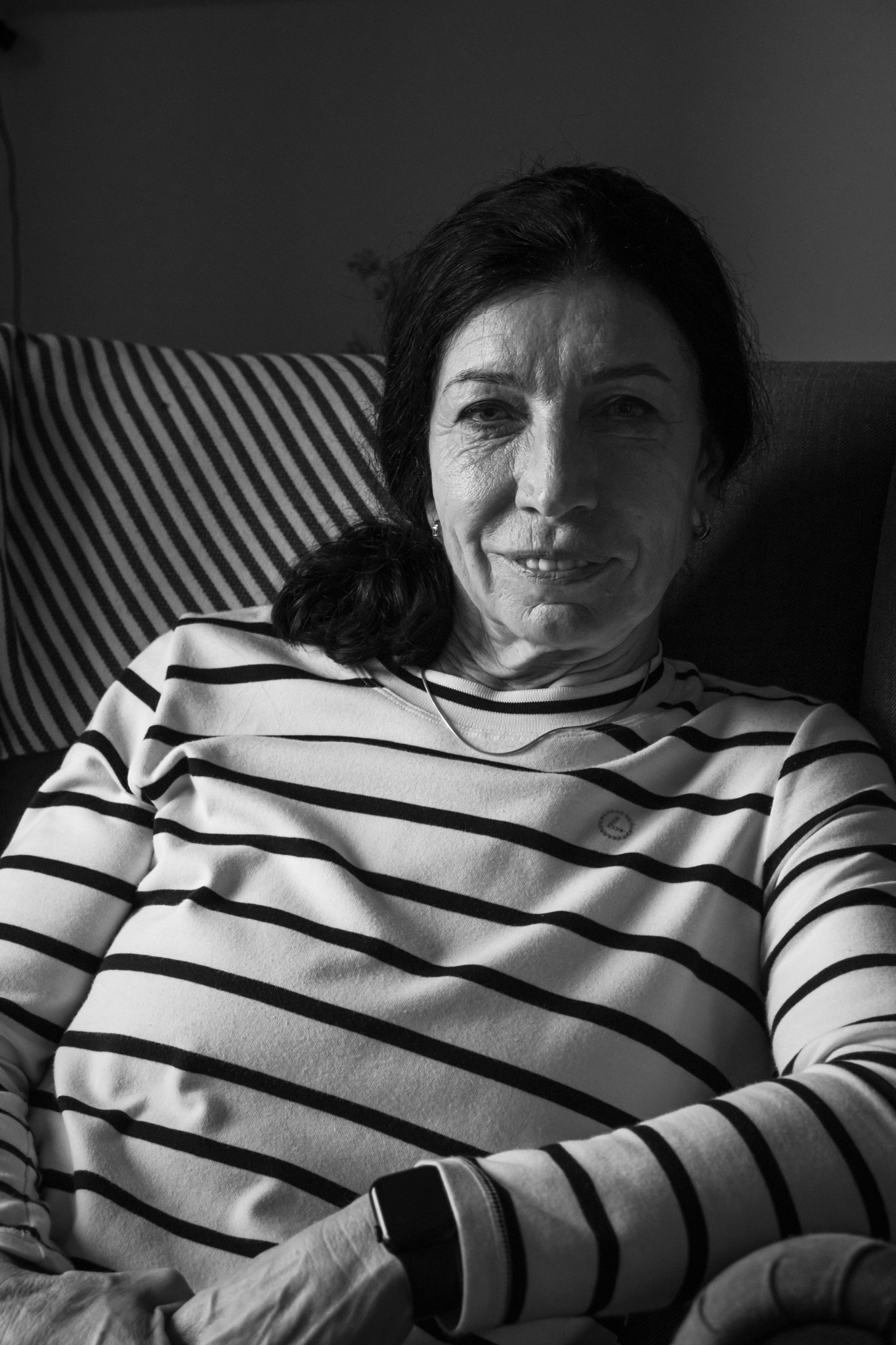
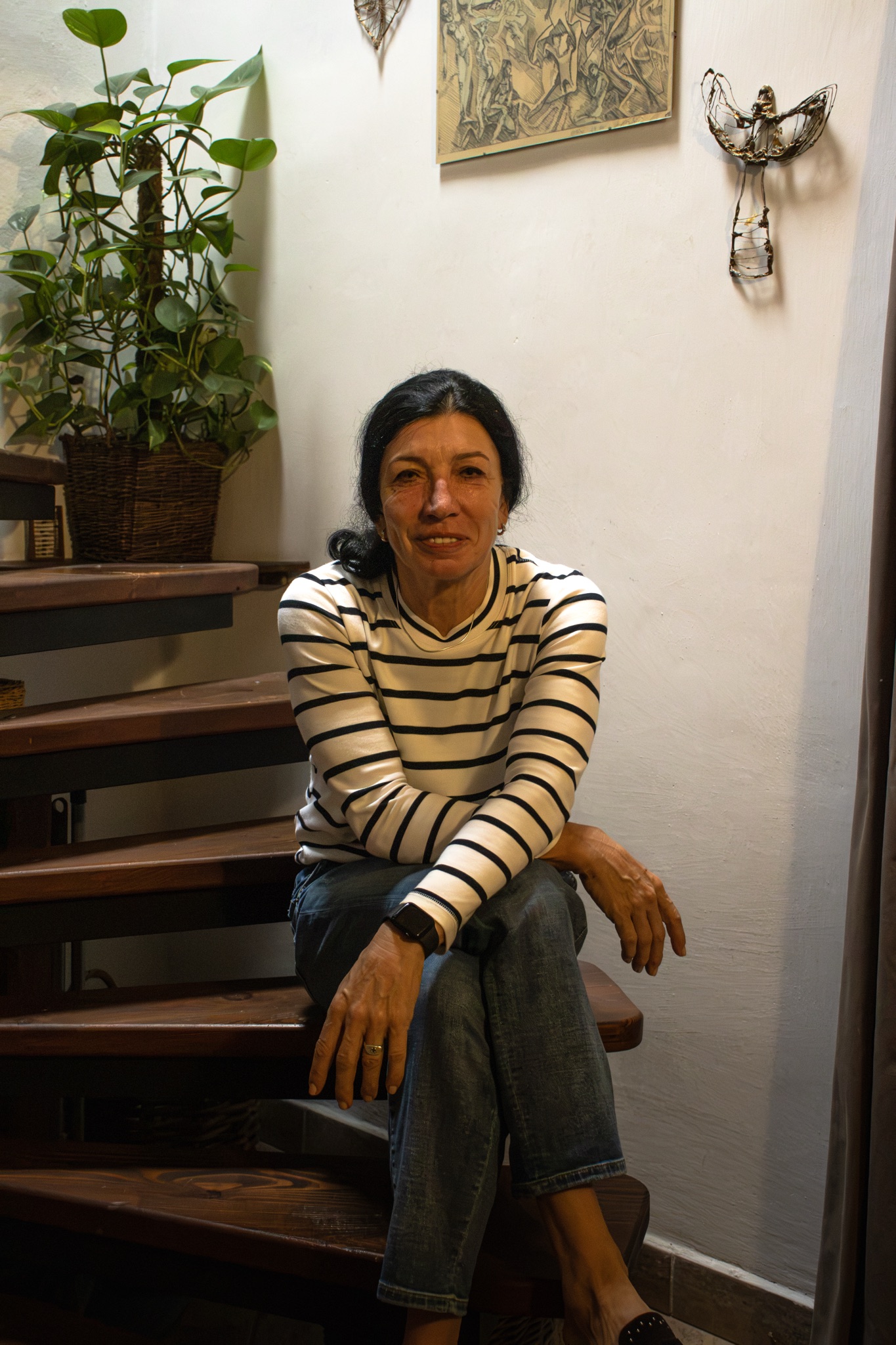
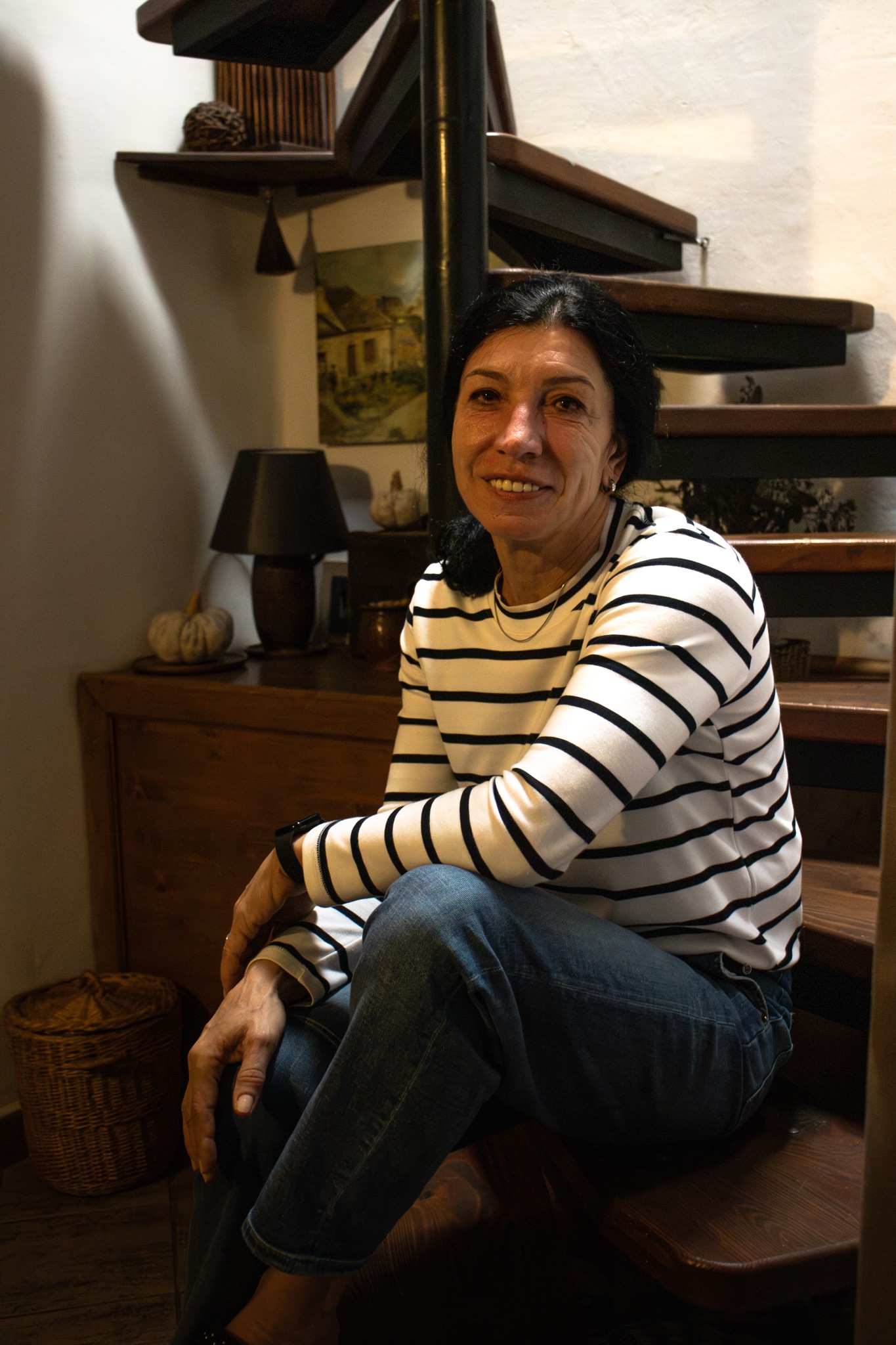
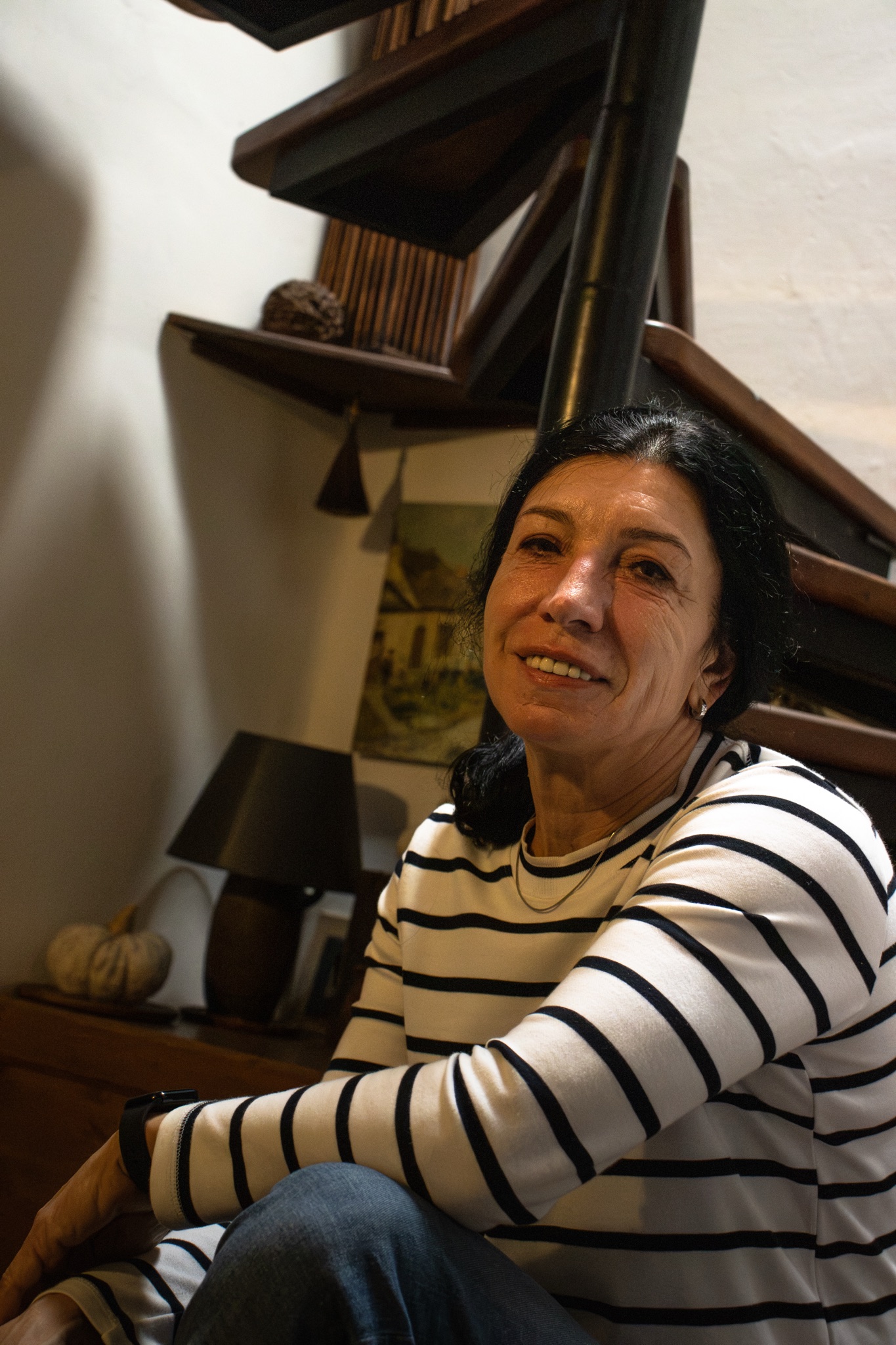
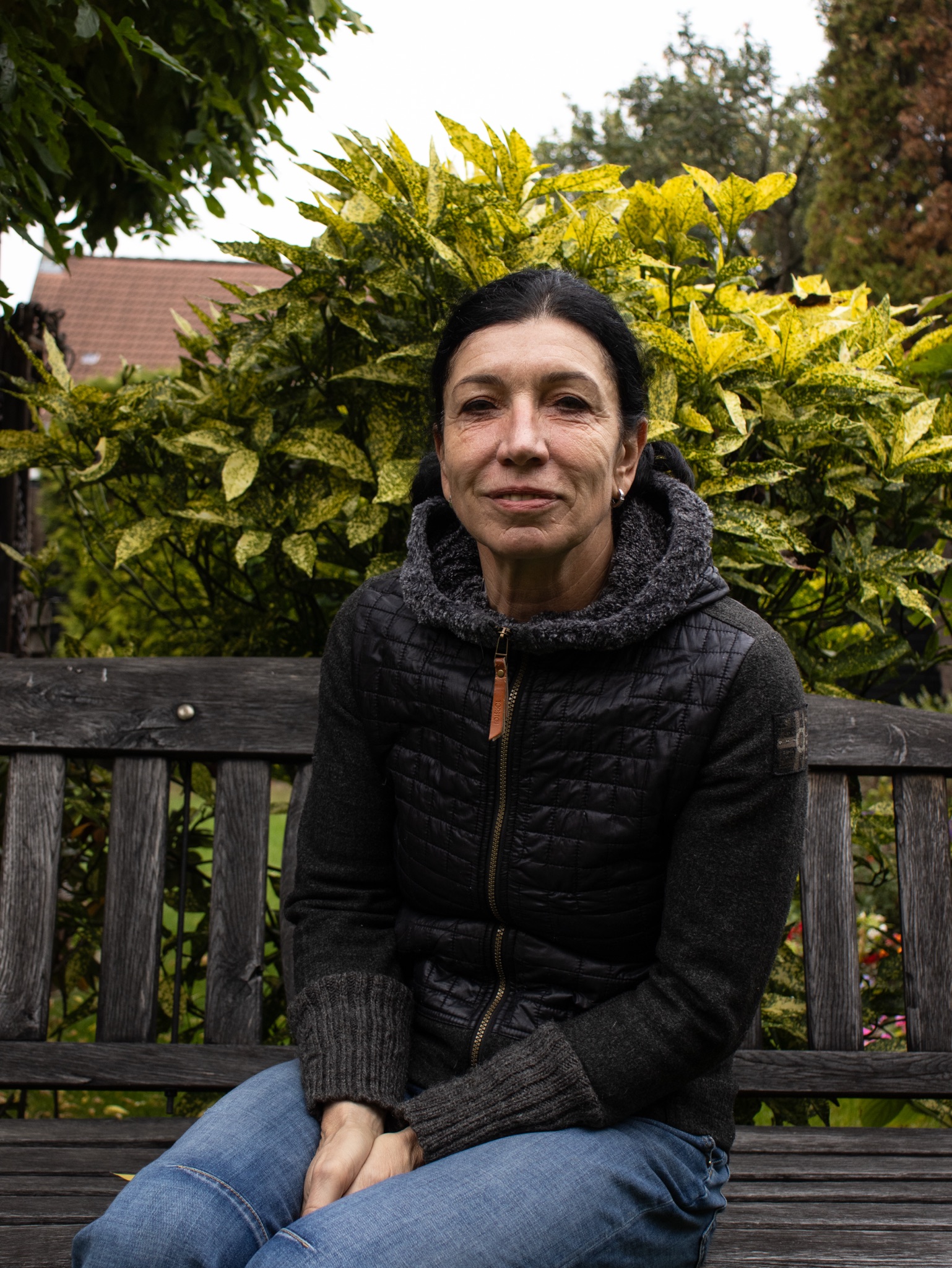
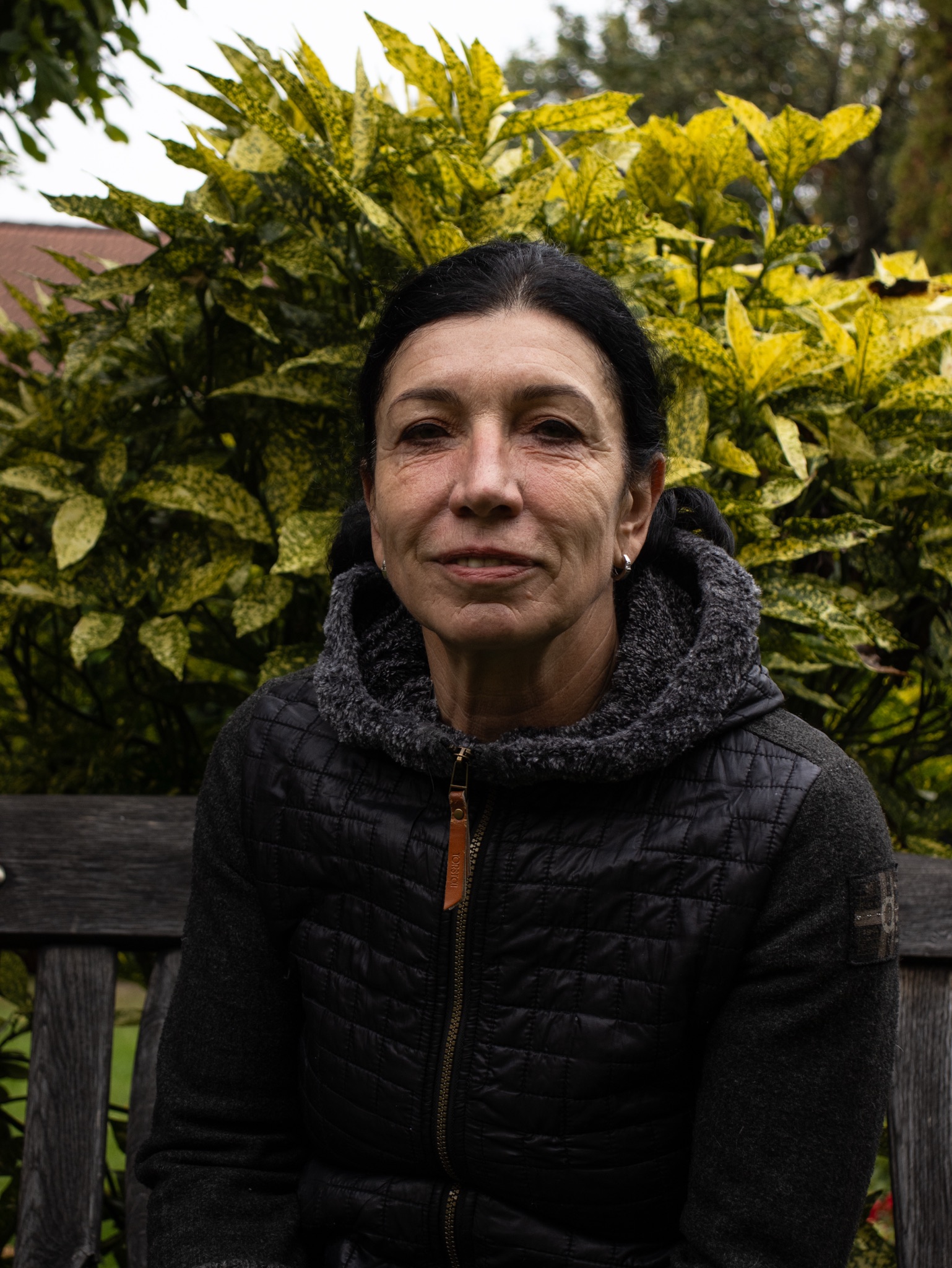

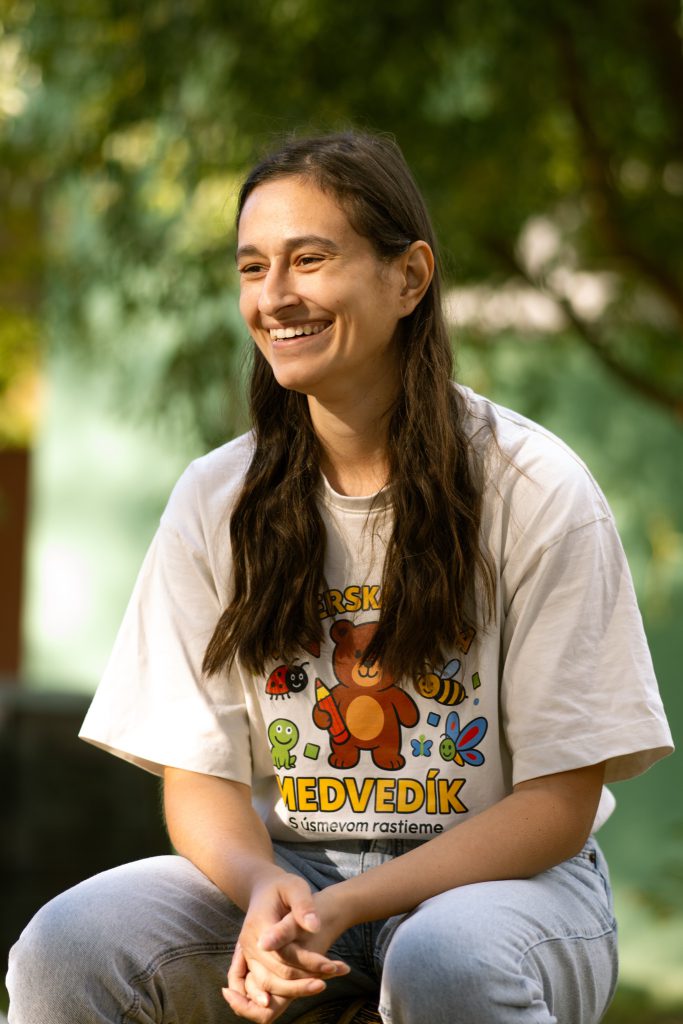
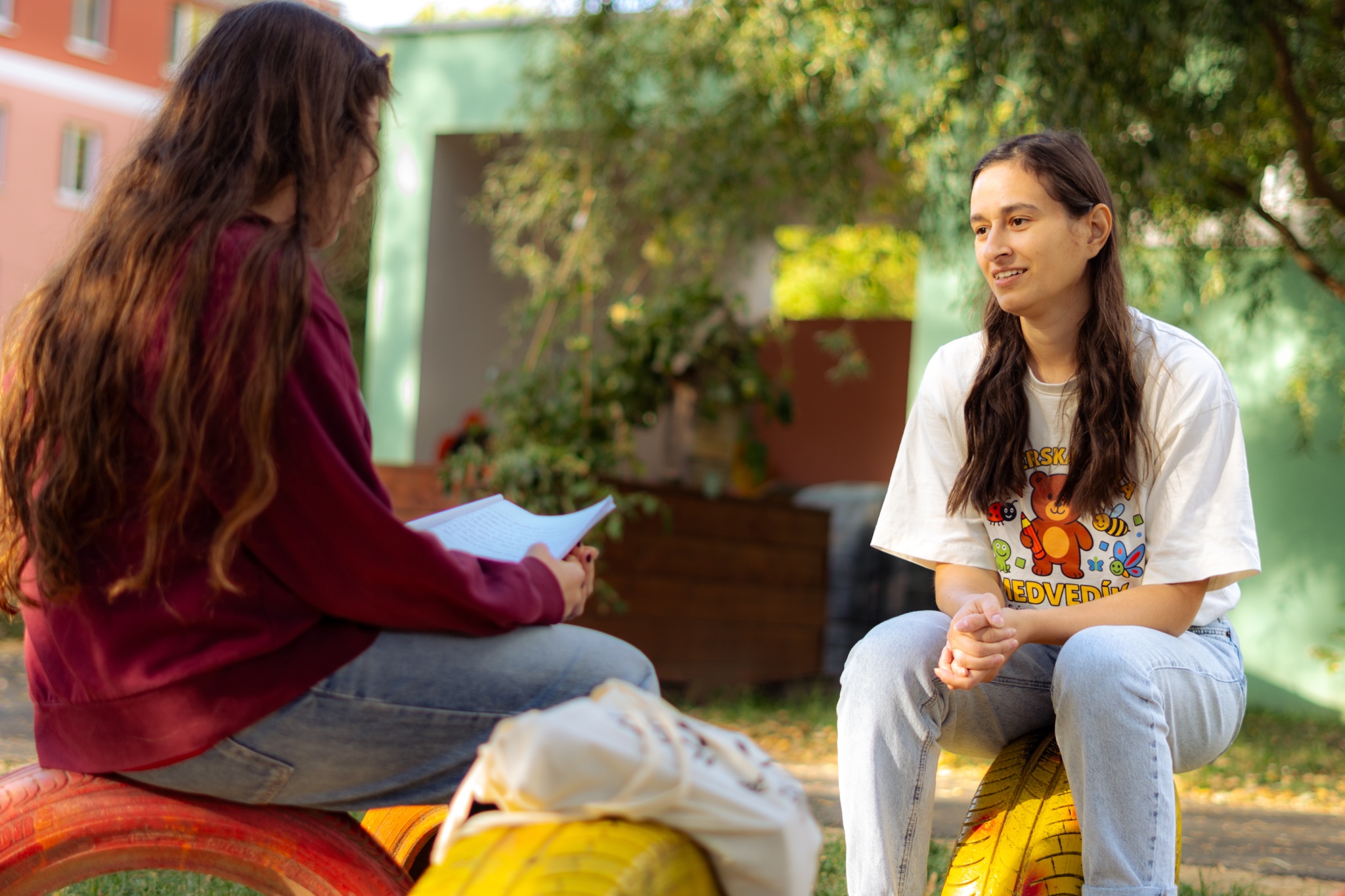
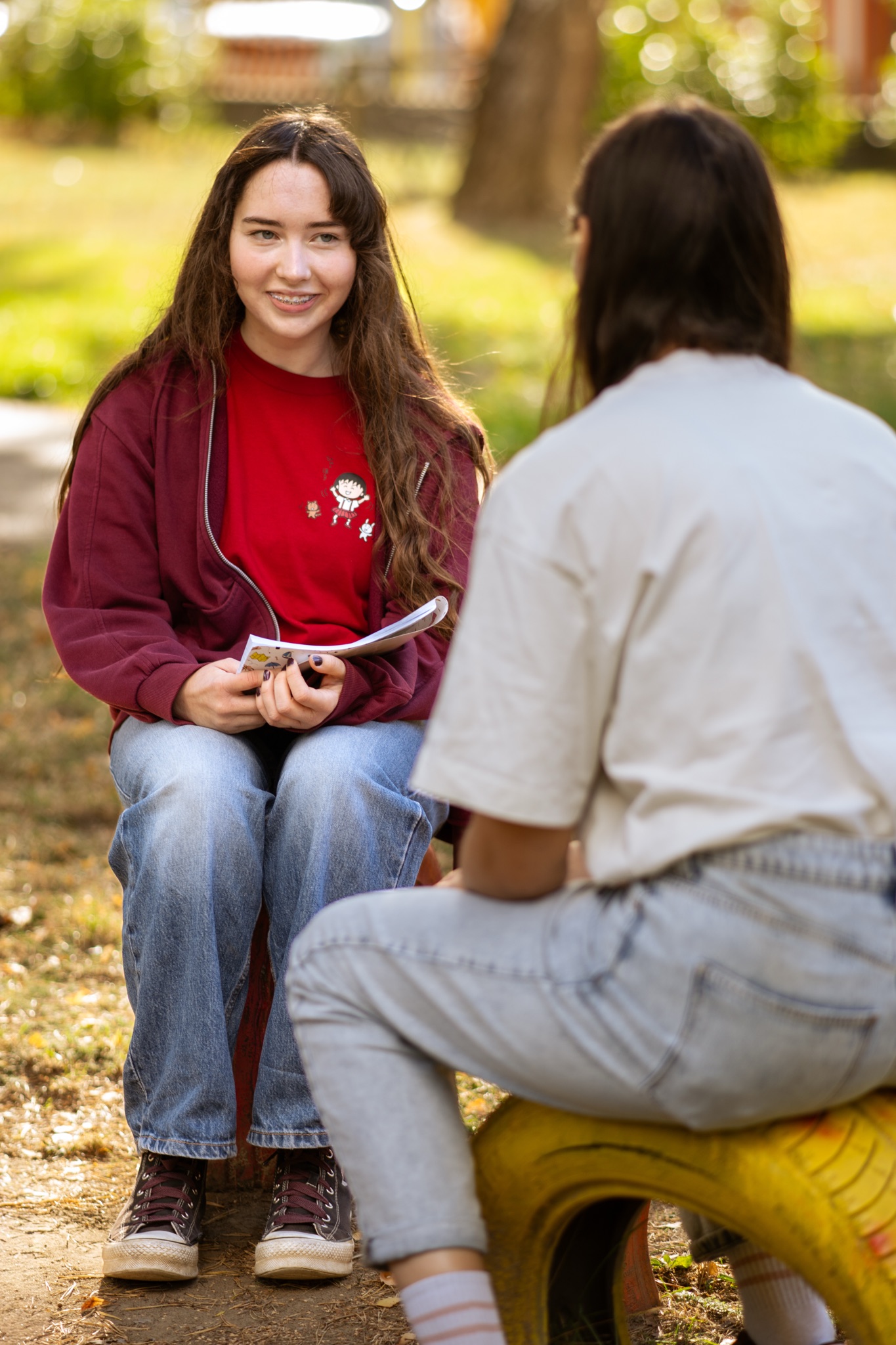
From confectioner to much-loved teacher
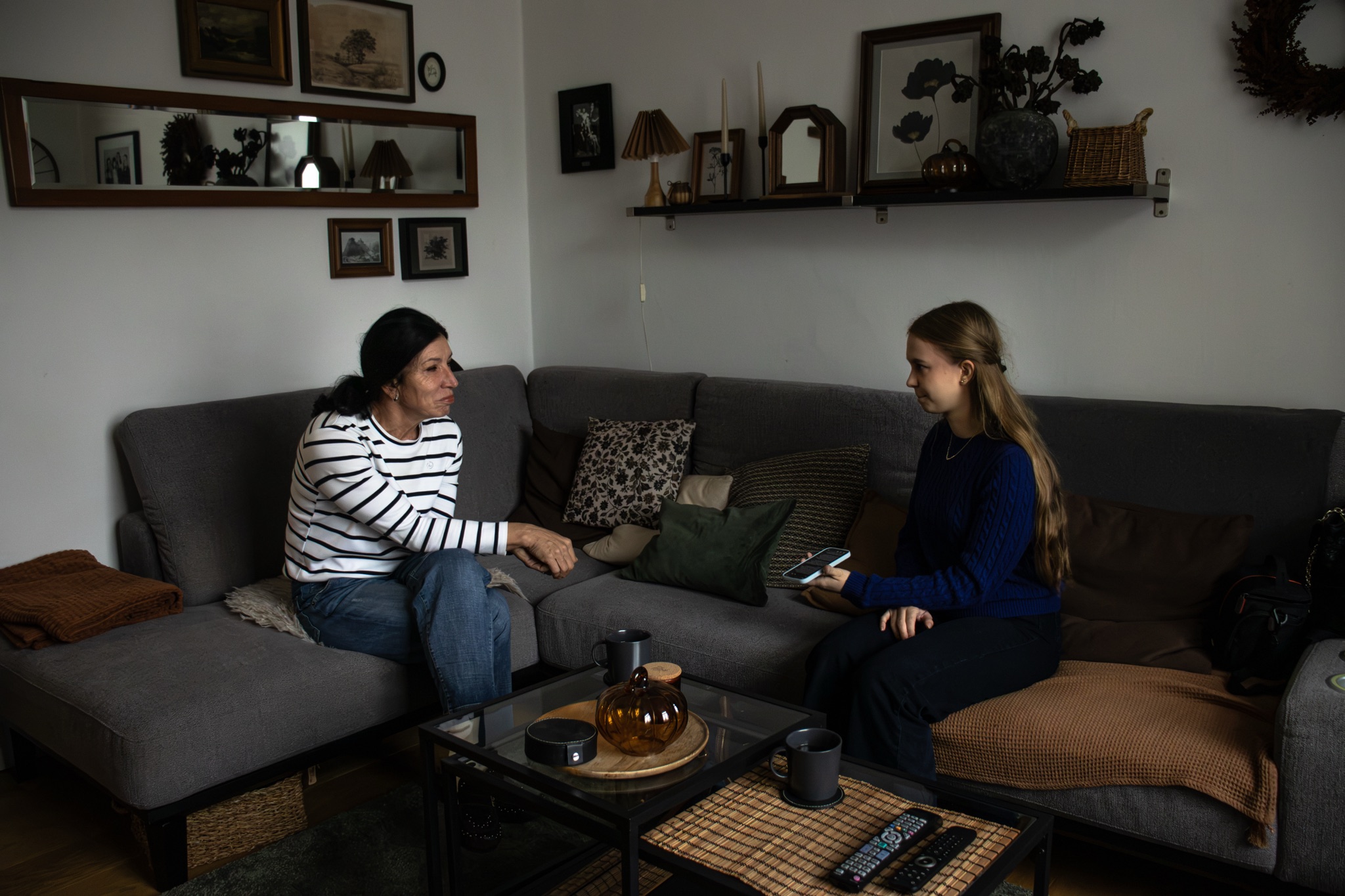
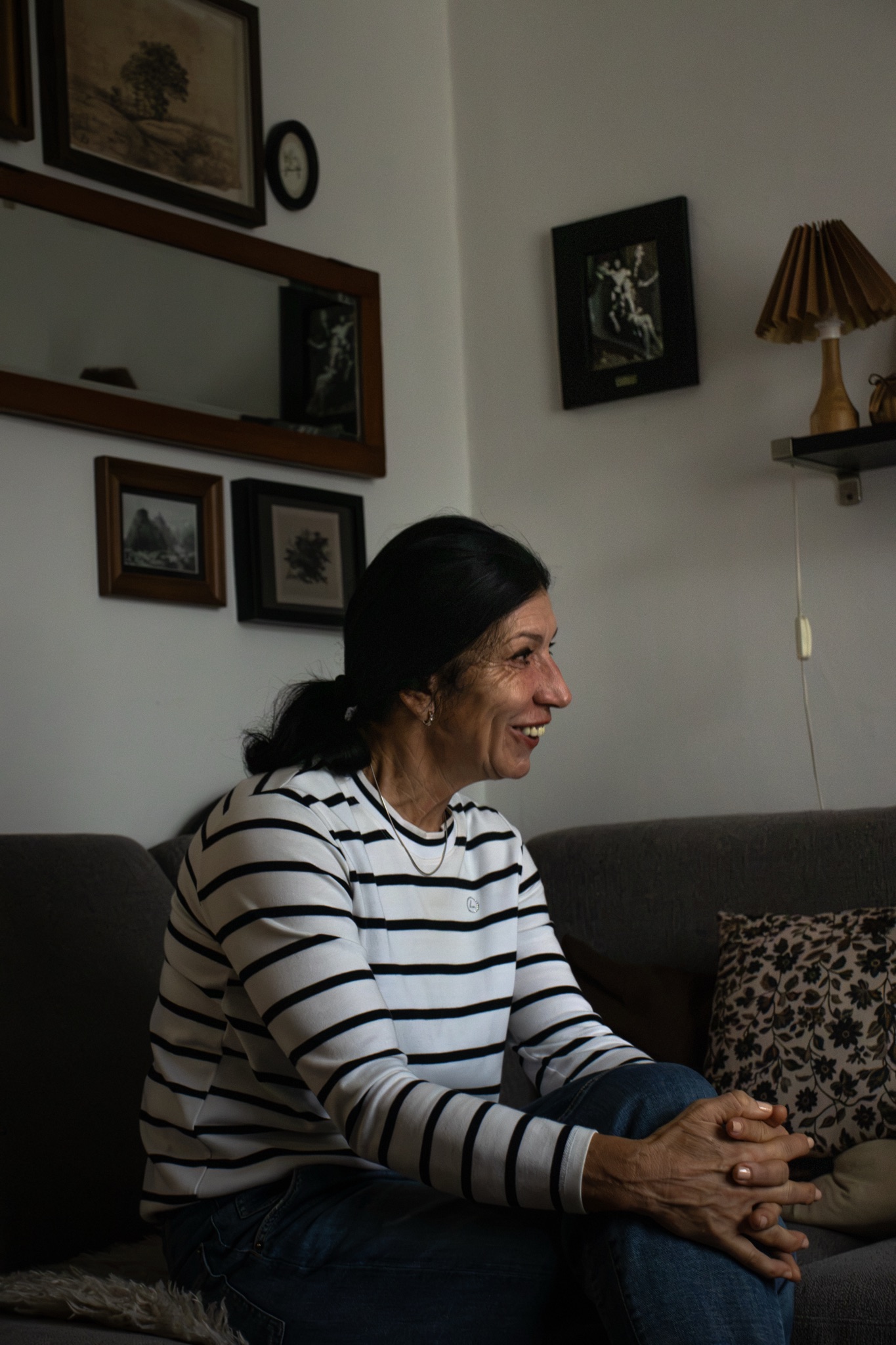
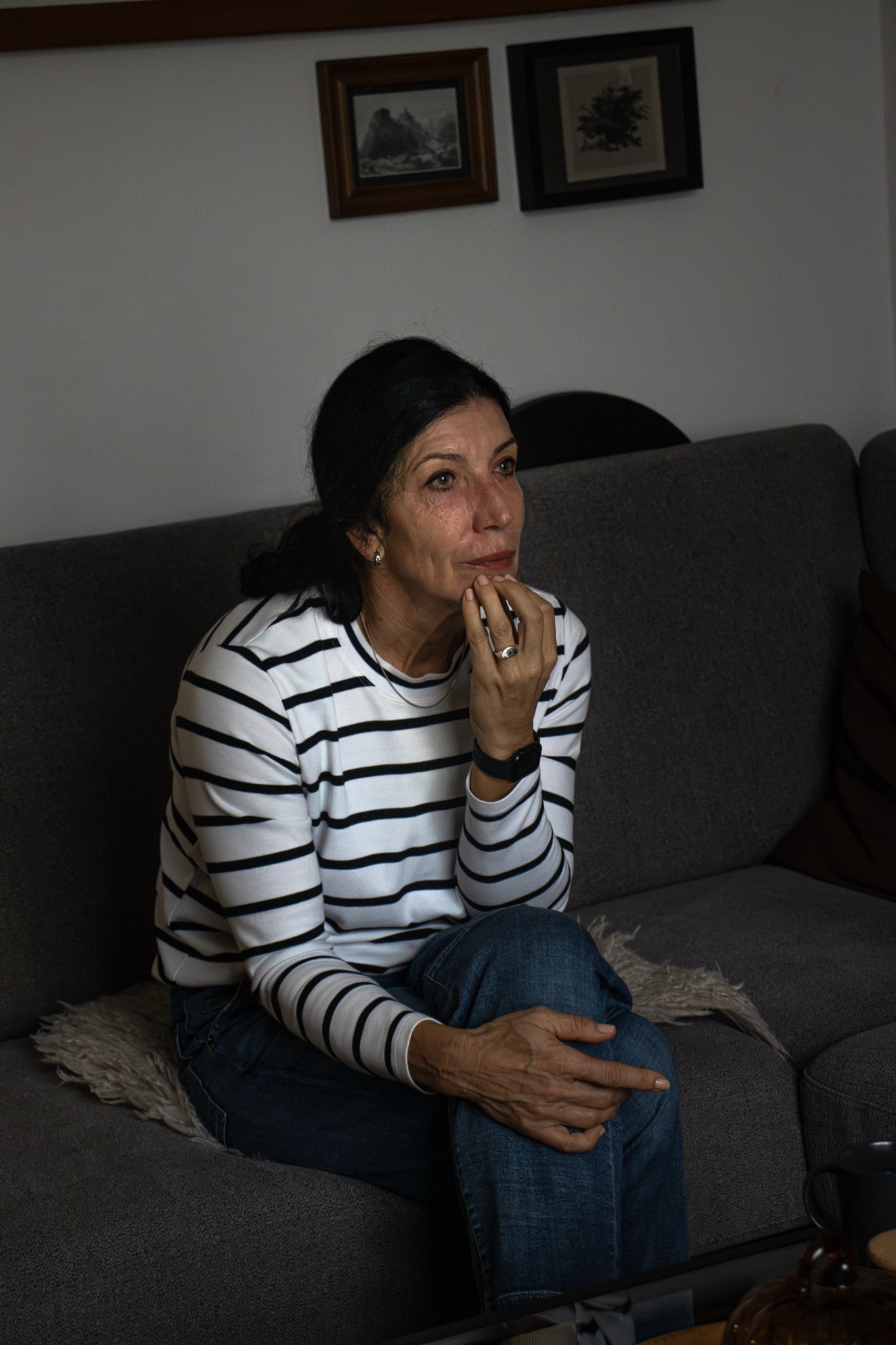
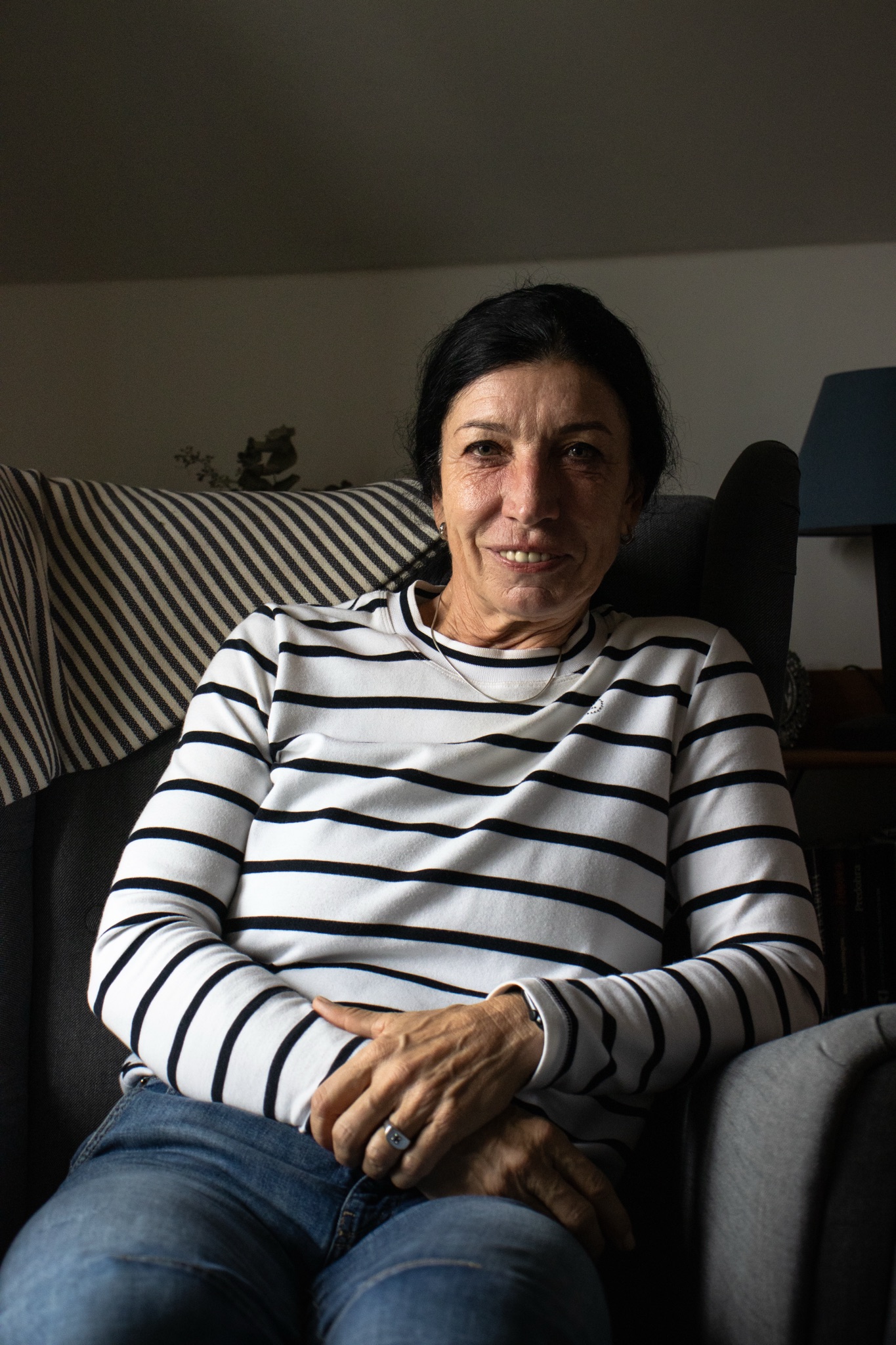
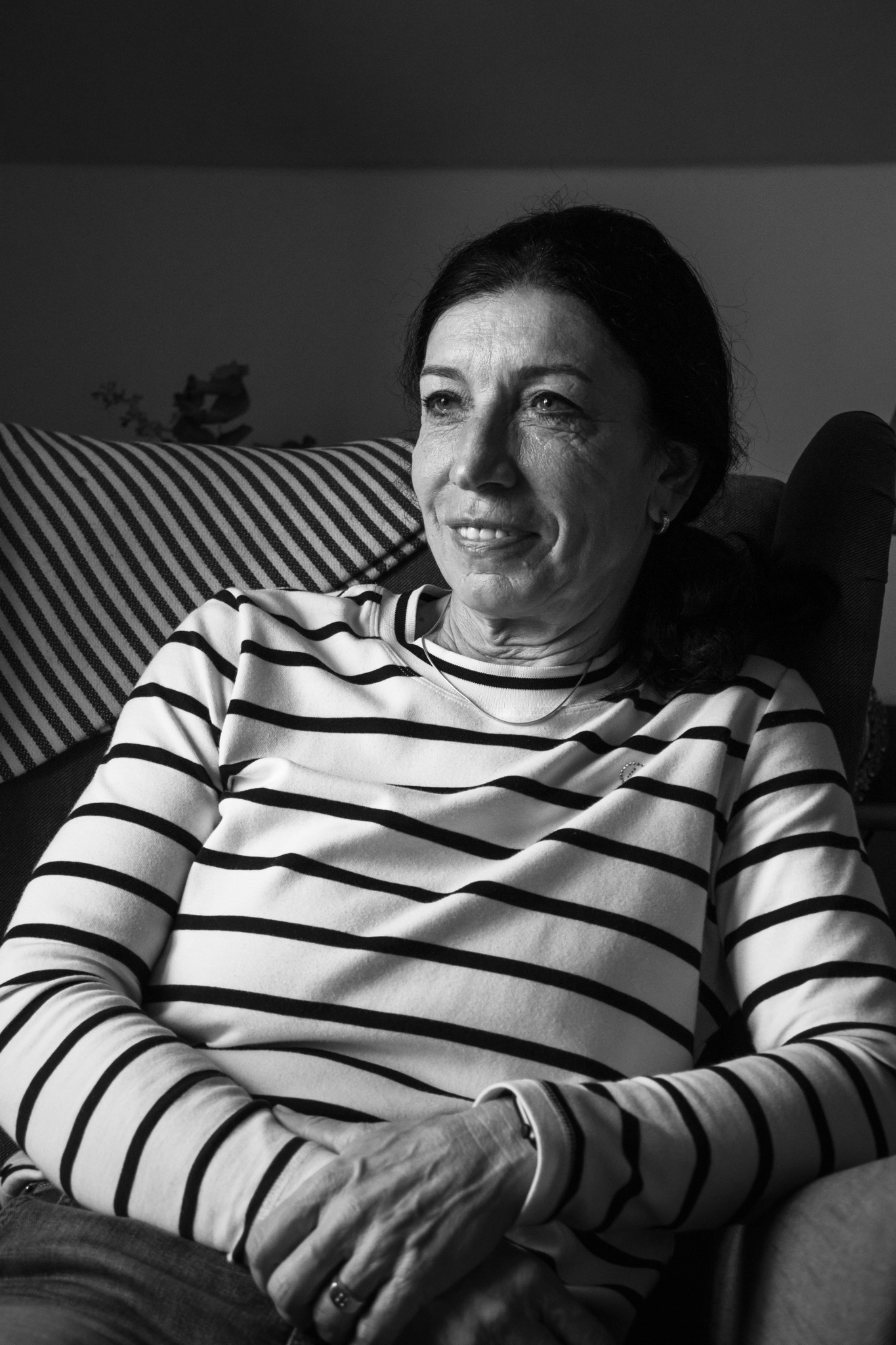
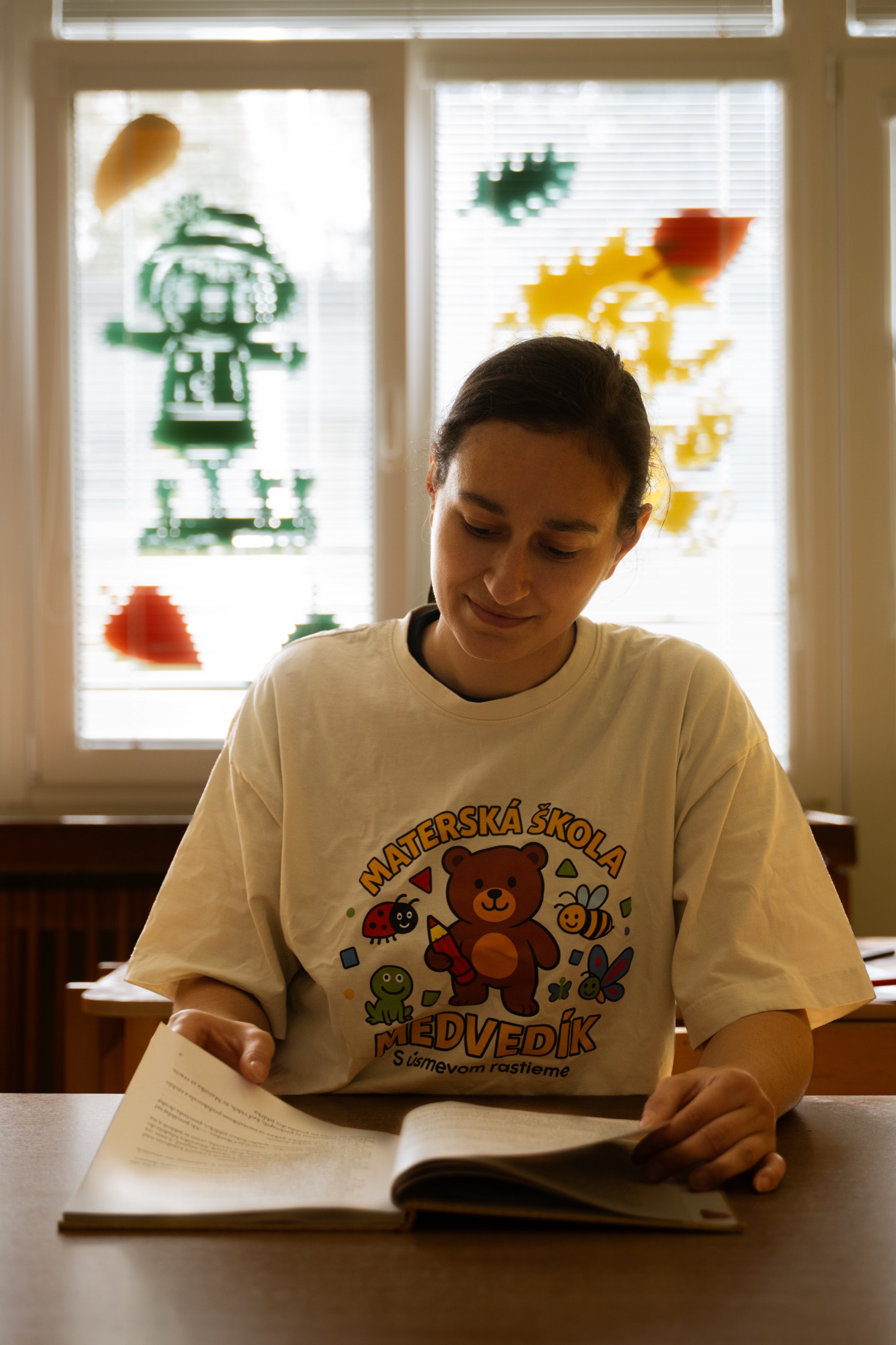
We stepped into the world of the nursery school – me and the two photographers. Despite the slightly chilly weather, we decided to stay outdoors and settled ourselves on the tyres behind the nursery. And I launched straight into the interview with Bc. Klaudia Oravcová.
I chose you because you came across as really likeable in the interview you did with the European Capital of Culture, and I liked how much heart you put into your work. This option also caught my eye because I went to this nursery myself.
To start with, I wanted to ask you – since I know your original job was at a dairy – why did you choose it?
“I trained as a confectioner and baker at secondary school and I wanted to stay in that field, but when I started university, the chemistry was hard. I didn’t want my parents spending money on tutoring and so on. And above all, I didn’t know whether I’d find work in it. It was also hard because the lecturers at university were very strict, and I didn’t enjoy it. I took a year out from university, and during that year I looked around for where to go next. I’d always been drawn to teaching – I wanted to teach PE, too, but people talked me out of it. So in the end it came down to the little ones at nursery.”
Do you have any advice for someone who realises their job isn’t the right one for them?
“Where there’s a will, there’s a way. What I say is, the main thing is to try. Even if you don’t enjoy the next thing either, you can always change it again – you just have to make a start. If the will isn’t there, you need to move on. Even if you’re scared of a particular subject, there’s no need to be afraid – you have to give it a go and be determined.”
The nomination letter from the parents of one of the children mentioned that you organise all sorts of performances. How do you motivate the children to take part?
“I don’t think I have any special kind of motivation, really. I just keep an eye on whether the kids are enjoying it. We’re a nursery that also focuses on folk traditions, and we mainly try to bring folk songs into everything we do. I’ve noticed that even when I pull out a song that isn’t a folk song – something a bit more modern – they enjoy it, but sometimes they forget it sooner. The folk songs, though, they hold on to. As soon as I tell them the title, they remember the words straight away and off they go. I could see in their eyes and in how they approached the little shows for parents that they enjoyed it. We’d also go through the songs together, and when there was some old folk word they didn’t understand, I’d ask them what it might mean, and then they started asking me about words too. And when they got it wrong, I’d steer them towards the right meaning.”
Which of the events you plan is your favourite?
“From last year, when I had the pre-schoolers, all the events were lovely. But I think the one I liked best was putting up the maypole. Everyone was dressed in folk costume, we went round and round the maypole singing songs. Then the children did a short sketch by the nursery. They really enjoyed it – probably most of all because there were several changes of scene and they weren’t stuck in one place. It was the first time I’d rehearsed a sketch like that with pre-schoolers, and with a colleague too. I have to say we both helped each other out, and it wouldn’t have worked without that. So it’s all about helping each other, and then the kids will enjoy it more as well.”
I wanted to ask whether lunch is still wheeled into the middle of the room on a trolley and the children line up in front of it, like when I came here.
“Yes, that’s right, it hasn’t changed. We still serve the littlest ones ourselves, because they’re only just getting used to nursery, but gradually, as they get older, we try to steer them more towards doing things for themselves. But if someone’s struggling, we help, of course. But yes, that’s how it is: the trolley comes in, we eat, and then the children wheel the trolley away. We don’t have room for a kitchen here. The trolleys might even be the same ones.”
What’s your favourite spread at nursery?
“Oh, my favourite spread – have a guess… I’ve got a sweet tooth.”
I don’t remember them much – I just know there used to be a fish one, and I didn’t like it, and then I got used to it.
“We haven’t had the fish one for ages. It’s mostly oniony ones now – I don’t like those either – but my favourite is the chocolate one. Though we don’t get that very often either. When there’s the pumpkin festival, the parents ask for the recipes: the chocolate one, the carrot one, the spinach one – and they’re all delicious!”
Now I’ll stray a little from nursery. Are there any books you love most and would recommend from your favourite genres?
“Phew. Couldn’t you have asked me something easier? Well, you should have asked me that yesterday. At the moment I’m reading Nad Oázou svetla a tmy. I really love the story, the landscape… You’ve honestly caught me off guard. My favourite fantasy series is Throne of Glass. I’ve read fewer detective novels, but my favourite there is The Whisperer. For romance, my favourite author right now is Ali Hazelwood. She wrote Not in Love and The Love Hypothesis, and so on. I’ve read an awful lot, you can’t just pick like that! But thank you. And about nature, my favourite is The Education of Little Tree. It’s about a boy who was Native American. He grows up with his grandparents, and there’s this connection with nature, this sense that we mustn’t harm it.”
And did you have a teacher at nursery who inspired you to go into this profession?
“The teachers were great. I have to say I haven’t got a single bad word to say about them. As for the eating, they mainly just wanted to make sure we weren’t hungry. My teacher is actually my neighbour, too, and I can say she did inspire me. She had such a friendly, really approachable manner. Later, when I was already at secondary school, I even went round to give her my graduation announcement card. I have really fond memories of nursery.”
The whole interview was lovely and cheerful, if fairly informal on the whole. Our teacher had to get back to her “kiddies”, so we said our goodbyes.
“So when are we meeting again, eh? Let’s get our diaries out…”
Interview by Amália Griffin, student at Ľudovít Štúr Grammar School in Trenčín
Photos by Adrian Weiss, student at the School of Applied Arts in Trenčín
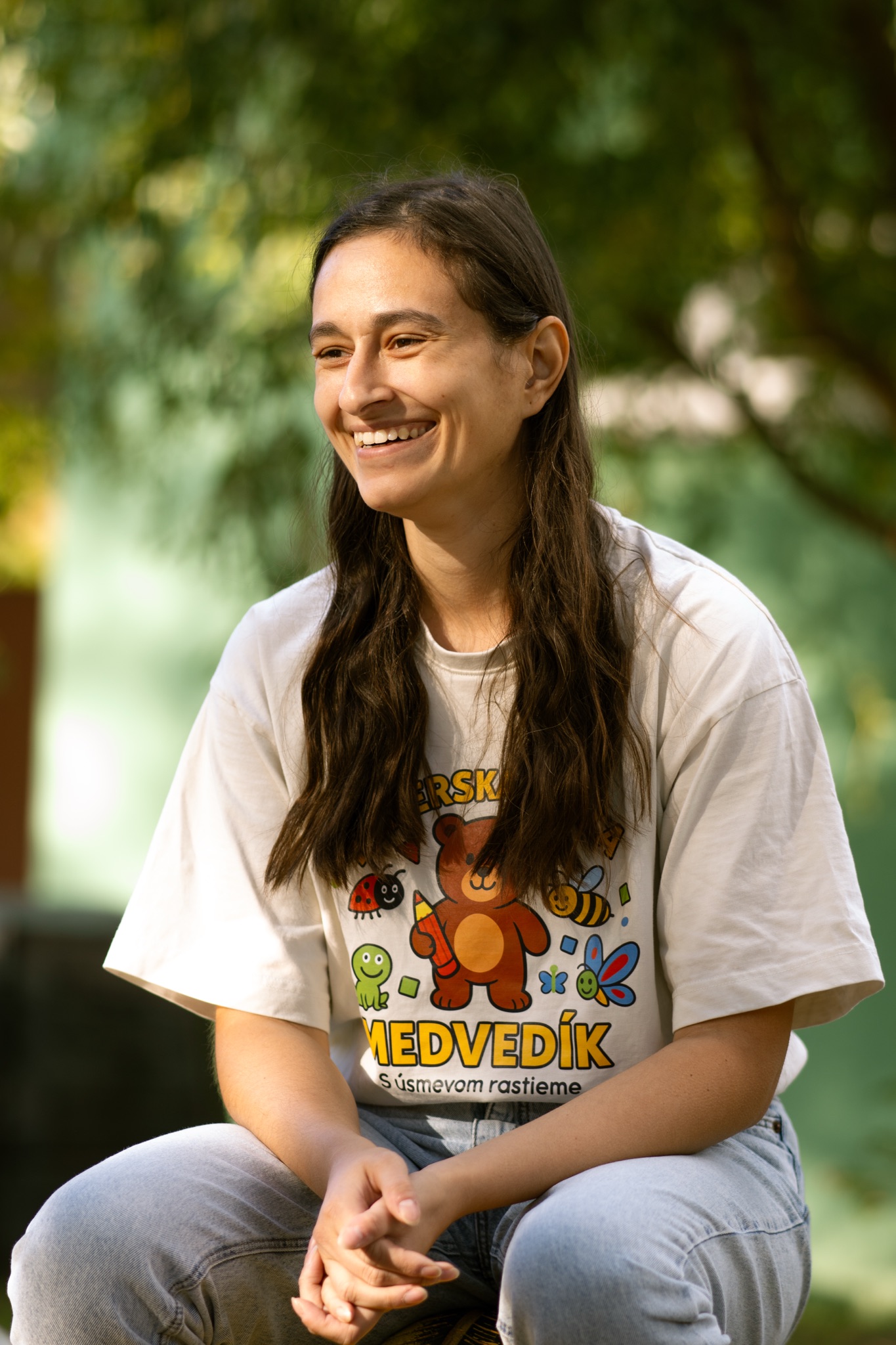
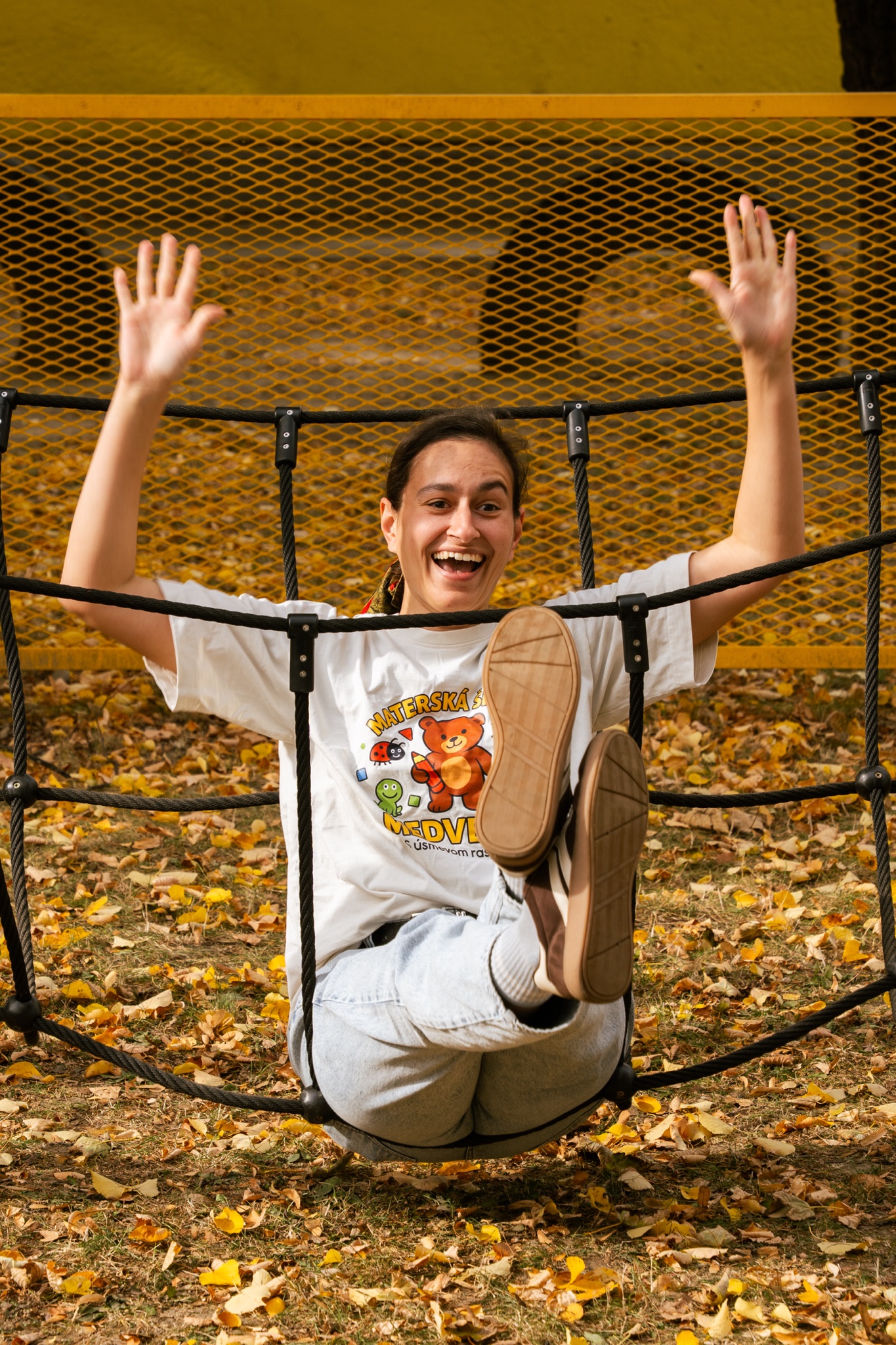
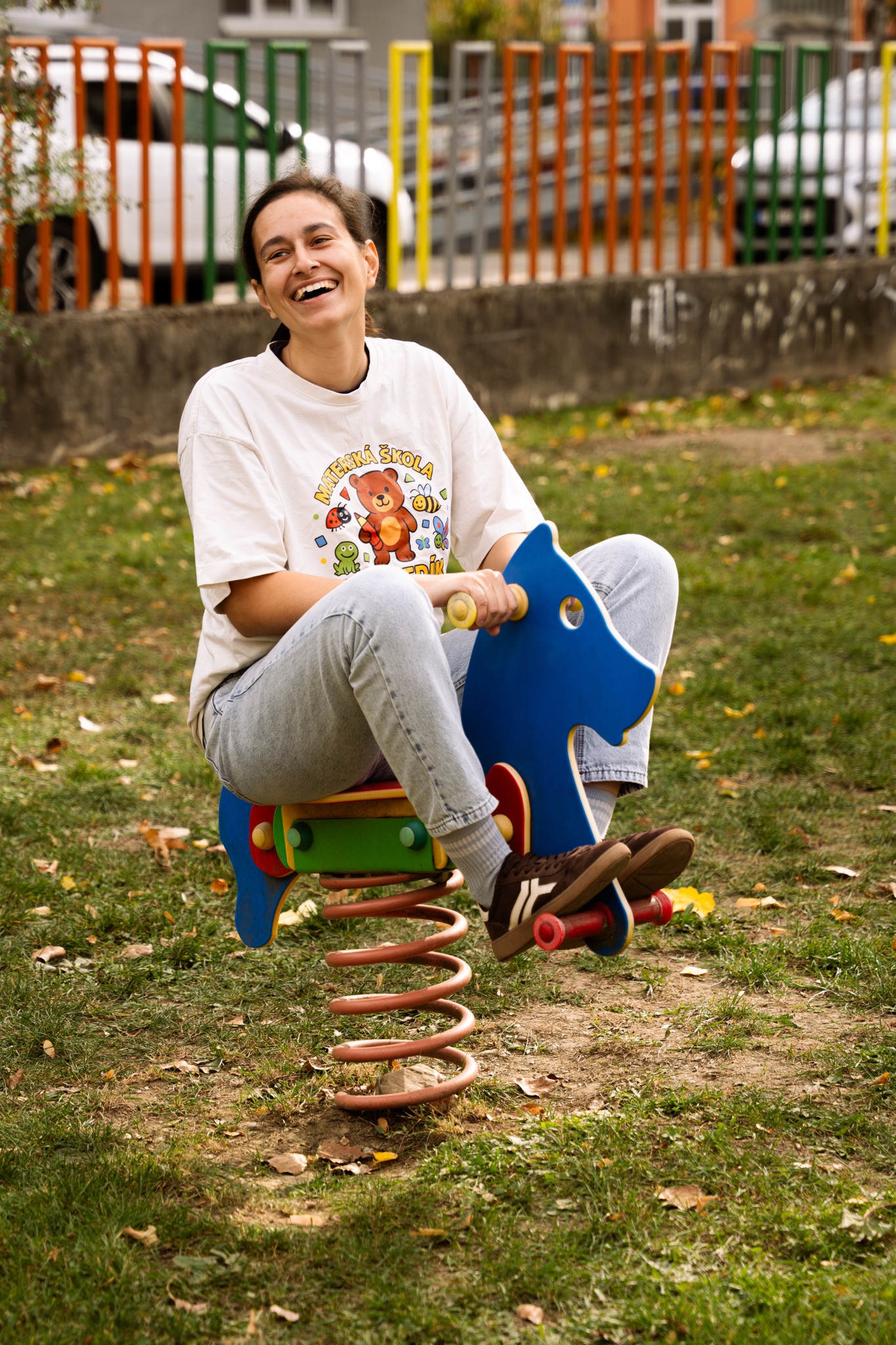
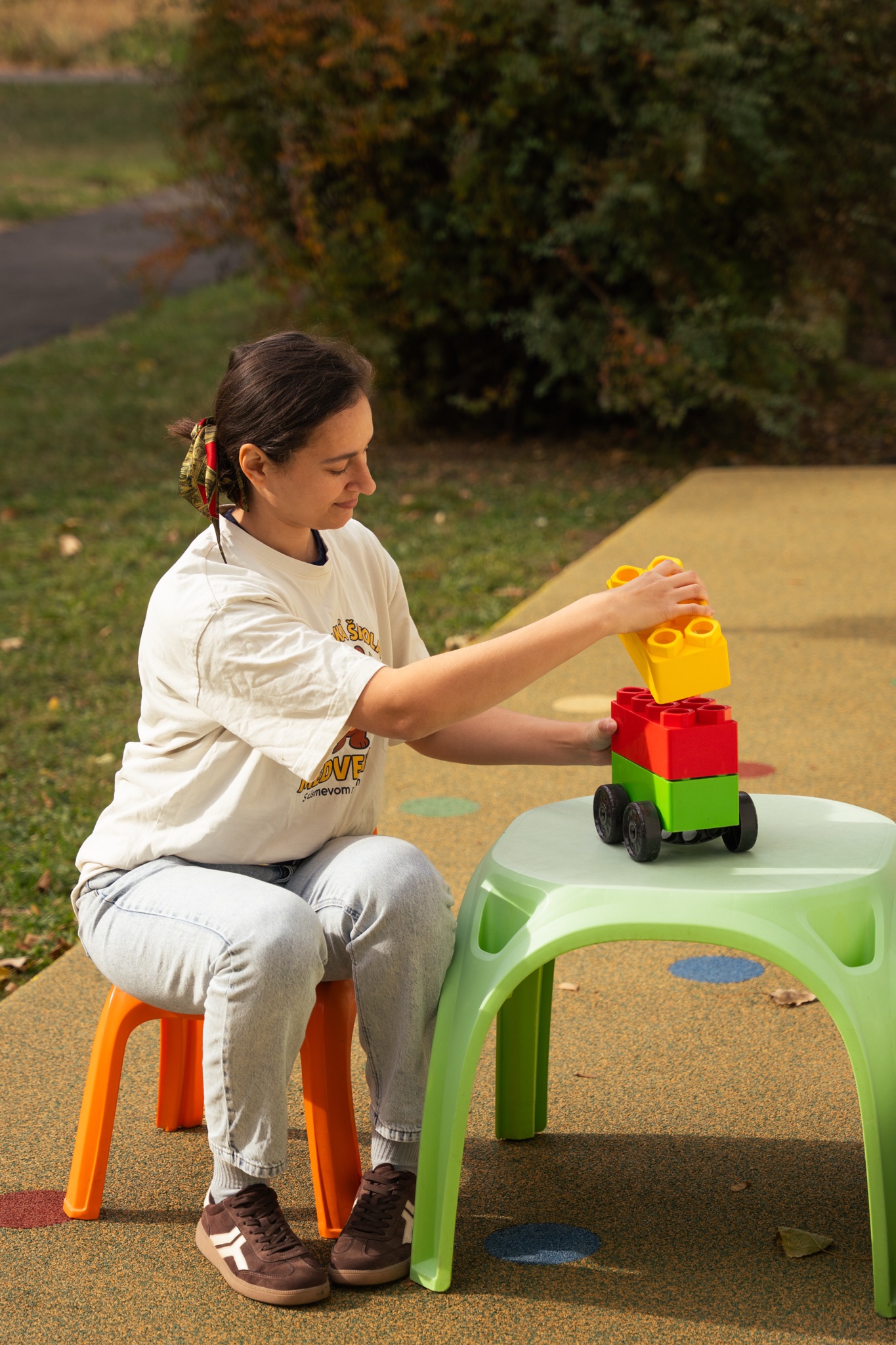
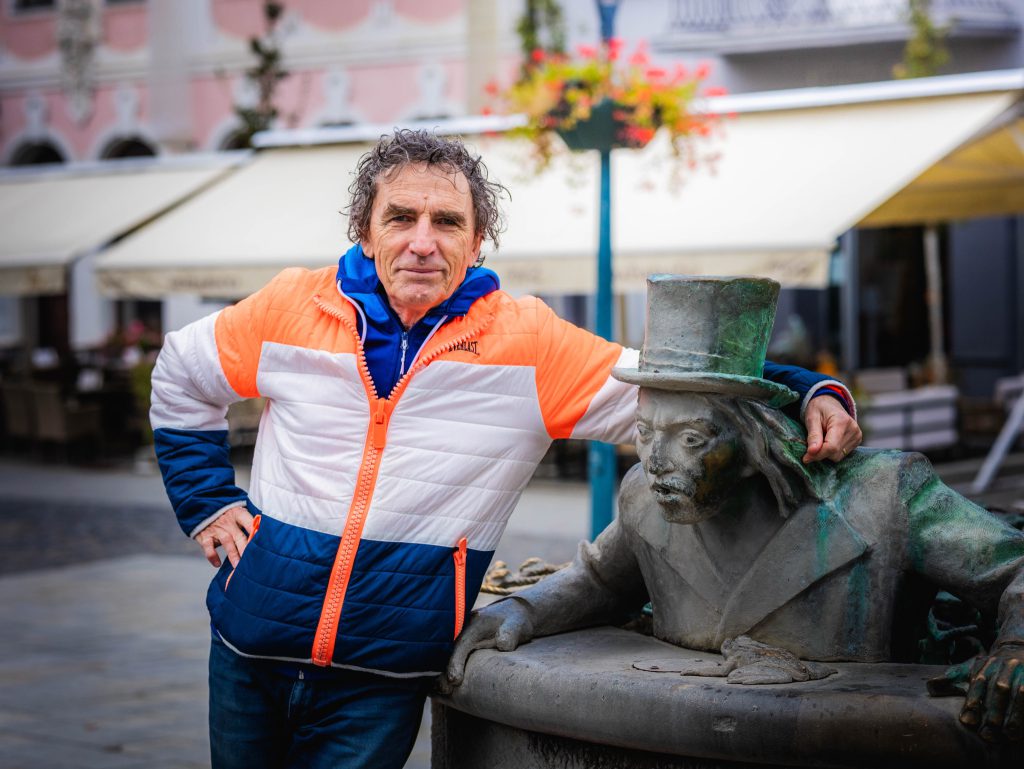
BEHIND THE MASK OF THE (PANTO)MIME
Imagine being able to make 10,000 people laugh without saying a single word. For Vladimír Kulíšek, that’s certainly no problem at all. “Even if a rhino saw my show, it would have to understand it!” That, word for word, is his theatrical motto. Through mime he can put a smile on the faces of audiences at home and abroad – but above all in places that need a little more joy in their lives. Yet there’s more than just humour hiding behind the mime’s mask. A former professional soldier, a keen traveller and a distinctive Trenčín personality, he tells us a story full of unexpected twists, moving encounters and experiences. How did his art cause “the first traffic jam in Trenčín”? How does a stage in China and Vietnam differ from ours? Vladimír Kulíšek told us that, too.
Most people associate your name with mime. But what would come to mind if you had to introduce yourself without mentioning the theatre?
I enjoy everything I do. In a way that’s a problem, because I really do a lot – whether it’s non-profit work for people with disabilities or the cultural events I organise for the city of Trenčín. It’s hard to pick out any one thing from all of that. One of the most important things for me is meditation. It helps me cope with everything I’m involved in.
Have you ever watched people and caught yourself thinking, “that would make a great mime”? Is that how a new act of yours comes about?
Of course, actors usually draw on the world around them too, but that’s not quite the case with me. I’m more the type of artist who sits down and writes. I call it “art while you wait”. It’s strange, but I usually create with a specific purpose. My colleague and I used to put a planned programme up on our website, but we only actually prepared it once someone had really booked it.
Originally you were a professional soldier. When did you first feel that life was pulling you in a completely different direction, and that you had to overcome something fundamental within yourself?
I made up my mind after five months at university. I realised it wasn’t the job for me. Even so, I finished my studies at the military academy and found my place in the military, where I did very well. Even at secondary school I was into the arts – I sang, danced, recited poetry, I even played the violin. At university I started doing mime, usually performing it for my classmates. The revolution saved me. I told myself: “If I want to get out of the army, it’s now or never”.
If you met your younger self in uniform today, what would you tell him?
Meditation has taught me that the past is dust. Let’s not look back at what’s been. Military school strengthened my sense of discipline and duty. In life everything is as it should be, and that’s exactly what’s reflected in my own life and career.
10,000 spectators is a huge audience. How did you feel just before your performance in China, and what happened during that unforgettable show?
I was peeking out from behind the curtain into the auditorium, where new spectators kept on arriving. They were Chinese soldiers. I’d guessed it would be a big number, but I certainly hadn’t expected an audience that size. Later I found out there really were 10,000 people there, which you could actually count, because they were lined up in perfectly neat rows. I stepped out onto the stage, blew a whistle and raised my arms. Suddenly, at my signal, that enormous mass of people all stood up at once and then immediately sat back down. It was an almost eerie feeling when I realised that the people in the back rows couldn’t even see me properly. It was a perfect chain reaction. But I was in my own world, where I forget about stress and responsibility. The adrenaline gave me courage, and I performed the show just as if I were playing to a smaller audience.
Does the saying “each to their own” also hold true when you perform in different countries around the world? Have you ever had to adapt your art to the norms and sense of humour of the country you were performing in?
When I give talks to young people, I stress two things: “travel and create”. I’ve travelled the whole world and I recommend the same to everyone. My performances have taken me all over Asia, too. There I noticed a big difference in temperament. But globally it’s true that everyone perceives humour the same way. It’s essentially a language we all share. Where I did feel a difference was when I was managing a dance and acrobatics troupe in China. When I was sitting on the plane home after six weeks, I said to myself: “If I’ve survived this, I can survive anything!” The tank for our acrobats’ water show started cracking the very moment they stepped into it. Every single day of that tour brought huge shocks.
What has life taught you that no art school can teach?
Experience has taught me to express an emotion so that the audience really lives through it. Above all, an actor on stage has to feel what he’s playing himself if he’s going to convince people.
Which show do you most enjoy coming back to?
My favourite is the show “Smetiak”. I don’t have to worry about a costume, because I play a homeless man in it. Of all of them, this show has the most depth. We play it for everyone – children and adults alike. Physically, it’s the most demanding one for me. Right now I have to focus on November, because I’ll be performing it 17 times.
One of your best-known roles is Charlie Chaplin. What would he do in today’s world?
One of his films is called The Great Dictator. In it he criticised an undemocratic regime. Today he’d probably also speak out about the current social crisis through his art. But this theatrical genre is slowly dying out, and many young people don’t know it at all any more.
After all these years on stage, what can still surprise you?
Basically, nothing can really surprise me much any more. During my shows I call audience members up on stage. Each of them comes up with something new and brings a reaction onto the stage that I have to start improvising with. When I perform shows for hearing-impaired people with my foundation – Počuť srdcom – I have to tune in to a different kind of feedback. People also ask me what the difference is between a show for adults and one for children. I always answer: 10 minutes, which is simply what their shorter attention span takes off.
Have you ever had to slow down significantly in your life or career and give yourself time to recover?
If I didn’t look after all the cultural events I’ve been devoting myself to for all these long years, they would disappear. I try to make sure that art really goes on living in Trenčín. I once put together a talk called “Silence in My Work and in My Life”. I link meditation, as a “silent stilling”, with mime, which is known to be called “the silent art” too. For me, even my work is relaxation. I also like watching films, especially detective stories.
What led you to decide to devote time and energy to charity projects?
When I started performing professionally, benefit concerts were taking off. Hearing-impaired children went to them as well. Since they didn’t get much out of them, I decided to create a benefit concert for hearing-impaired children. As there was no internet back then, I looked up all the schools for the hearing-impaired in Slovakia, the Czech Republic and Austria in a directory and invited them to my show. I called up friends who did magic, dance and acrobatics, and organised the first benefit concert at the Dom armády in Trenčín. That’s when the story started going round that I’d caused the first traffic jam in Trenčín. In the end, that benefit concert was a great success.
Can humour help even in situations that can no longer be resolved? What did the children you visited during the Dr. Klaun project teach you?
The hardest performances are the ones where I can see the life fading from those children’s eyes. We get very kind feedback. One experience still resonates with me today. I played for a child who hadn’t spoken to anyone else for weeks. But I managed to bring a smile back to their face, and apparently they talked about the show for the whole of the following week. Humour works miracles.
Do you have any new projects planned for 2027?
We’re trying to find a new story for the Príbehy z Trenčína event and to put together the programme of classical music concerts for next year. Other than that, for now I just want to carry on doing what I love.
Thank you for your time. I wish you good health and lots of smiling faces in the audience.
Interview by Sofia Halásová, student at Ľudovít Štúr Grammar School in Trenčín
Photos by Matej Hamaj, student at the School of Applied Arts in Trenčín
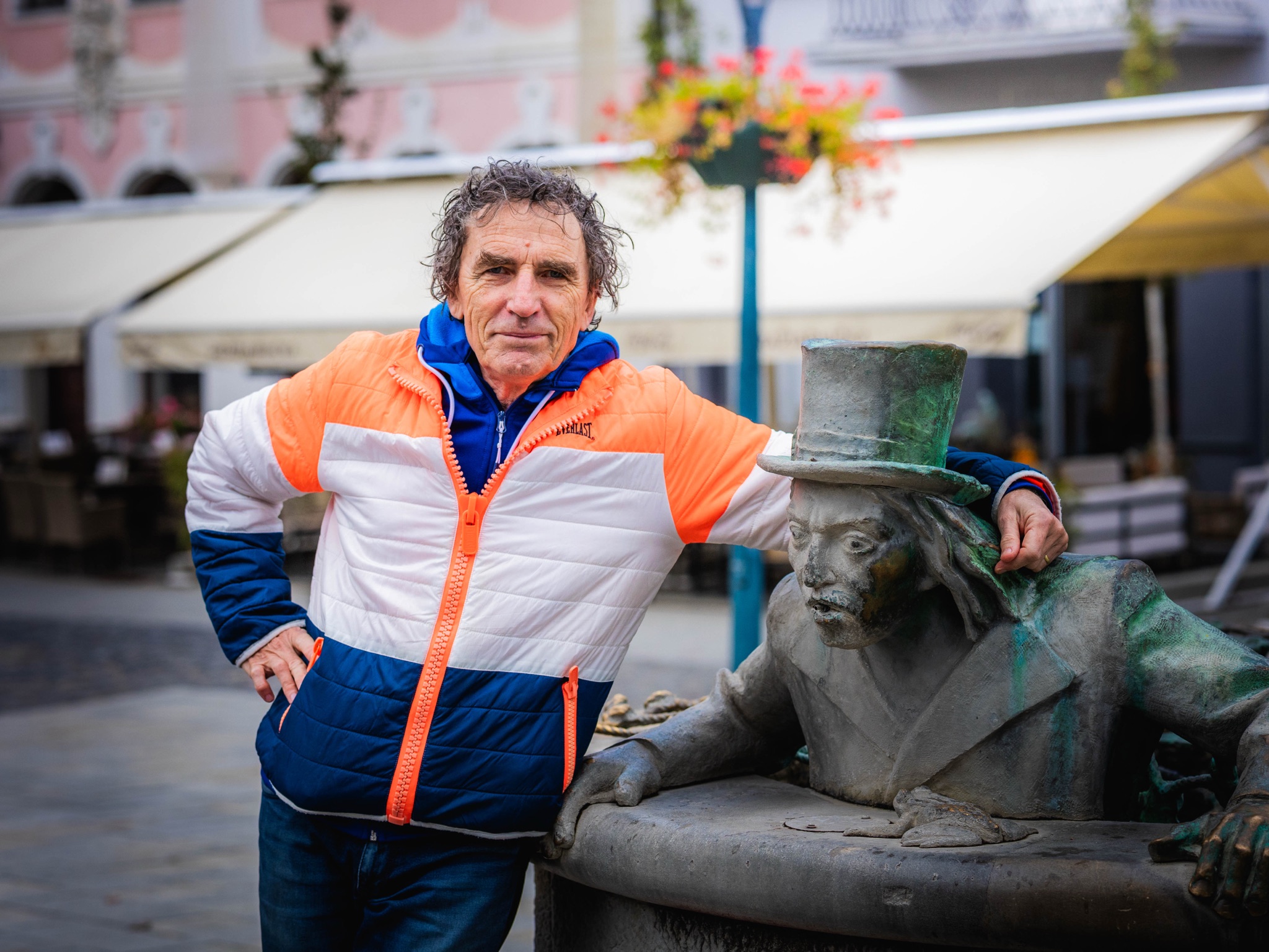
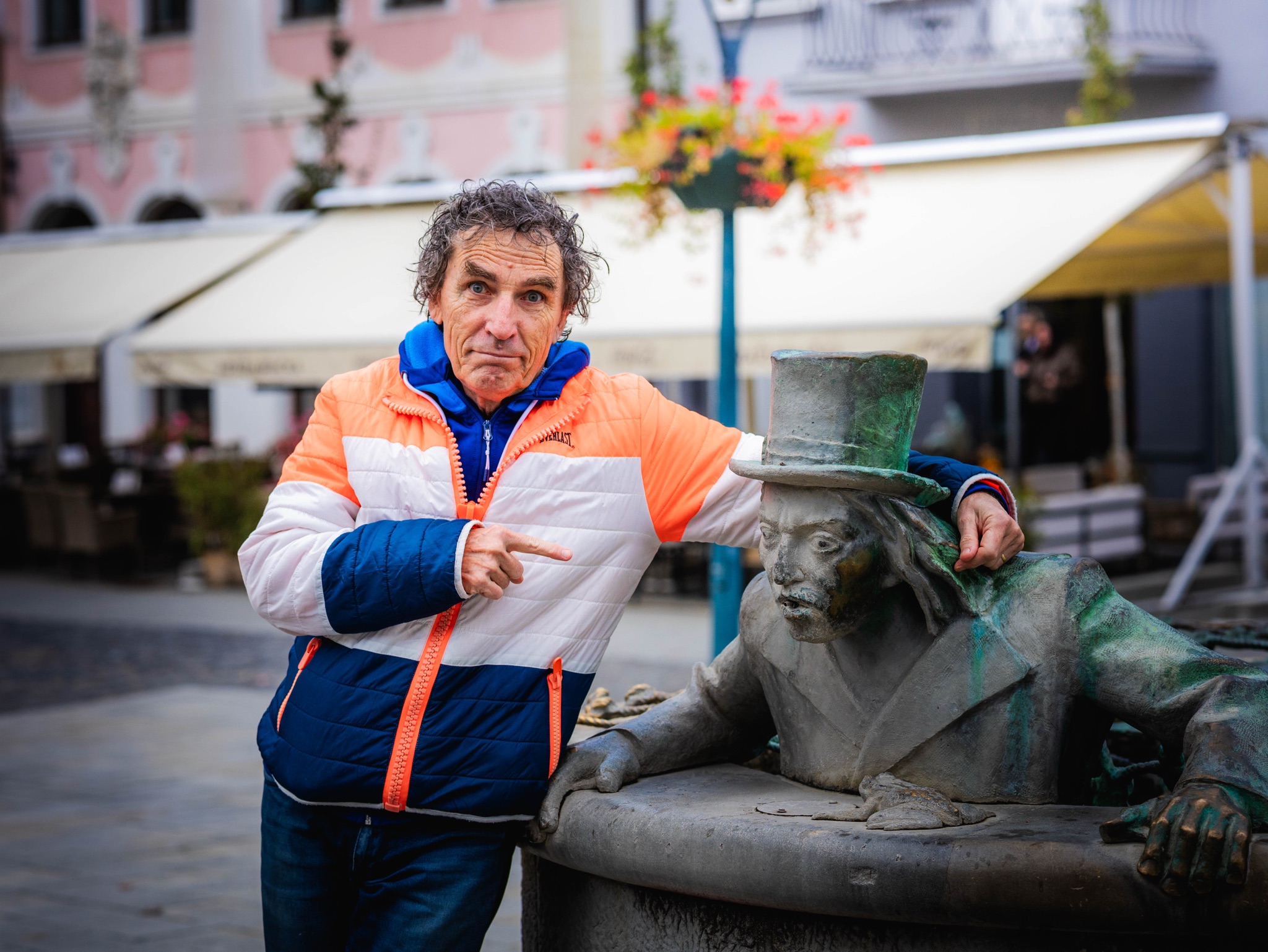
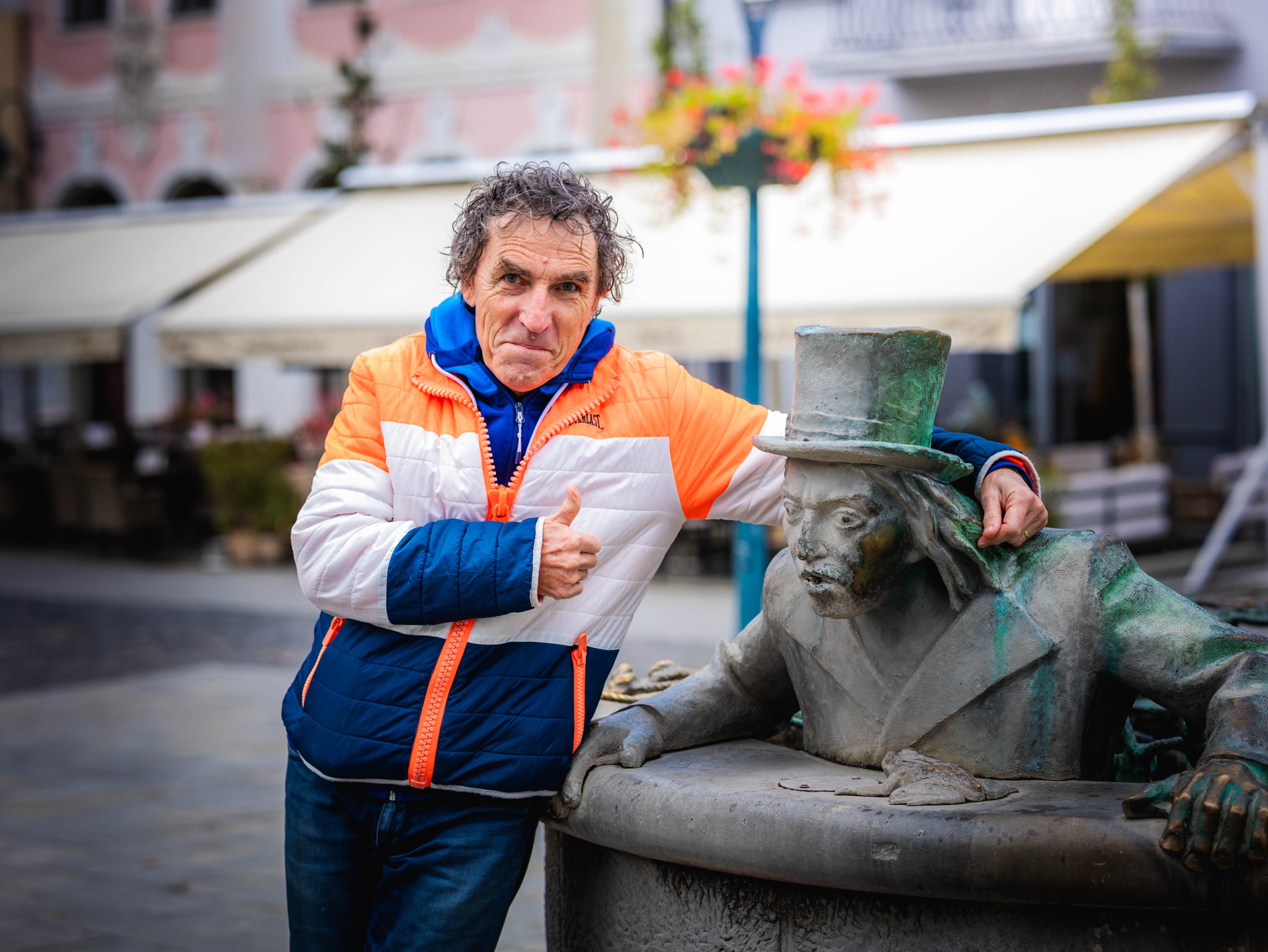
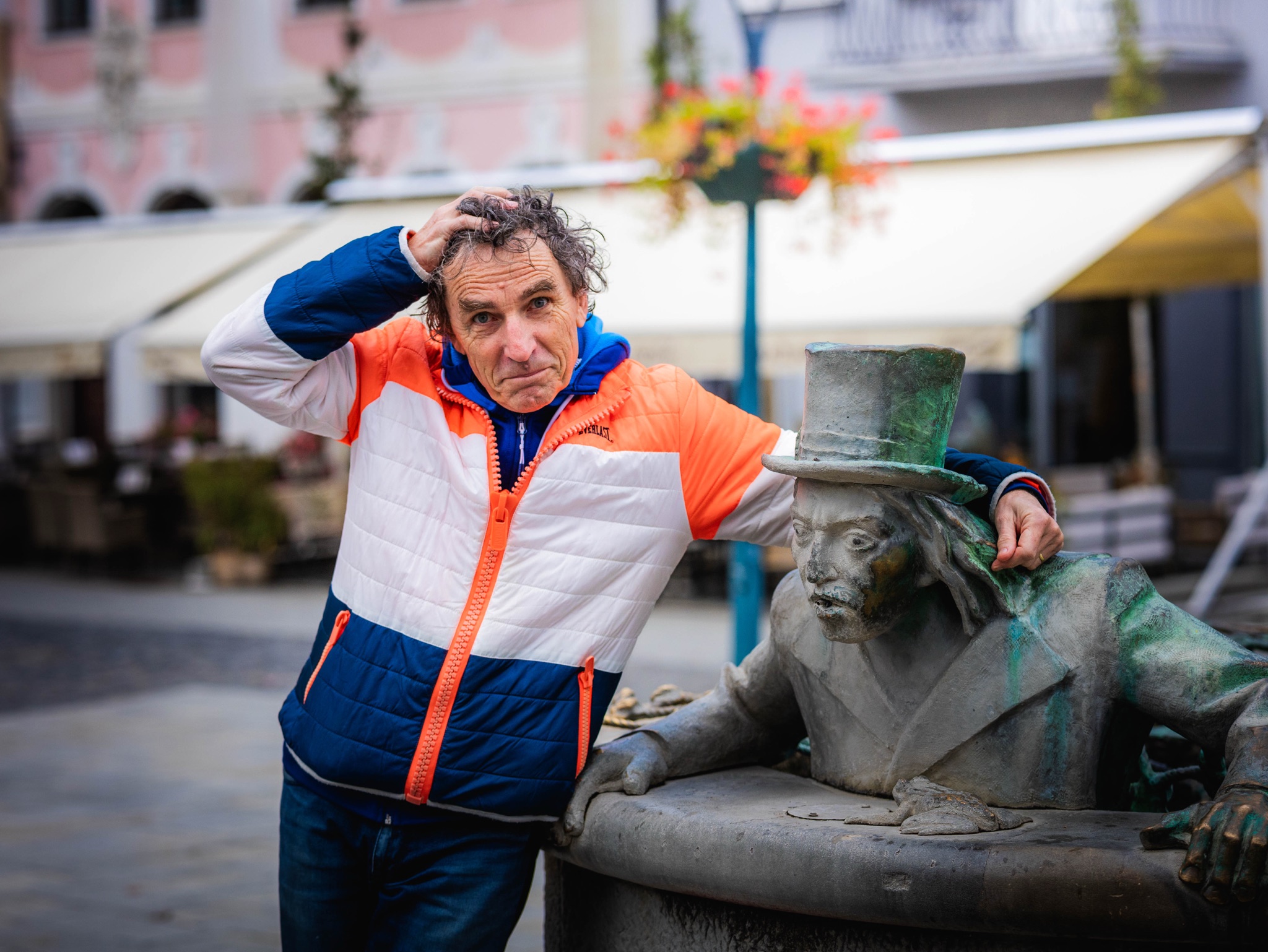
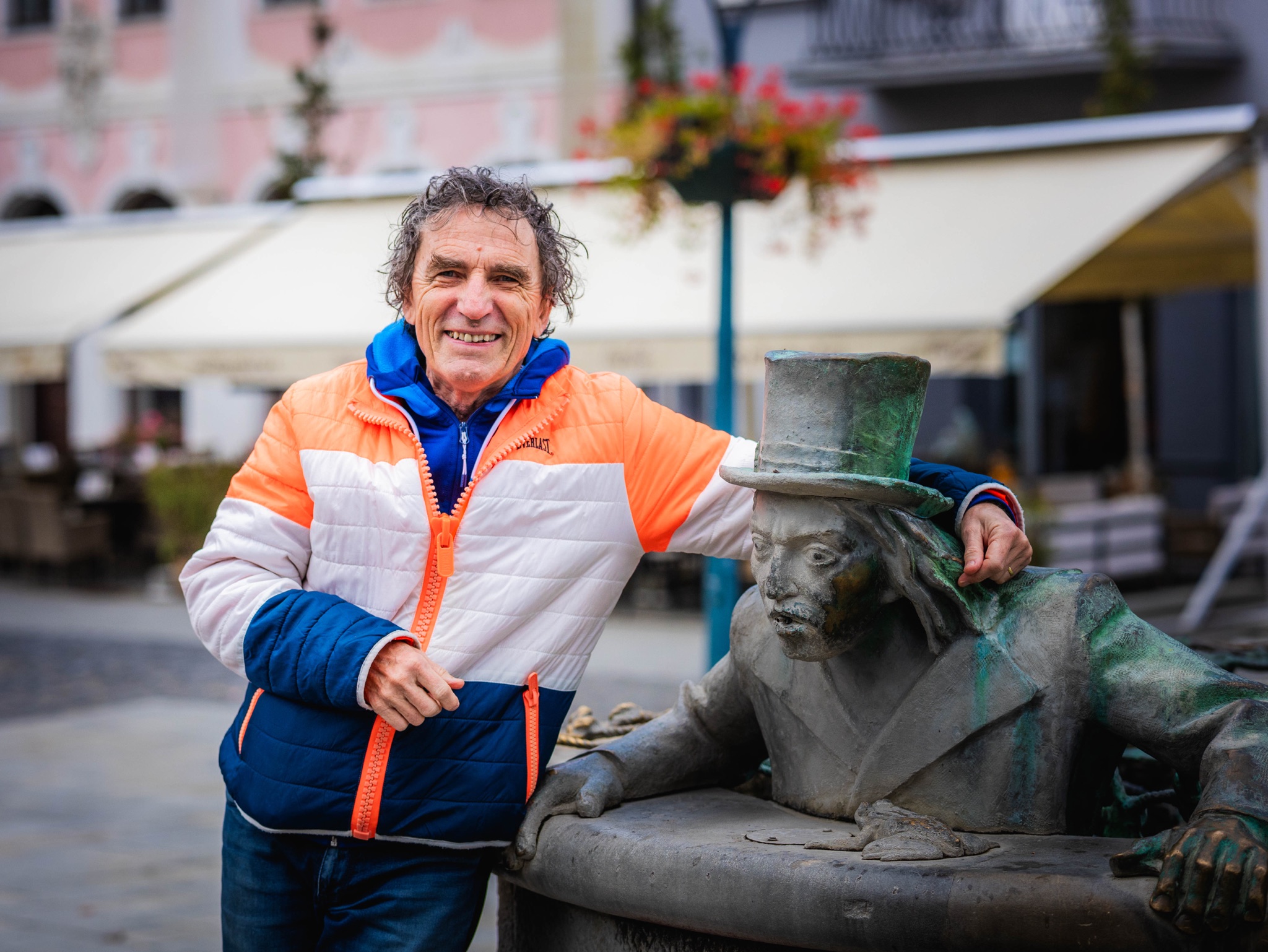
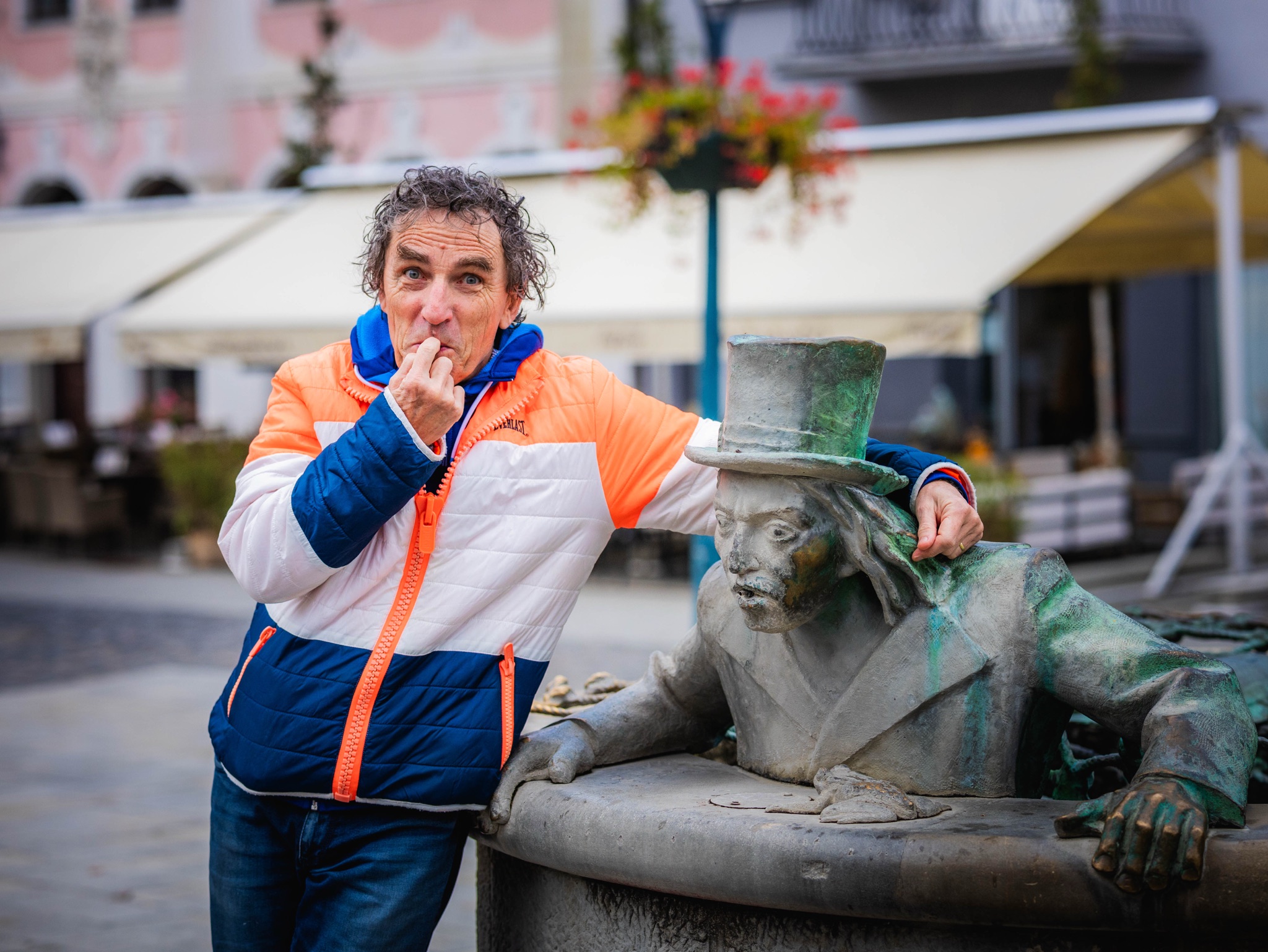
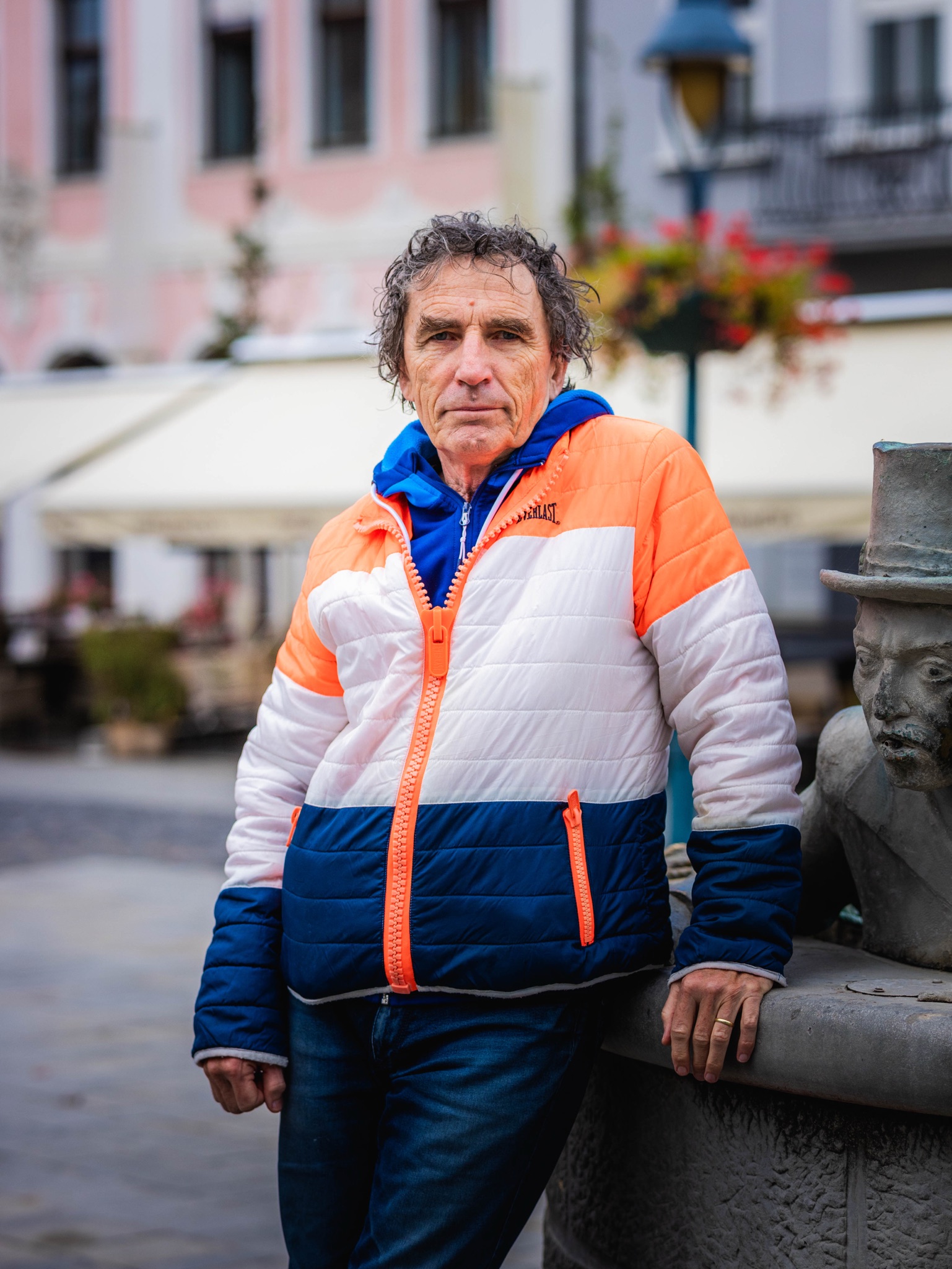
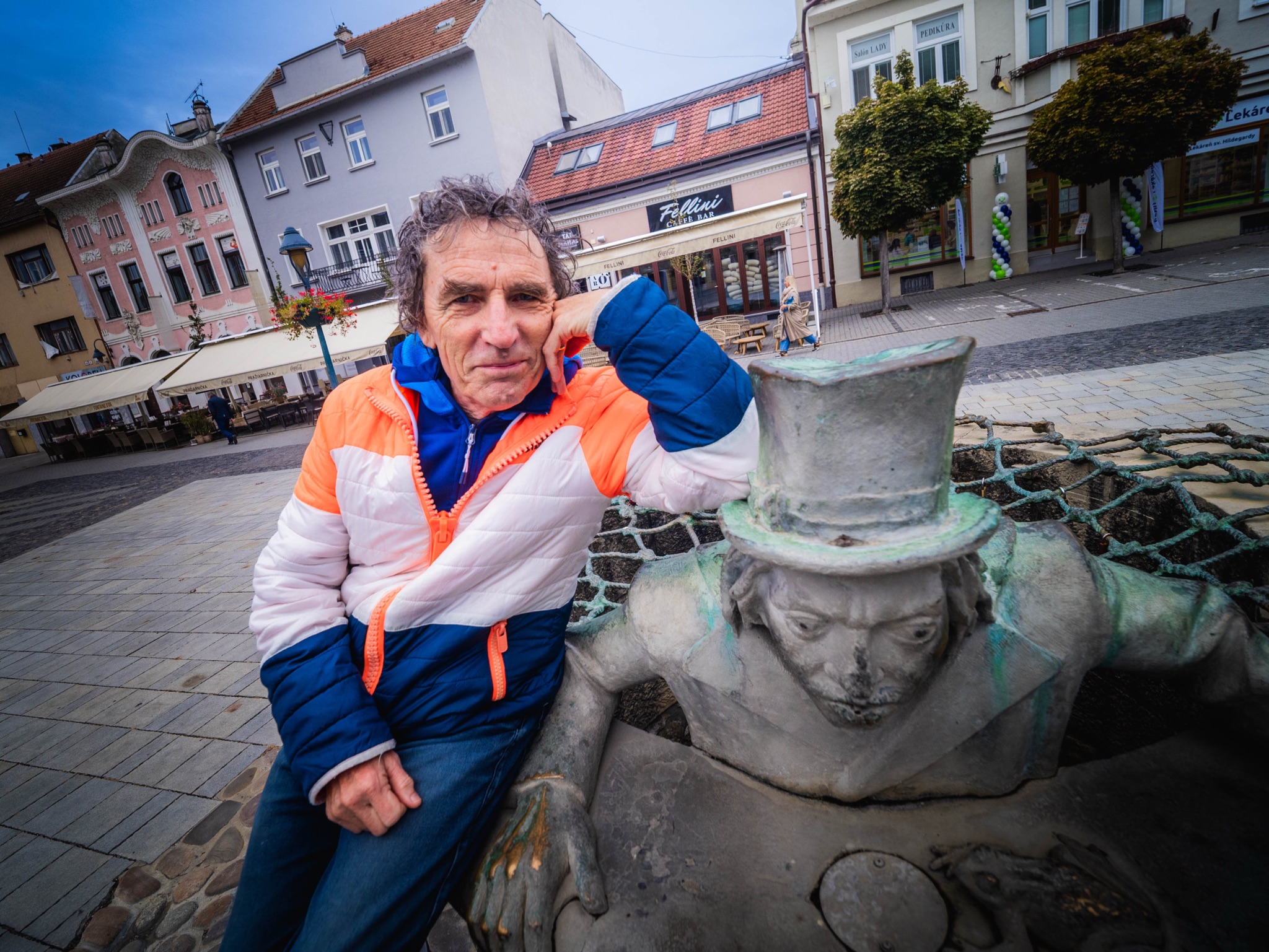
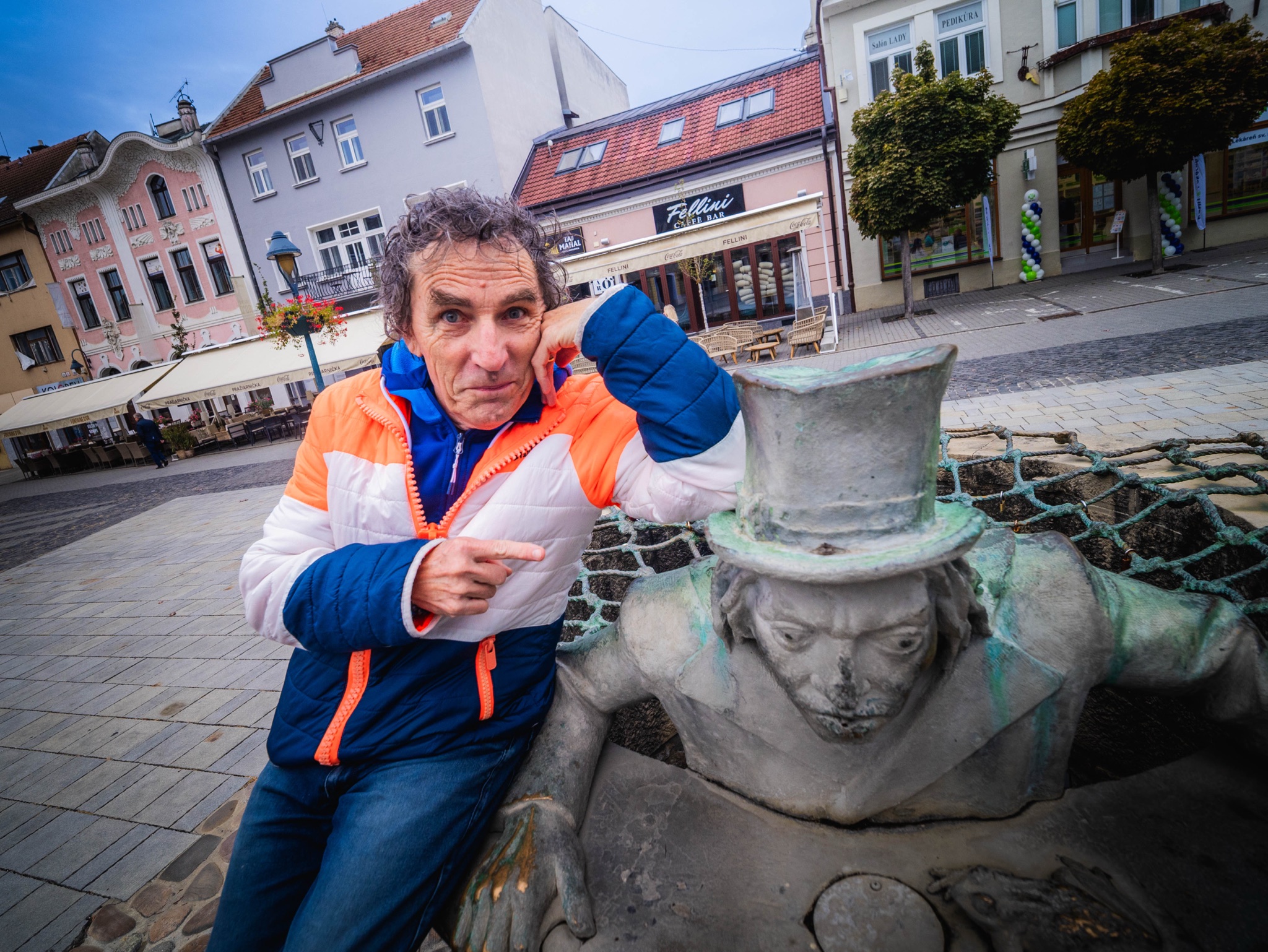
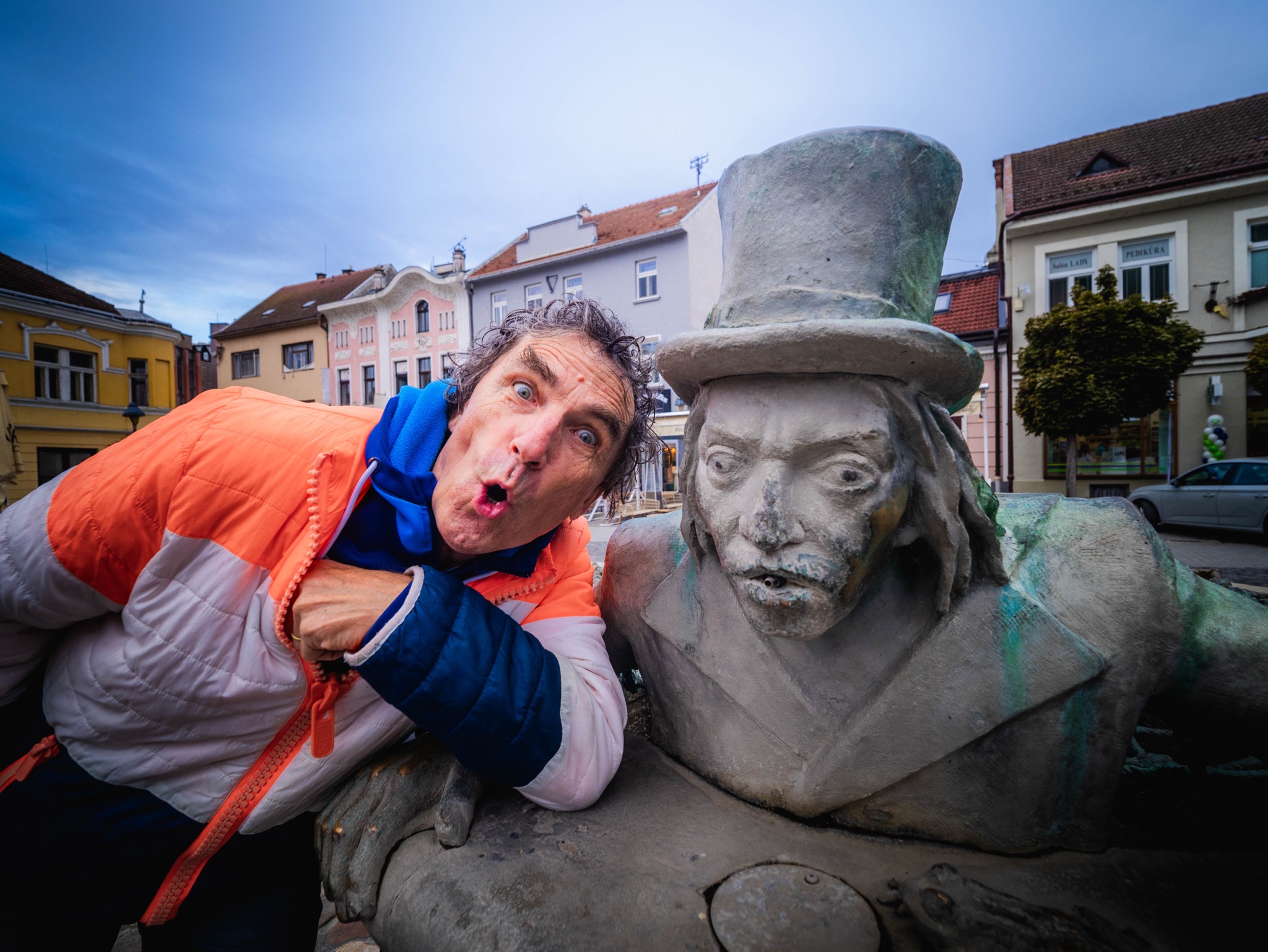
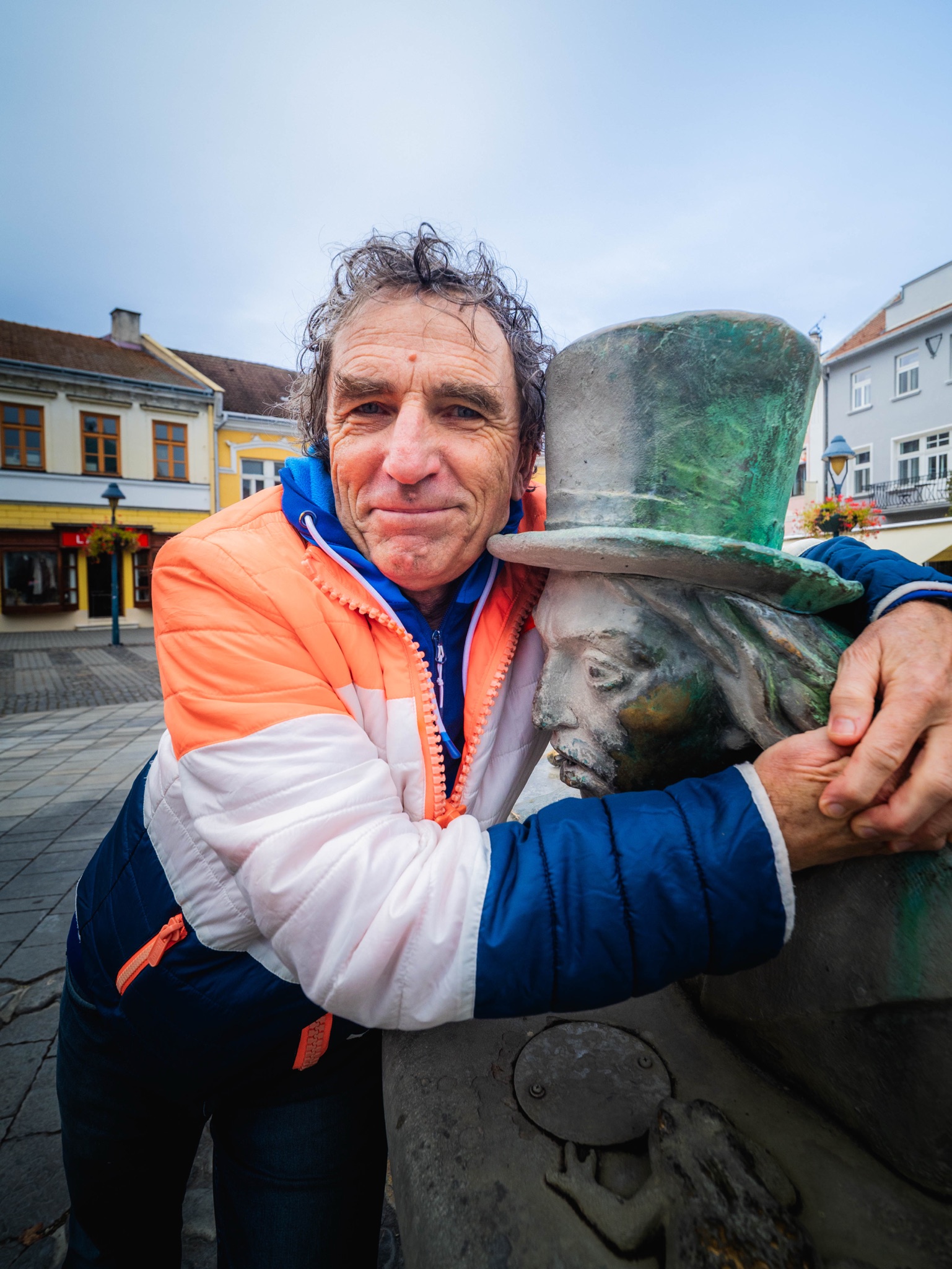
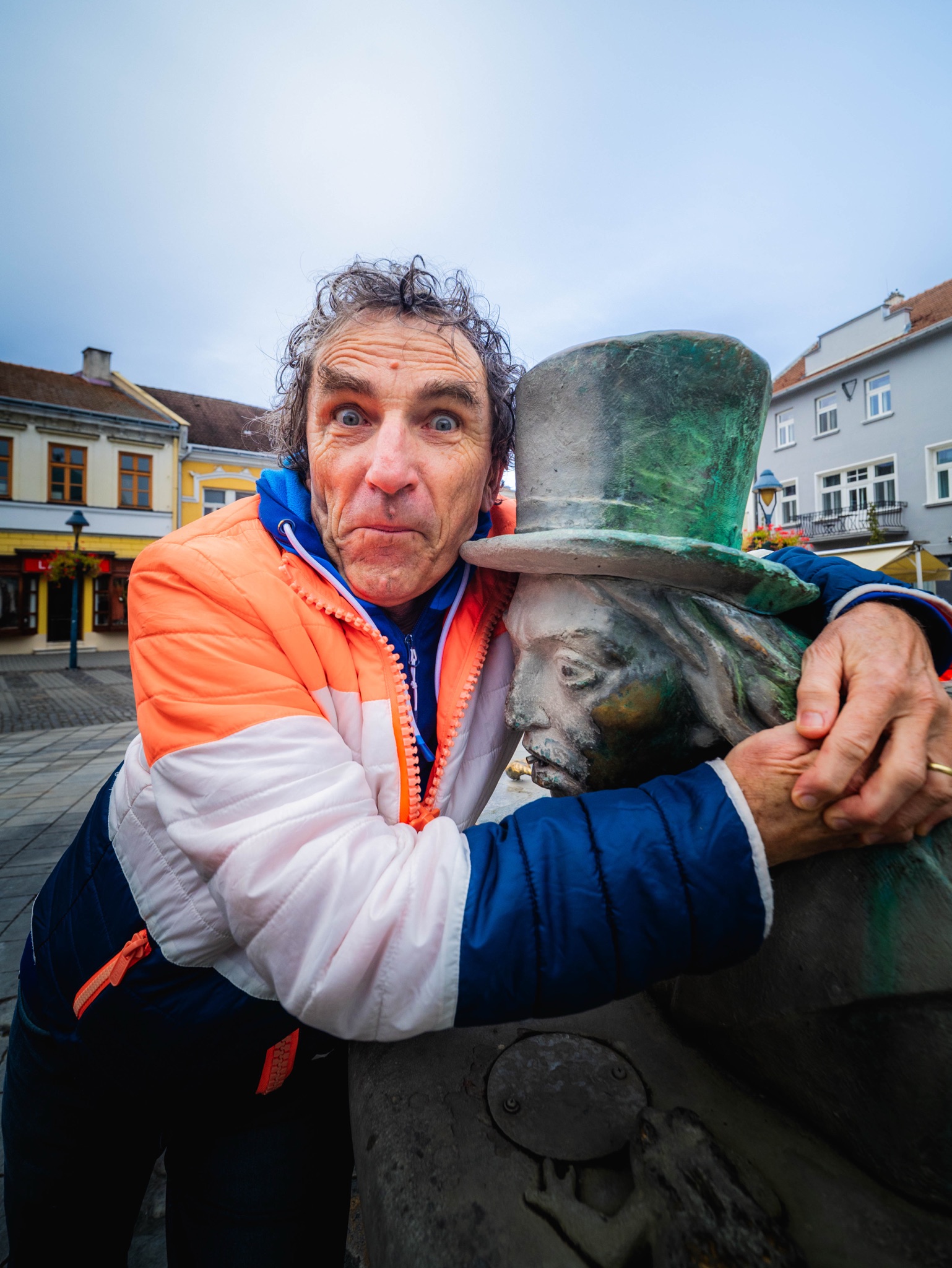
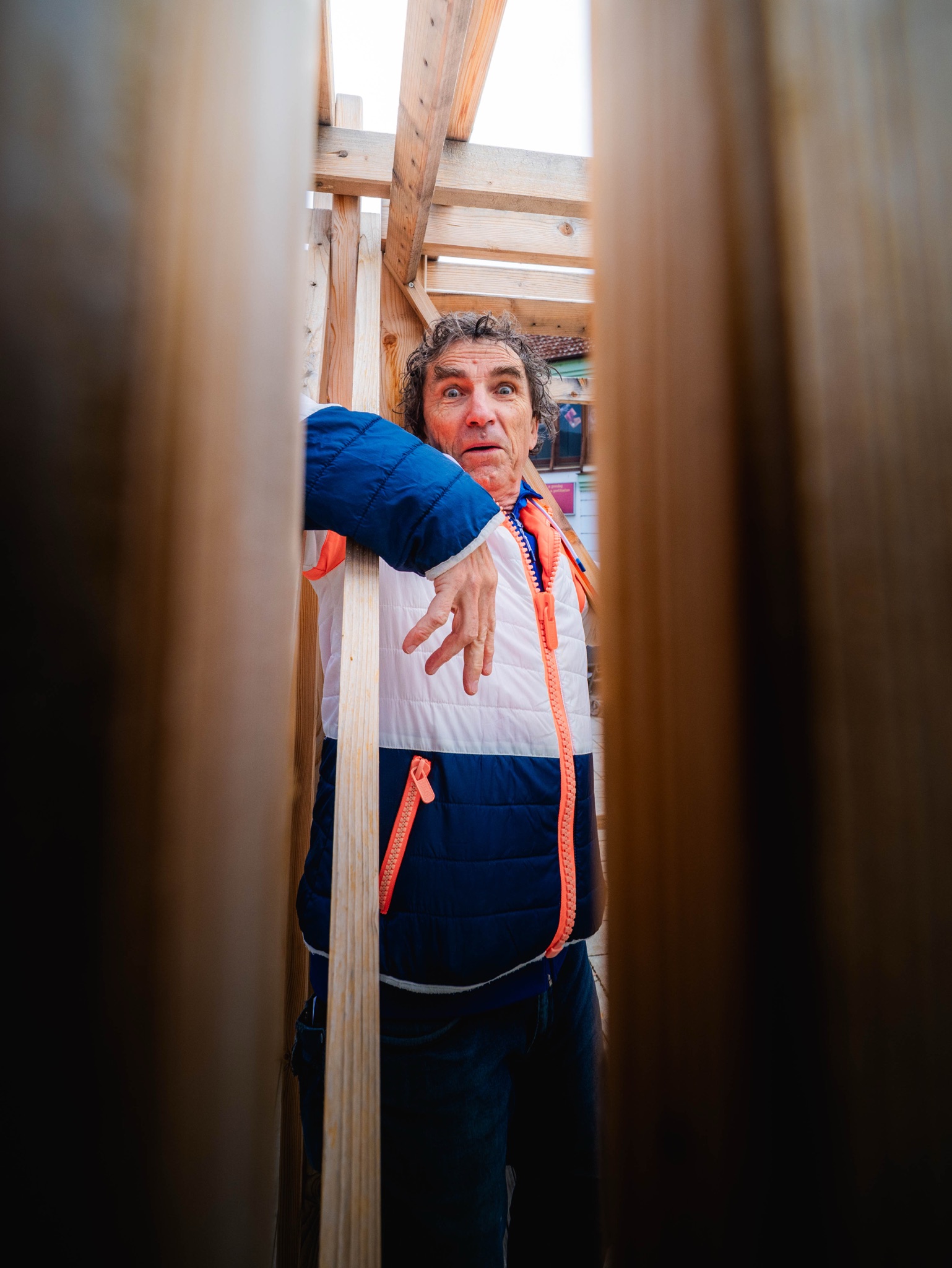
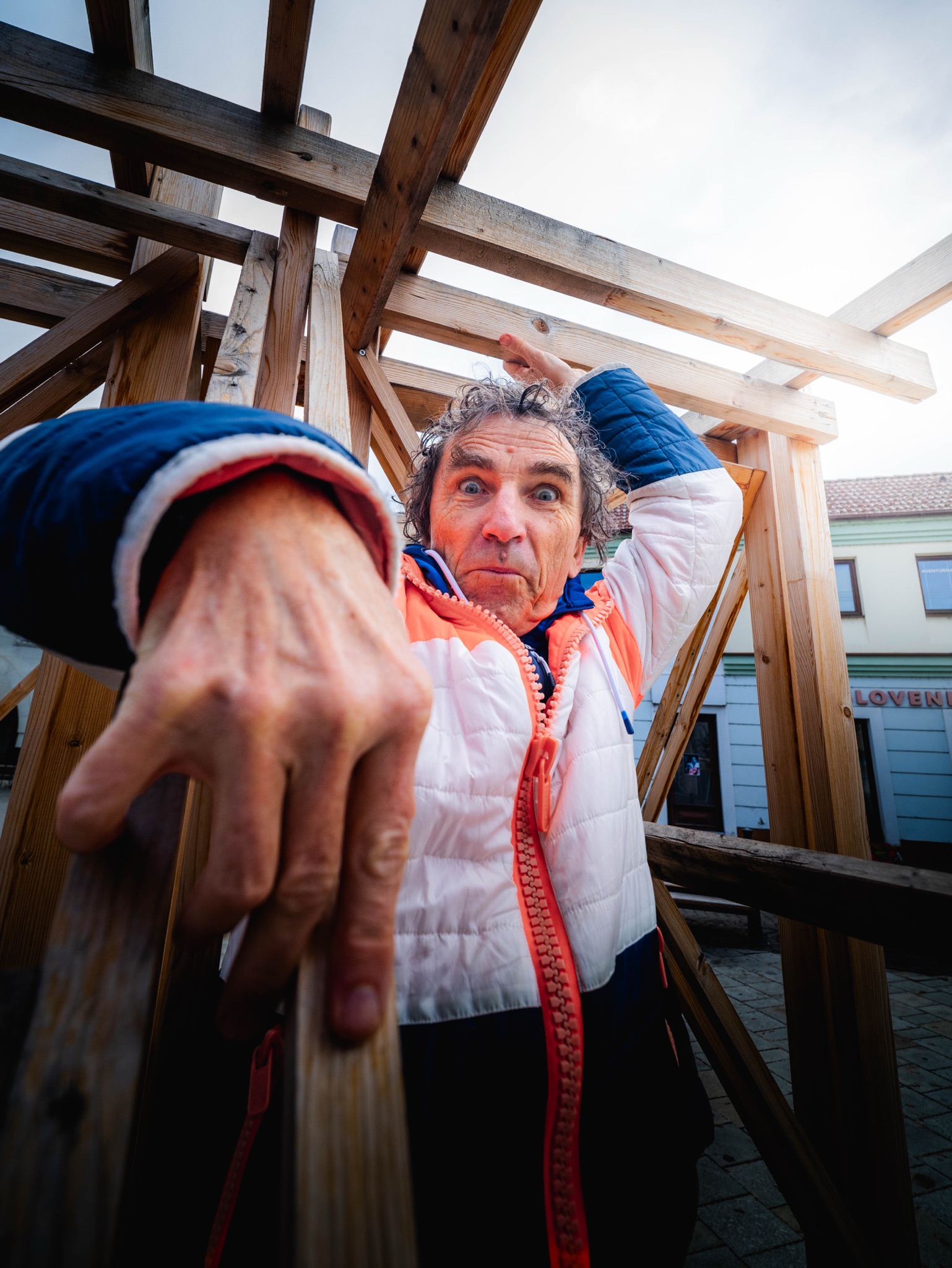
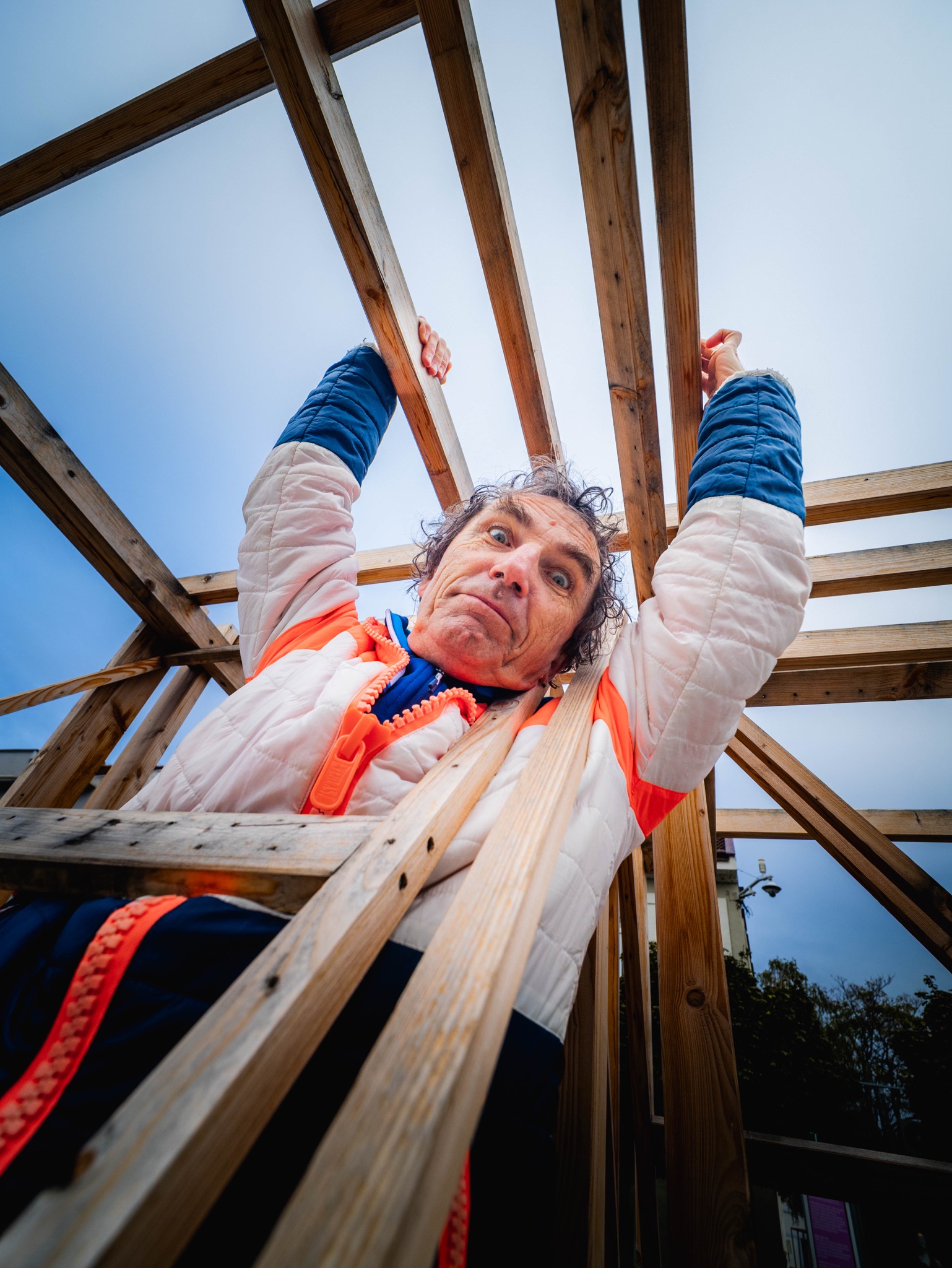
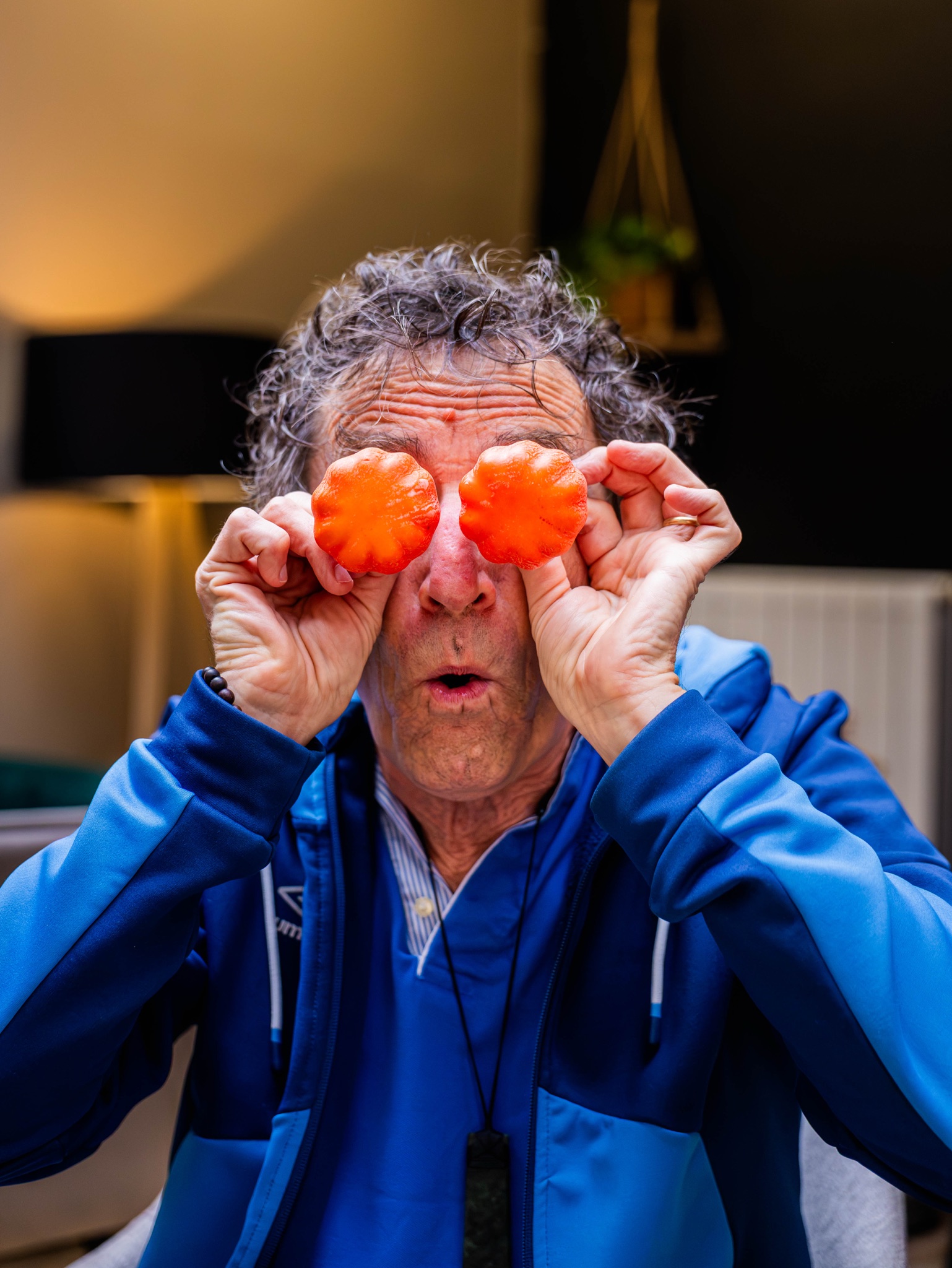
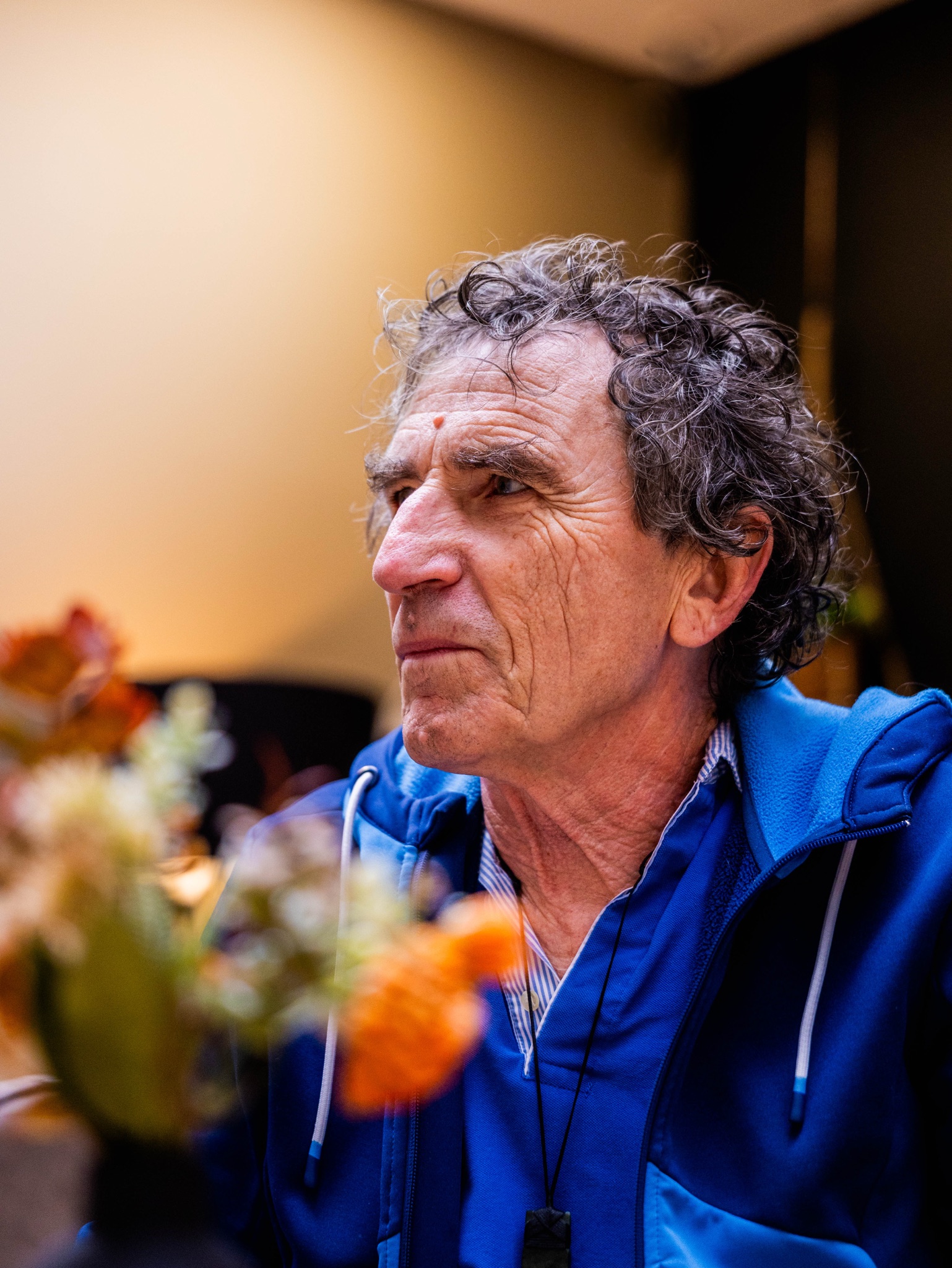
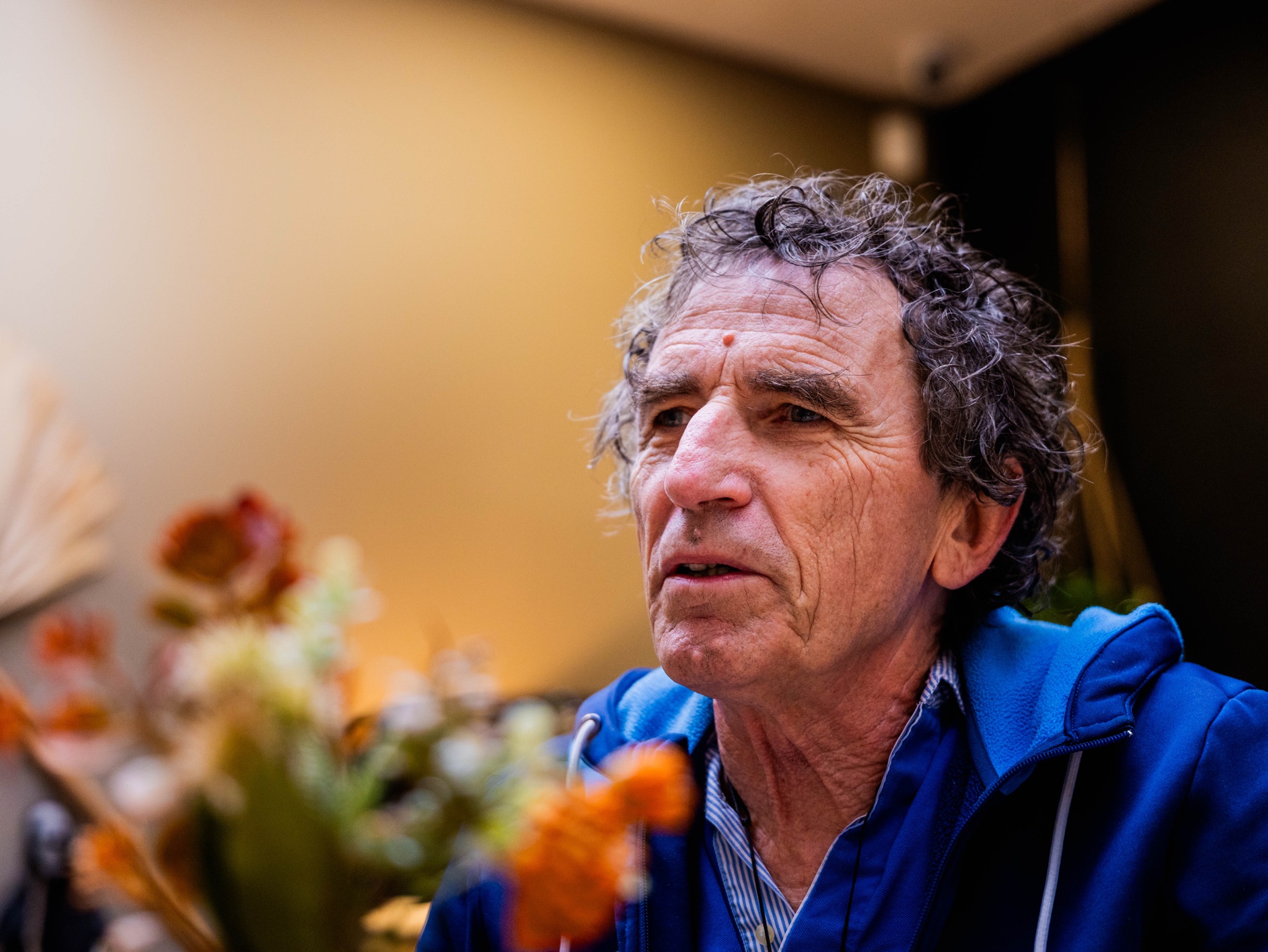
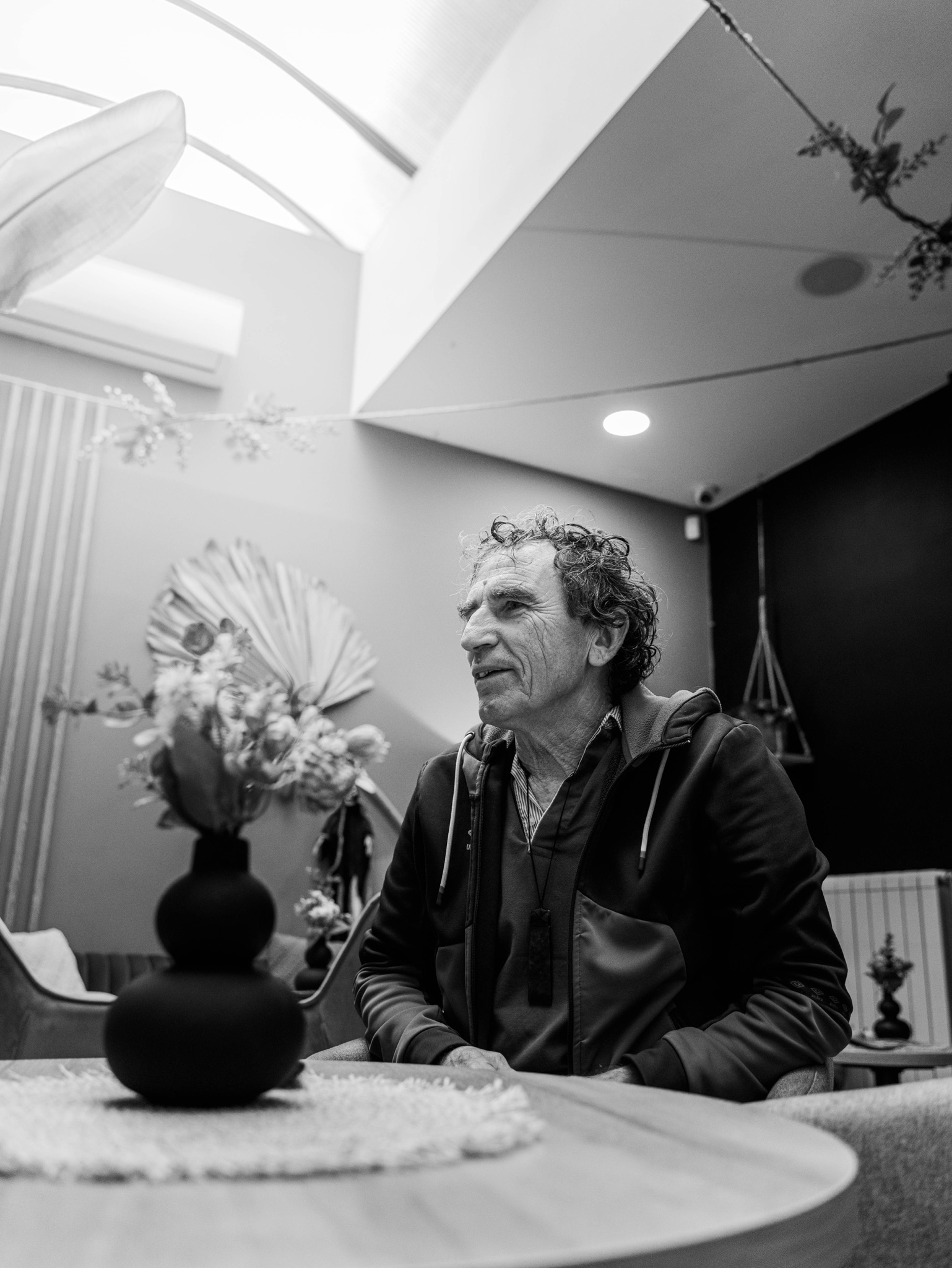
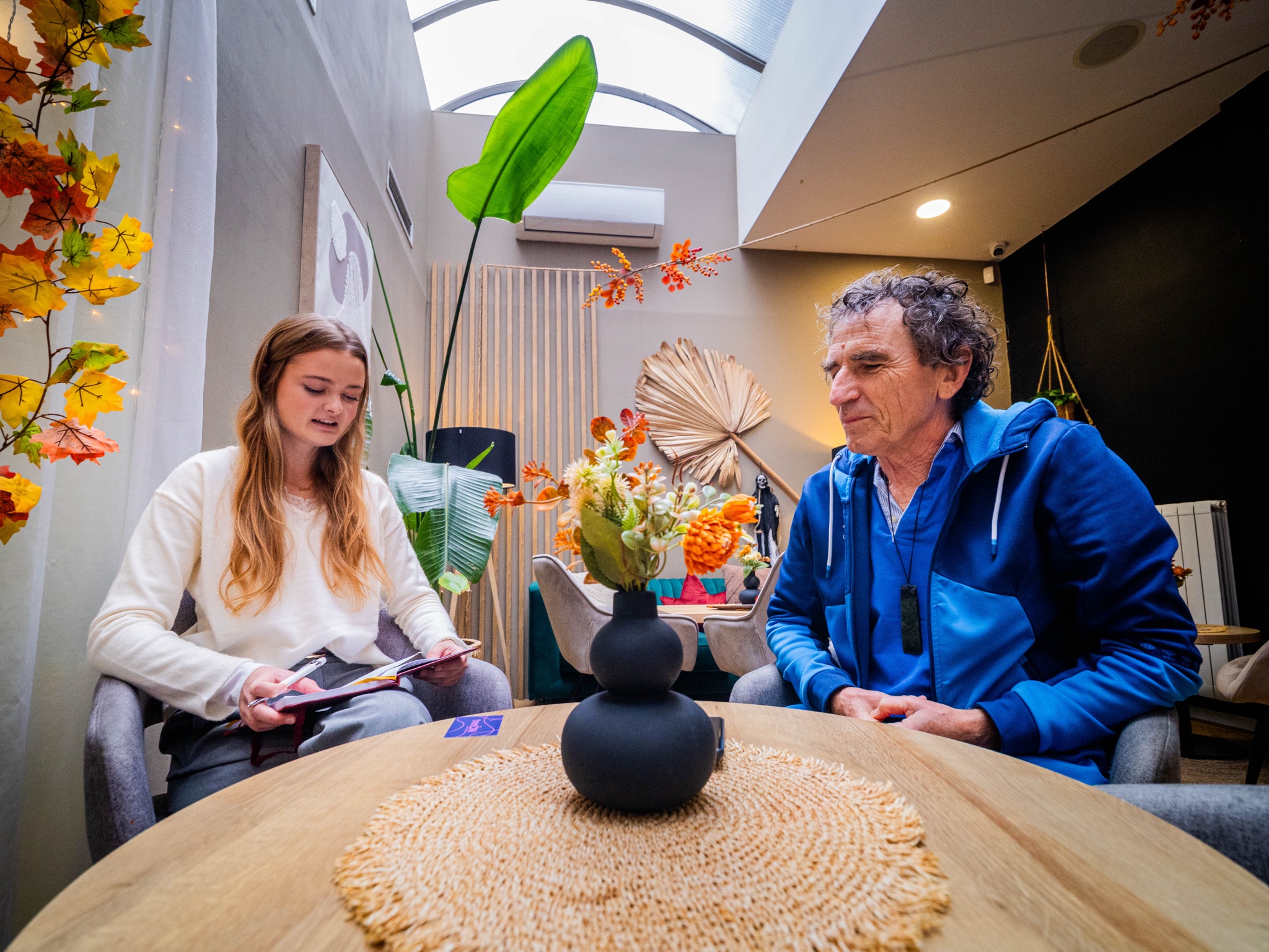
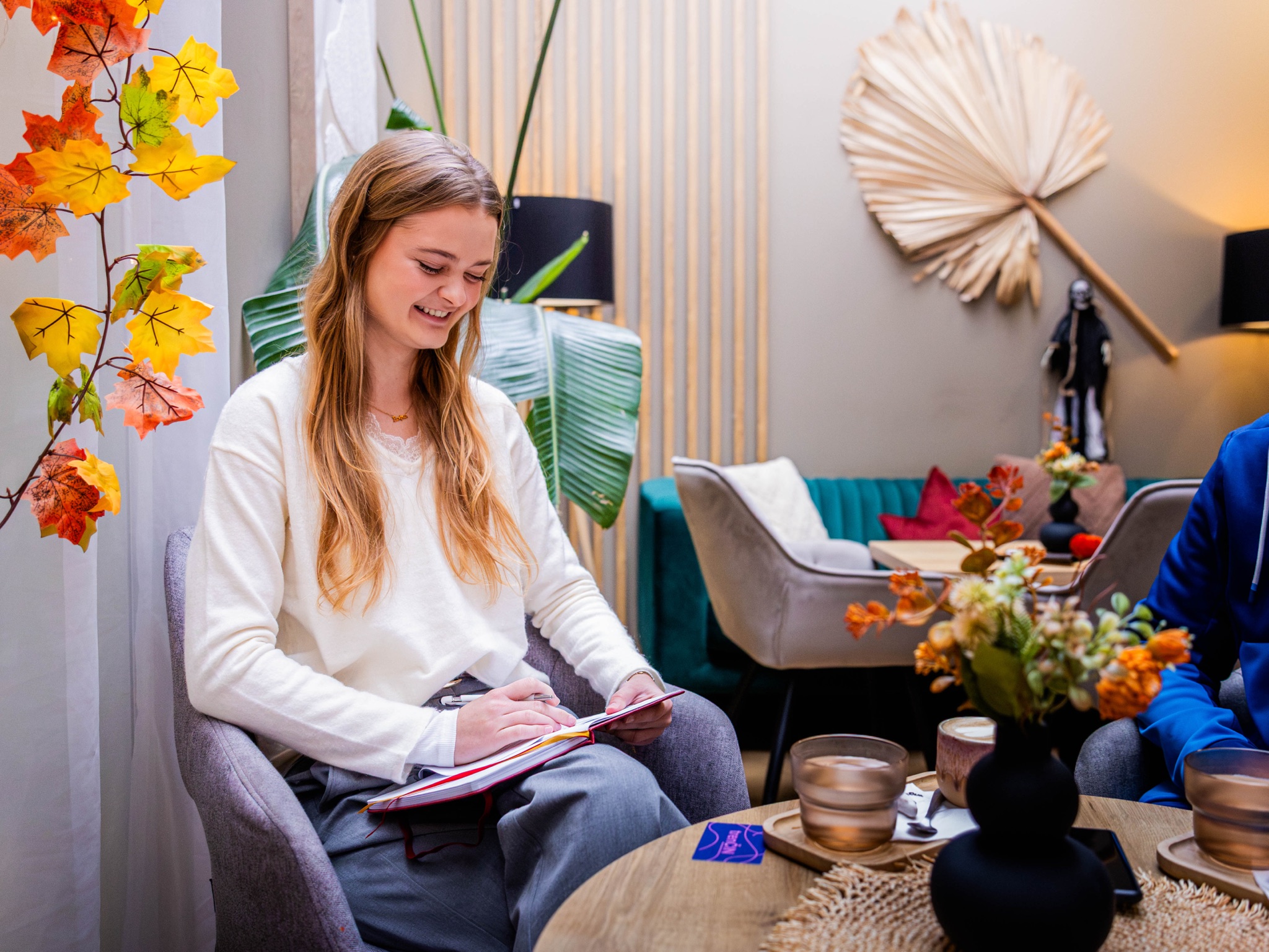
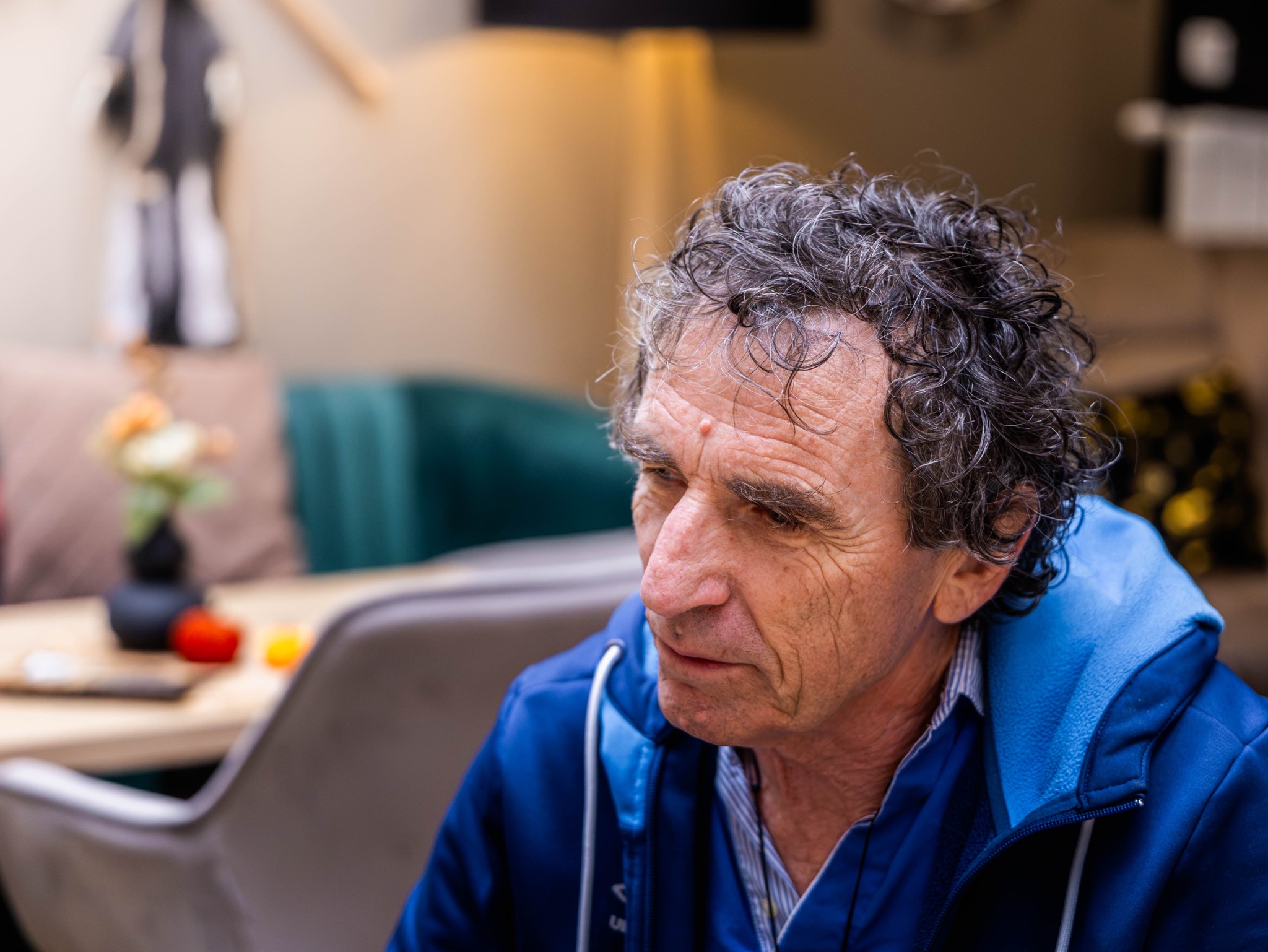
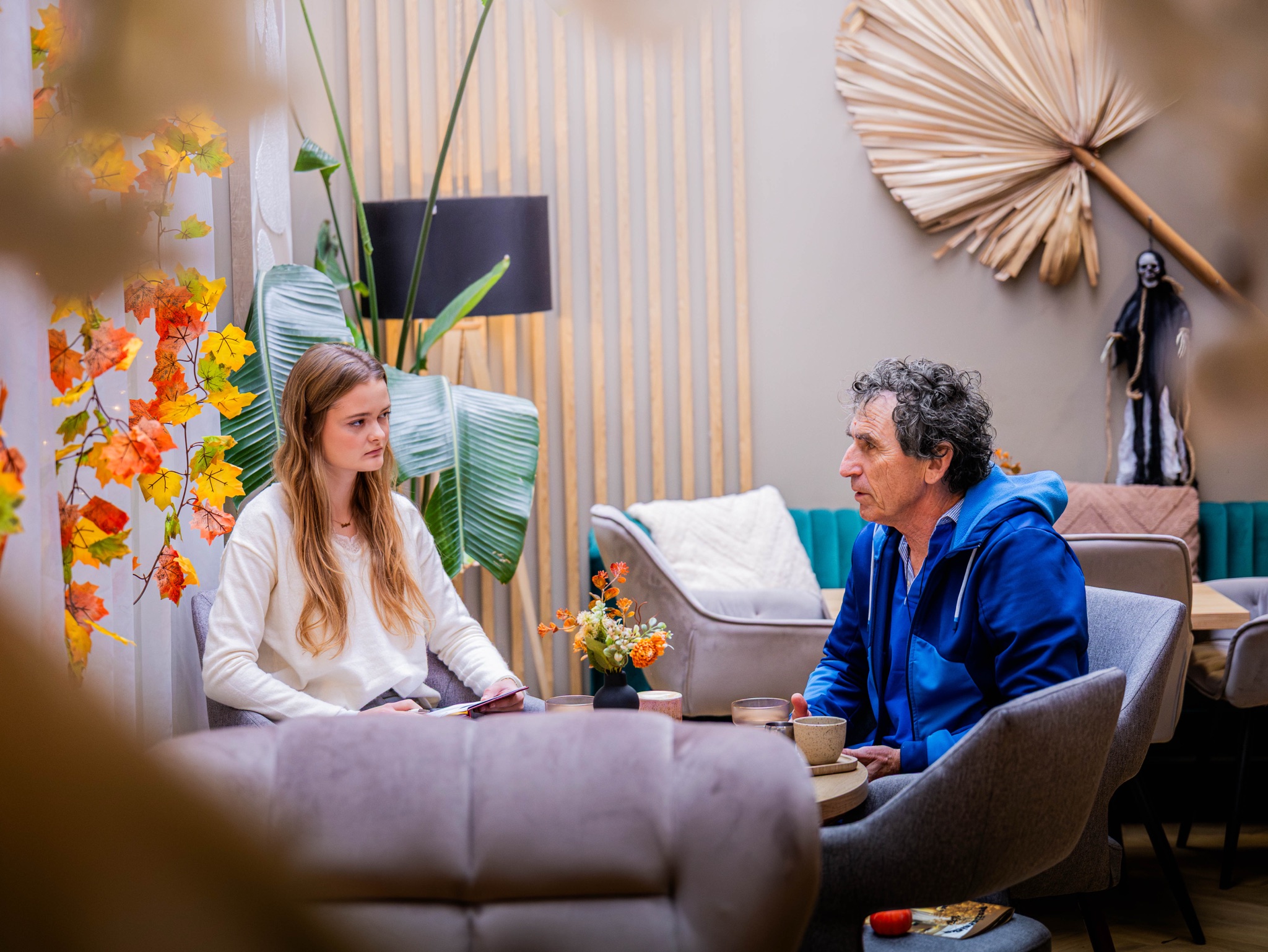
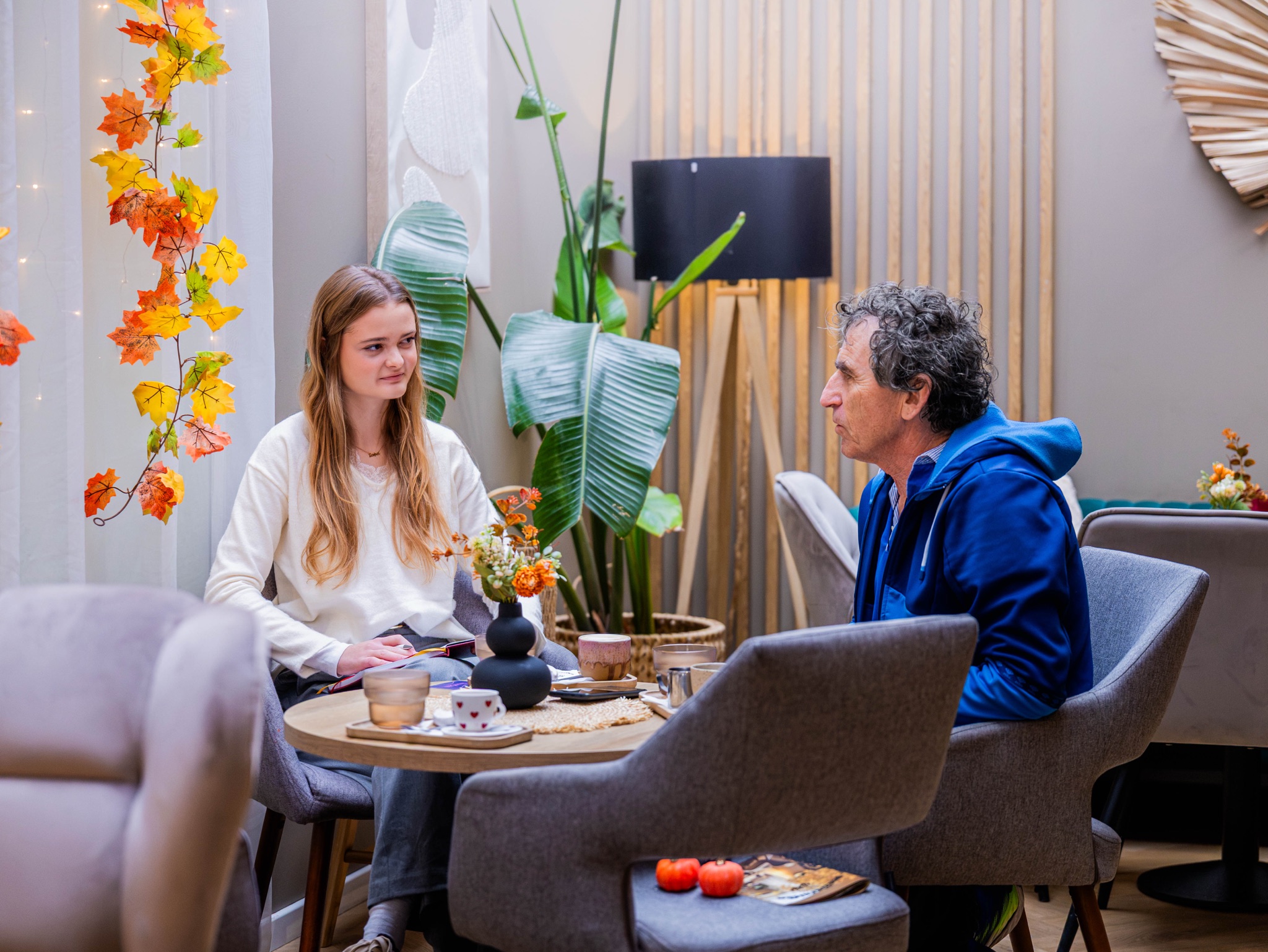
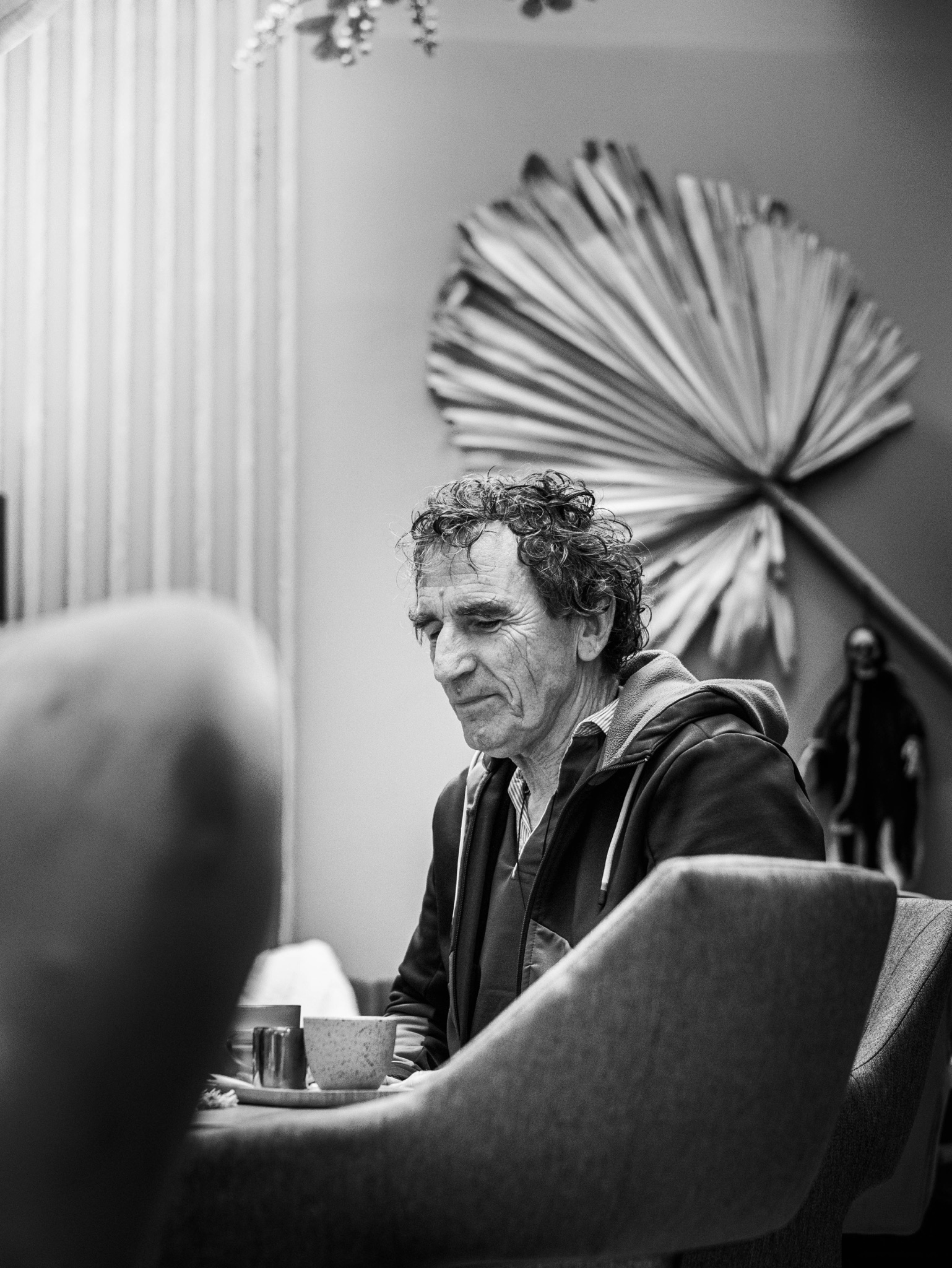
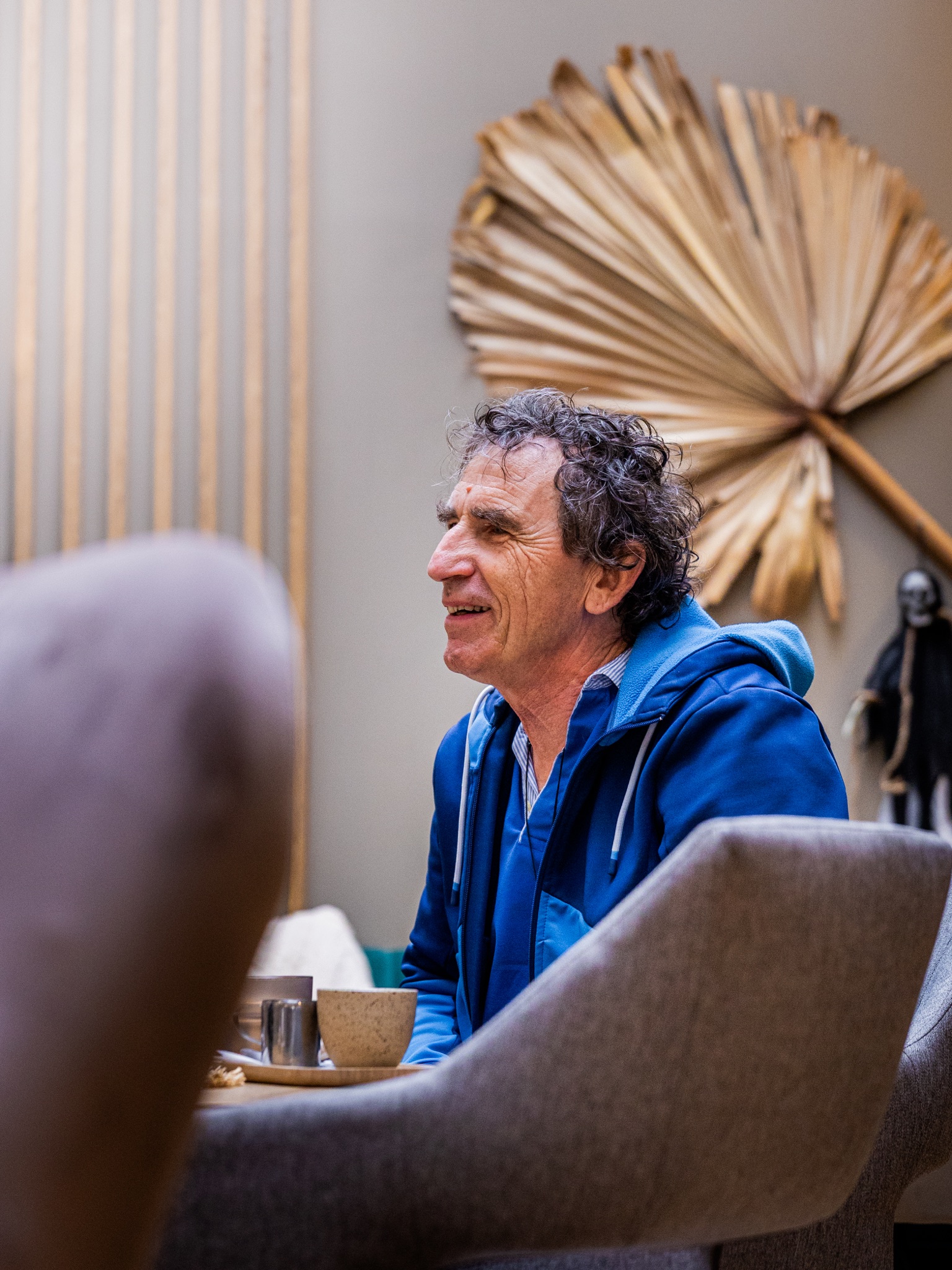

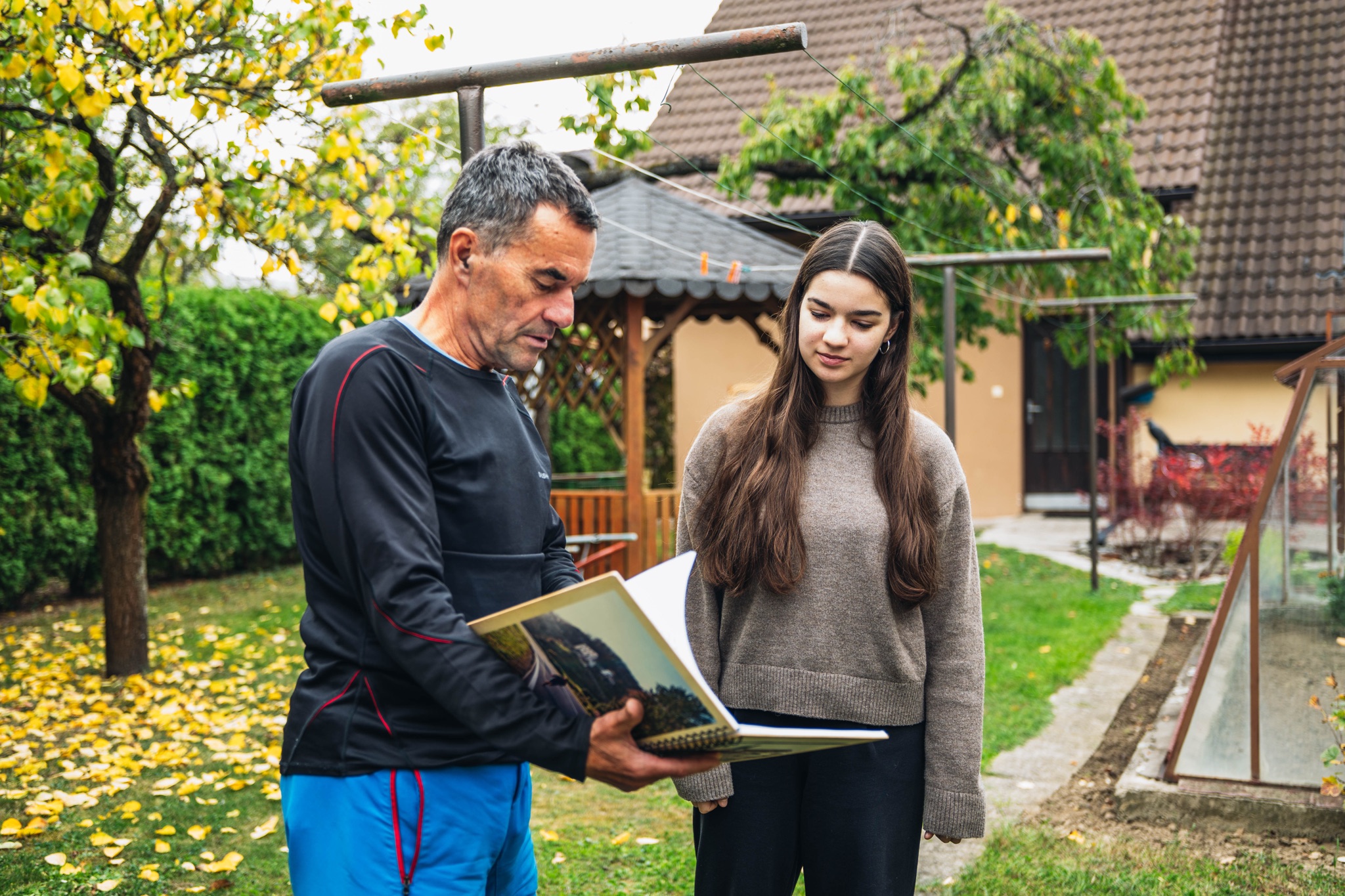
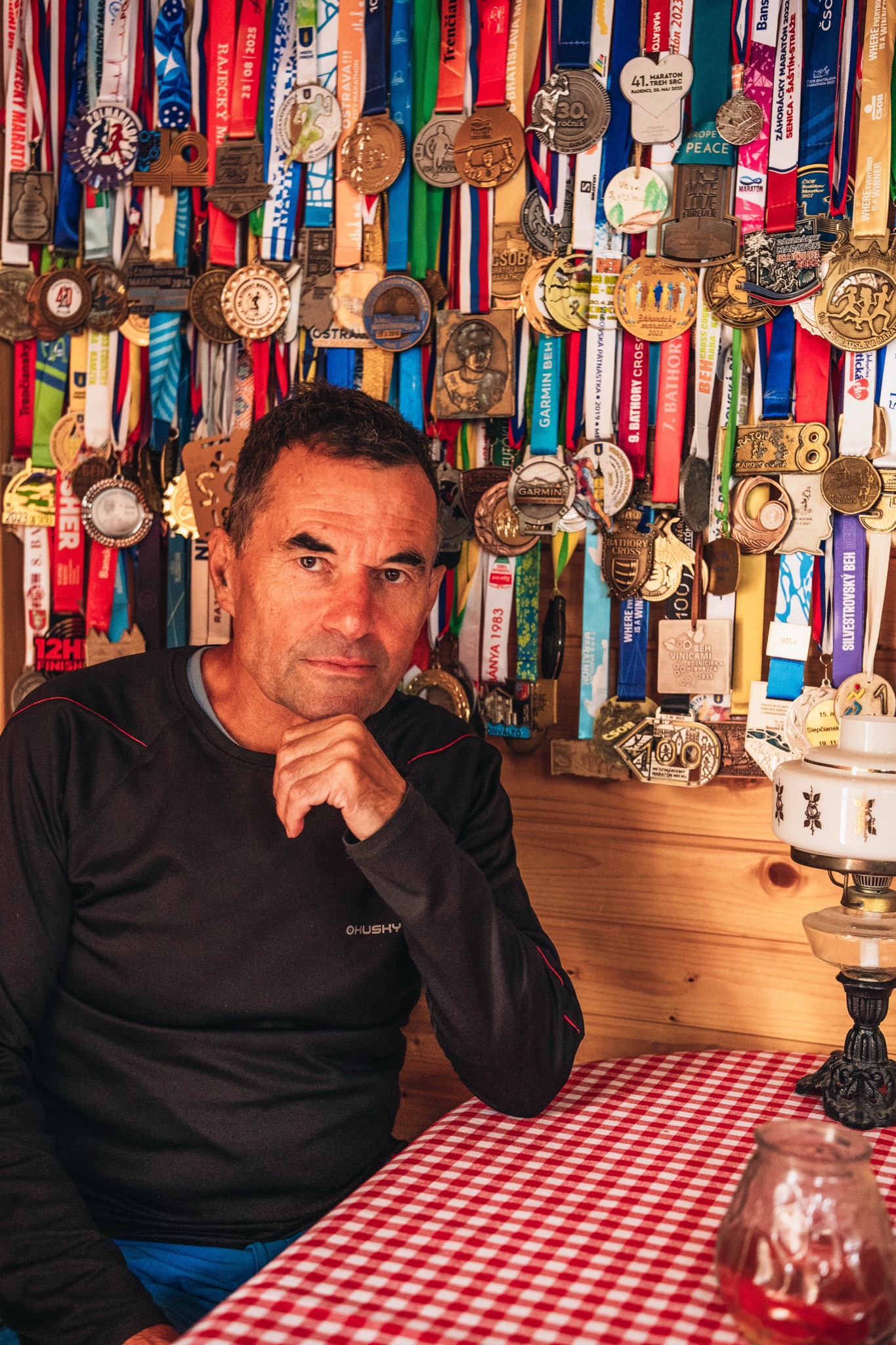
fourteen marathons in fourteen days
Sarah: To start with, how would you introduce yourself – what’s the most important thing you’d like to tell us about yourself?
Stanislav Ďuriga: That’s a tough question. Basically, I’m glad to be alive, I’m happy that I know lots of people, I have plenty of loved ones and we’re all healthy… and that I can run. That’s what matters most to me.
Sarah: When did your story with running begin? When did you start running regularly?
Stanislav Ďuriga: Exactly fifty years ago, when I started secondary school – in Nové Mesto nad Váhom – and the teachers there noticed my interest in running and in going to PE, since students often tried to get out of it.
I only took up running seriously after my military service. I used to cycle as well, and I was called up into the army as a cyclist, but in the end nothing came of the cycling; I started running instead. That’s almost fifty years ago now.
Sarah: Did you have proper training sessions, or did you just run off your own bat?
Stanislav Ďuriga: I didn’t have training sessions. Even though my teachers told me to run, I told myself I’d run only when I wanted to. That’s always been my way.
I think a coach can set you a training plan and push you further, but everyone’s different and different things suit different people.
Sarah: What was it about running that appealed to you so much – what has kept you at it for decades?
Stanislav Ďuriga: Running has one big advantage: it’s not a team sport. When I want to go, I just go. I don’t need anyone else for it.
When I started out, not many people round here were running yet. But I was always drawn to longer and longer distances. Back then a marathon was an almost unimaginable goal. Gradually, though, I came to understand that if you pursue your goal systematically and persistently, success will come.
I often tell people that if they go after something, success will come. They just have to want it and stick with it.
Take me, for example – I wasn’t exactly a model pupil. I did badly at school, I had to sit my school-leaving exams twice – well, it’s not that I studied badly, I just didn’t study. I could have, but I decided to go a different way and I don’t regret it one bit. (laughs)
The path you walk – or run – is yours to choose. Today I realise it’s as if some guardian angel was always standing by me. I could have set off in all sorts of directions, but in the end I chose the right path. And I’m very grateful for that.
Sarah: What kind of running suits you better: in a group or alone?
Stanislav Ďuriga: We used to have a group in Trenčín; we’d meet up at Brezina, and there were as many as thirteen or fourteen of us running. It had its charm, because we motivated each other and gradually got faster.
More than twenty years ago I began to realise how precious time is. I’d tell myself that the worst thing was to waste it at work, and I had this thought in my head: “if only I could just run”. So I started rethinking what a person really needs to be happy, and whether you always have to have more.
Gradually I got used to running alone, mostly in the mornings, simply whenever I feel like it and have the time. Of course I still like to meet up with other runners now and then, say on the track by the Váh, have a chat with someone, that sort of thing. But basically it’s all the same to me whether I run alone or in a group.
Sarah: Has running also changed how you see life and yourself?
Stanislav Ďuriga: Definitely. These days I tell people that if they want to take up running or any other sport, they have to put not just their body into it but their spirit too.
Once I’d have thought: “Who cares about the spirit?” I’d probably even have been embarrassed to say something like that out loud. And now every morning I try to work on my body and then on my soul as well.
Sarah: You say running also teaches you things you only realise years later. What have long runs and tough races shown you?
Stanislav Ďuriga: You know, as the years go by, you see it a bit differently. I used to say that until I was sixty I never played the wise man, because I only ever spoke from my own experience. I recently turned 65, so now I can say that until sixty-five I never played the wise man. (laughs) Now I’m speaking from my own experience again.
It was on long runs in particular that I discovered belief is the best doping. When you’re running a hundred kilometres, or for six or twelve hours, you get into situations where it’s no longer just about physical fitness. For instance, I recently ran to Vršatec for eleven hours. On runs like that you find out what a big role your mind plays, and your belief in your own abilities.
What matters is believing you can do it and carrying on despite the tiredness. But just talking yourself into it isn’t enough. You also have to put the work in. If I didn’t train and just kept telling myself, “I can do it, I can do it,” I wouldn’t get very far. It’s as if our photographer picked up a camera for the first time and told herself she could do it. She might well take a picture of something, but whether it would turn out the way she imagines is another matter. (laughs)
So belief helps you, but it has to go hand in hand with preparation and effort. When those things come together, you can overcome far more than you thought at the start.
Sarah: Do you still have days when you don’t feel like going for a run? What do you do when your strength gives out in the middle of a run?
Stanislav Ďuriga: The last time I didn’t feel like it was… this morning. (laughs) You just have to learn to tell whether it’s laziness or genuine tiredness.
There was a time when running two hundred days in a row was no problem for me. Lots of people are amazed when I run a marathon on a Sunday and twenty kilometres the day before. The way I see it, I want every run to be a celebration. When it’s a nice day, it’s a shame to sit at home doing nothing.
Yes, there are moments during a run when you just can’t go on. Once, in winter, I was running through forty centimetres of snow and had no idea how I’d wade my way back through it. Just then I spotted tracks left by a tractor, which made the going easier. Situations like that reinforce my belief that you have to trust things will work out somehow. I always tell myself: it’ll turn out one way or another. And so far it’s always turned out fine.
Sarah: Today’s runners have masses of sports kit, technology and nutritional supplements. Do you think they’re essential, or can you succeed without them?
Stanislav Ďuriga: I try to show younger runners, too, that the most important thing is heart, and how well you can prepare and train your own body. There used to be maybe fifteen of us running in Trenčín; now fifteen people turn up within ten minutes. When I look at their kit, I can see how many options there are. But I’m convinced you shouldn’t rely on that alone.
For example, once in Croatia I found a pair of trainers on the beach that had been washed up by the sea. I dried them, cleaned them and ran a marathon in them – which I actually won. When one of the local runners then noticed I had copper wire instead of laces, he just couldn’t get his head round it. (laughs)
I don’t personally use many supplements either. I remember a friend advising me before one of my first marathons on everything I should take with me, including gels and so on. Then, when I was running the marathon in Čadca, I realised at the fifth kilometre that I’d left them in the car. At first I panicked and wondered what to do now, whether I should stop. In the end I ran without them and managed just as well.
That doesn’t mean modern kit is pointless, though. Recently some friends gave me a pair of carbon running shoes. I’d never seen or held a pair before, and it was only when I tried them out that I found they help me improve even further. But the important thing is not to build everything on stuff you can buy. You should take joy in running and see it as something special. Like a celebration.
Sarah: What would you say to people who compare themselves with others when they run and want to match the performances of more experienced runners?
Stanislav Ďuriga: I tell everyone they have to enjoy moving at their own level and shouldn’t compare themselves with others. Everyone has a talent for something. Maybe mine is more for running; someone else’s is for something completely different.
Today running is, to some extent, a matter of fashion as well. People know it’s healthy, but not everyone does it. In the same way, there are more cyclists now that new cycle routes have been built. I take a simple view: if you want to run, run; if you want to cycle, cycle. The main thing is to keep moving, keep developing and find what brings you joy.
Sarah: You’re proof that you can keep improving even later in life. What have you managed to achieve in recent years?
Stanislav Ďuriga: That’s exactly what’s so wonderful about running. What I didn’t manage to achieve when I was young, I’m managing now. I can still compete and push my own limits.
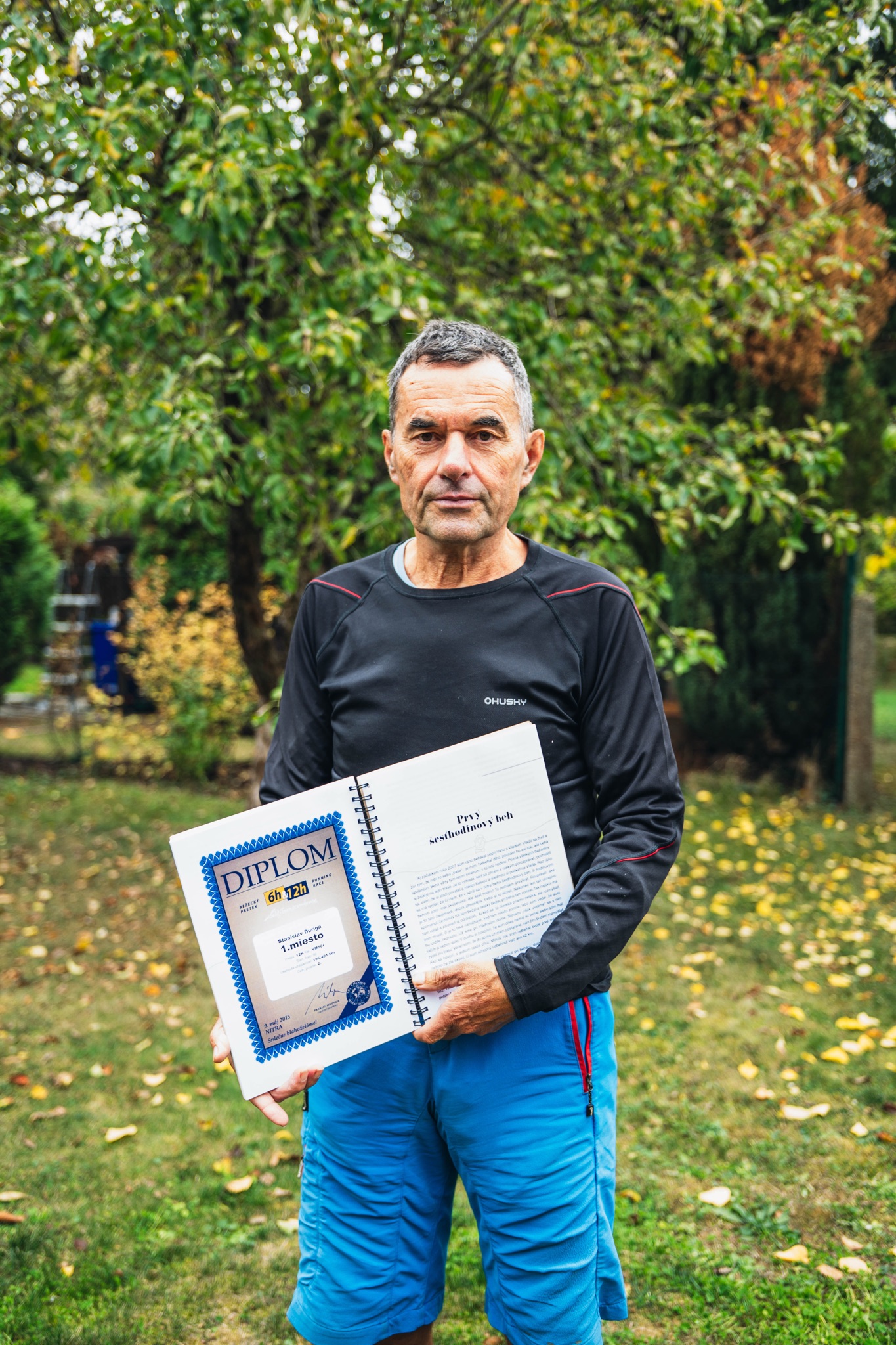
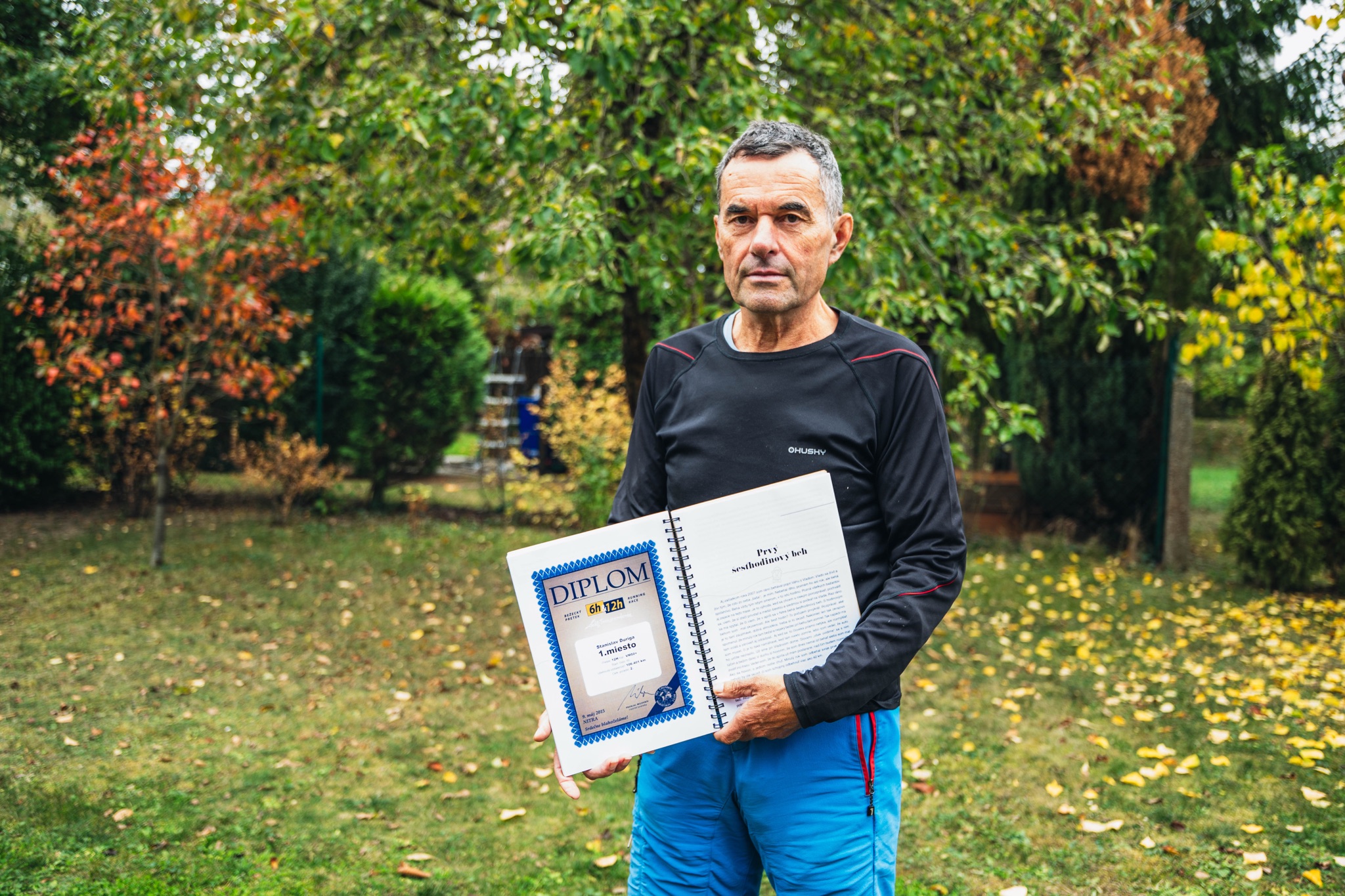
I hold Slovak records in several age categories and disciplines, over various distances and in timed runs. A month ago in Prešov I even set the fourth-best performance in the world this year. Once upon a time I wouldn’t even have dreamt of something like that.
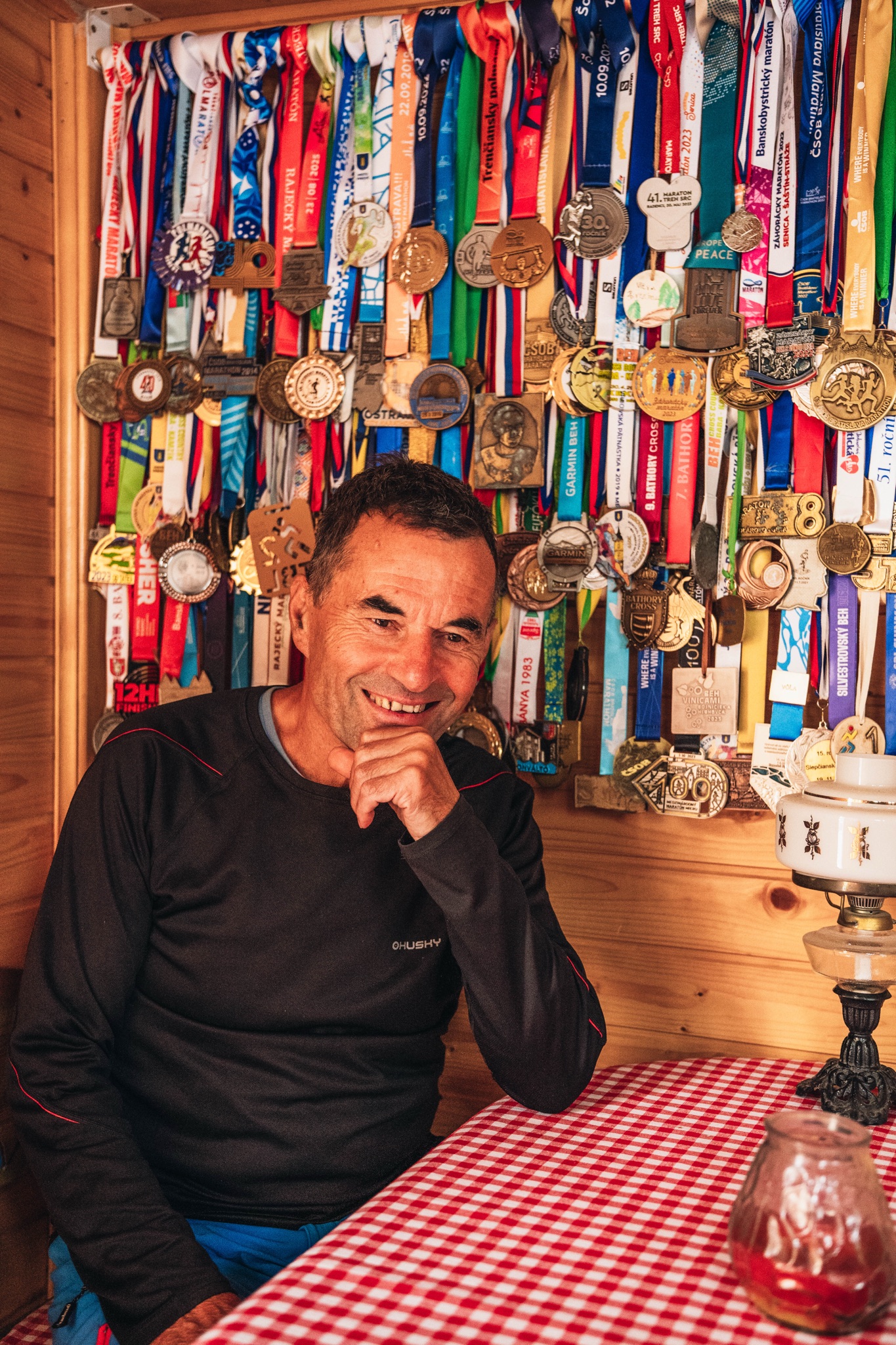
Going through my stats now, I can also see that I’m just two races short of the milestone of a thousand races completed in my lifetime. When I look back, I have to say I truly owe everything to running.
Sarah: Do you know how many marathons you’ve run in your life?
Stanislav Ďuriga: Yes, I write it all down too – I keep stats and count everything. A marathon is 42 kilometres, and runs over longer distances are called ultramarathons or ultra runs. I ran my first marathon twenty years ago, and since then I’ve racked up quite a few. This Saturday in Kroměříž I ran my 249th marathon or ultra. Altogether I’ve done about 40 ultras. If I take those away, that leaves 209 standard marathons. This year’s was, I think, my fourteenth.
Sarah: In your quote you mention 14 marathons in 14 days, which comes to roughly 600 kilometres. How did a challenge like that come about?
Stanislav Ďuriga: It was during the pandemic, when everything was restricted. After about 45 years of running, I realised I wanted to give thanks for it somehow. You don’t even think about lots of things; you take them for granted until you realise how precious they are.
I decided to express my gratitude by running. I told myself I’d run around churches, or from church to church. I didn’t tell anyone about it beforehand. I simply set off early in the morning, around three or half past three, and didn’t get back until eight. And that’s how I ran 14 marathons in 14 days. I even wrote a book about it, by the way.
Sarah: What was going on in your head during those runs?
Stanislav Ďuriga: I saw it as my own Way of the Cross. Once I might even have been embarrassed to talk about faith, but I simply gave thanks and prayed. I gave thanks that I could run, and prayed that I could keep on running and that others would have that chance too.
My body suffered, but my soul was at peace. I told myself that even if I never managed anything like it again, this would be enough for me. As it turned out, I’ve run about 80 more marathons since then. In seventy of them I finished in the top three in my category, and I won 65. Once upon a time I wouldn’t even have dreamt of that.
Sarah: You’re known for having built the Runner’s Chapel in the Vinohradské hills above Zlatovce with your own hands. Could you tell us something about it?
Stanislav Ďuriga: I built the Runner’s Chapel three years ago. I brought 42 stones from places I love and where I used to run; they symbolise the 42-kilometre marathon distance. This place gives me enormous energy, and I feel grateful that I can run and complete marathons. When I go there, I sit down for ten minutes and I feel good. For me it’s a place where I can stop, recharge my batteries and realise everything I have to be grateful for.
Sarah: You mentioned Zdeno Chára. Do you know him personally?
Stanislav Ďuriga: We do know each other, and it’s something very special for me. We’ve known each other for about three years, and even when we weren’t together, we’d phone or write to each other. Over the holidays I had more time, so I read back through our text messages and looked through my notes; I write down what I’ve done every day.
Sarah: What does your relationship with Zdeno mean to you?
Stanislav Ďuriga: The thing is, Zdeno feels that anyone who strikes up a conversation with him wants something from him, or soon will. People often drain his energy. So it really touched me when he told me that I, on the contrary, give him energy and don’t want anything from him. That means a lot to me. He sees it as a kind of miracle from God, too.
Sarah: What do you value most about him, and why?
Stanislav Ďuriga: What I value about Zdeno isn’t what he’s achieved but rather the kind of person he is. His humility and his humanity.
I think we often idealise athletes. We see their successes and admire everything they’ve achieved, but they’re ordinary people too. Zdeno really has achieved a lot, but when you talk to him in person, heart to heart, you realise that success isn’t what matters most.
Sarah: How do you help others through running?
Stanislav Ďuriga: Mainly by talking. I run alongside people, chat with them and try to encourage them. Sometimes people have the idea that they can manage ten kilometres at most and no more. Once I was running with one such person and we were chatting, so he wasn’t really concentrating on the running. Suddenly he realises he’s done fifteen kilometres. He was over the moon, because until then he’d thought he couldn’t do it.
It’s all in the head. You set yourself a limit and believe you can’t go any further. That’s why I say belief in your own abilities is so important. It’s about connecting your legs and your head. If your legs and your head don’t connect, you might as well stay at home – no need to even turn up to the race.
Sarah: Why did you decide to write a book about your Way of the Cross?
Stanislav Ďuriga: That was another of those long-held wishes.
Foreword: Even as a little boy I wanted to write a book. I didn’t write it – I couldn’t write. The longing didn’t leave me even when I was grown up. Again I wanted to write a book. By then I could write, but I didn’t know what it should be about. So I started running, counting on something coming to me while I ran. Nothing came to me. I still wanted to write a book. Suddenly I realised how simple it was. I wrote a book about running: how I ran, where I ran, why I ran, why I still run. If you’re interested, read it. If you do, I’ll be pleased. If you don’t, never mind – I don’t read books either.
Interview by Sarah Barrierová, student at Ľudovít Štúr Grammar School in Trenčín
Photos by Ema Šedíková, student at the School of Applied Arts in Trenčín
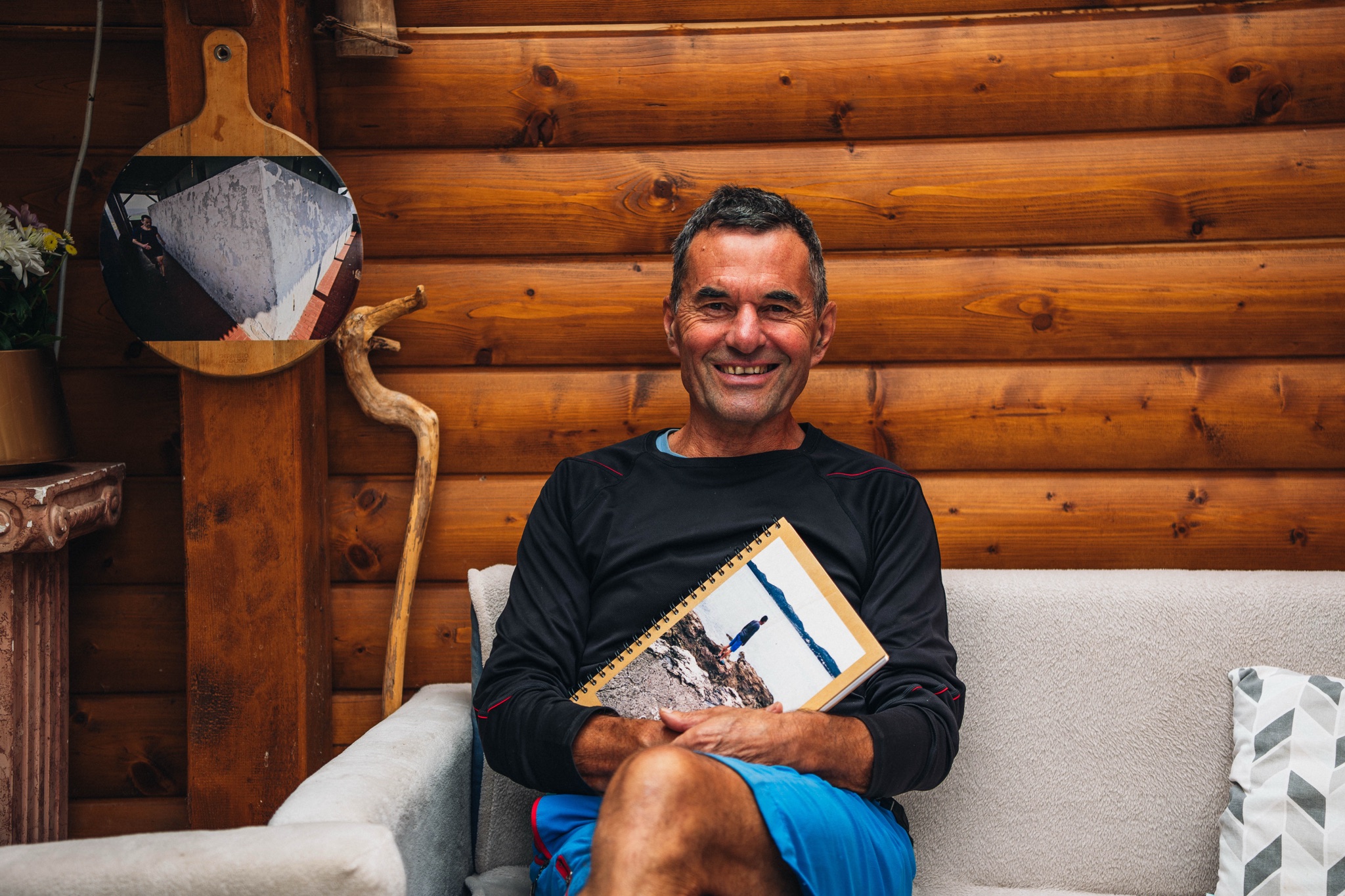
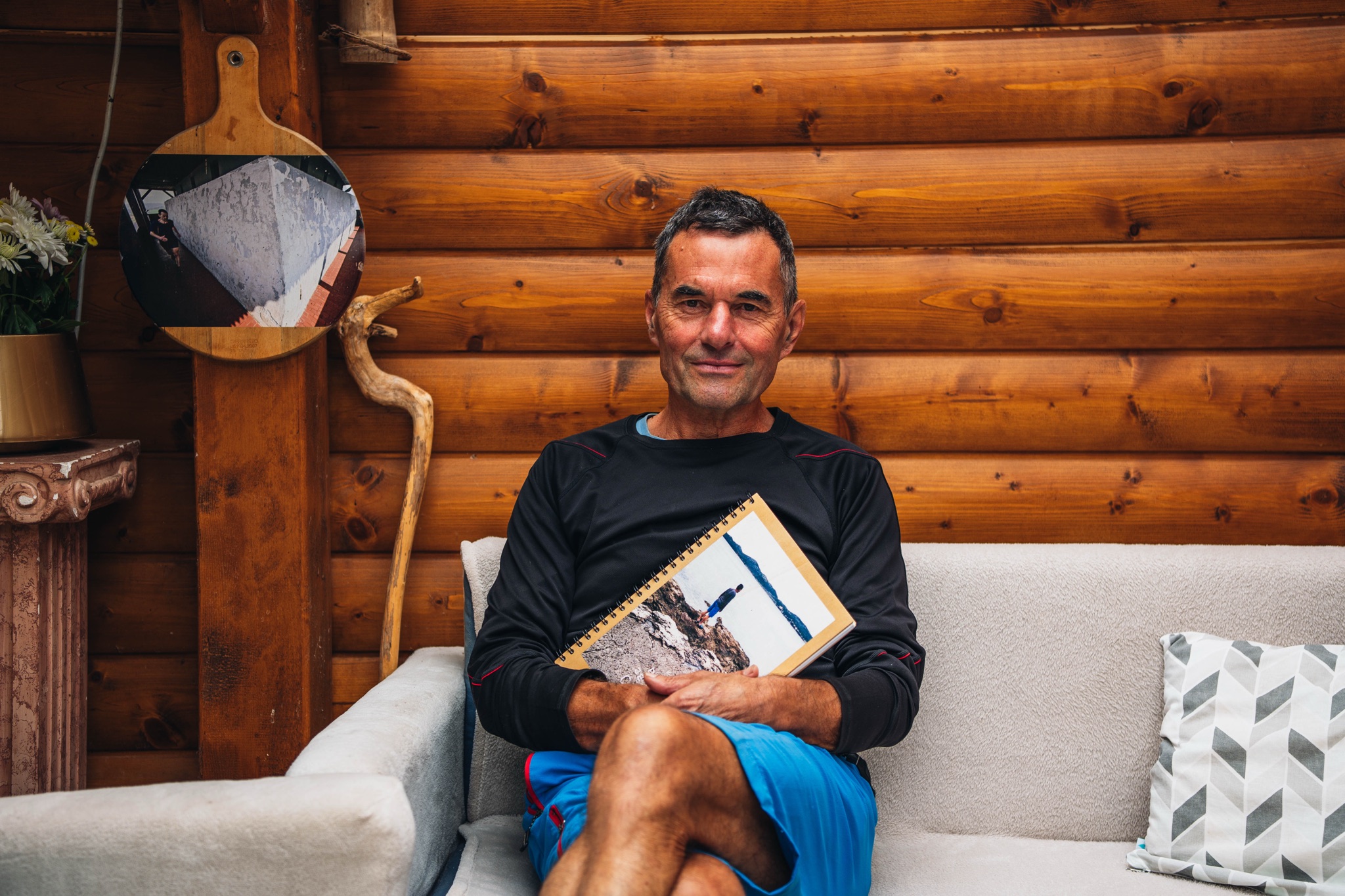
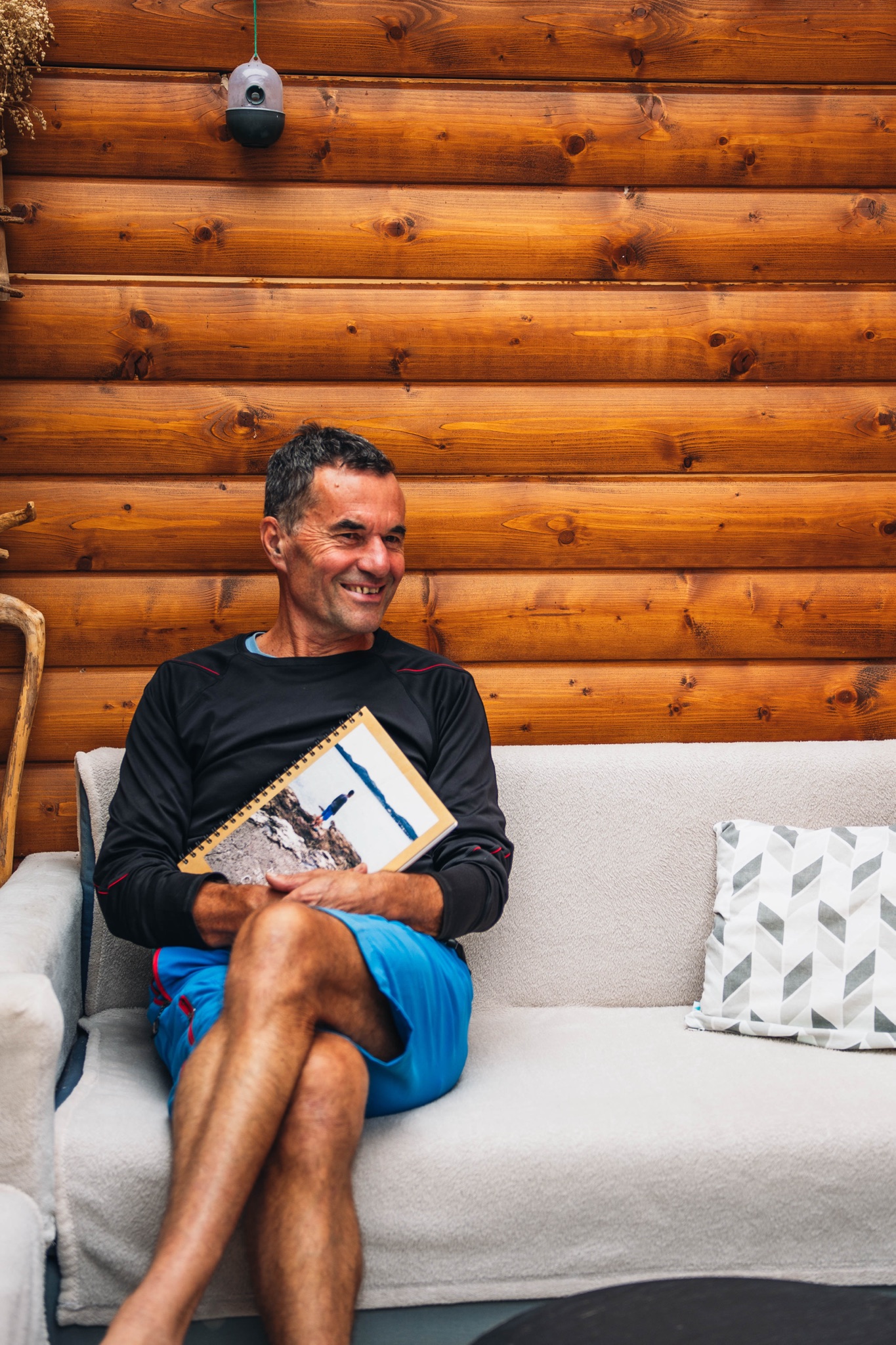
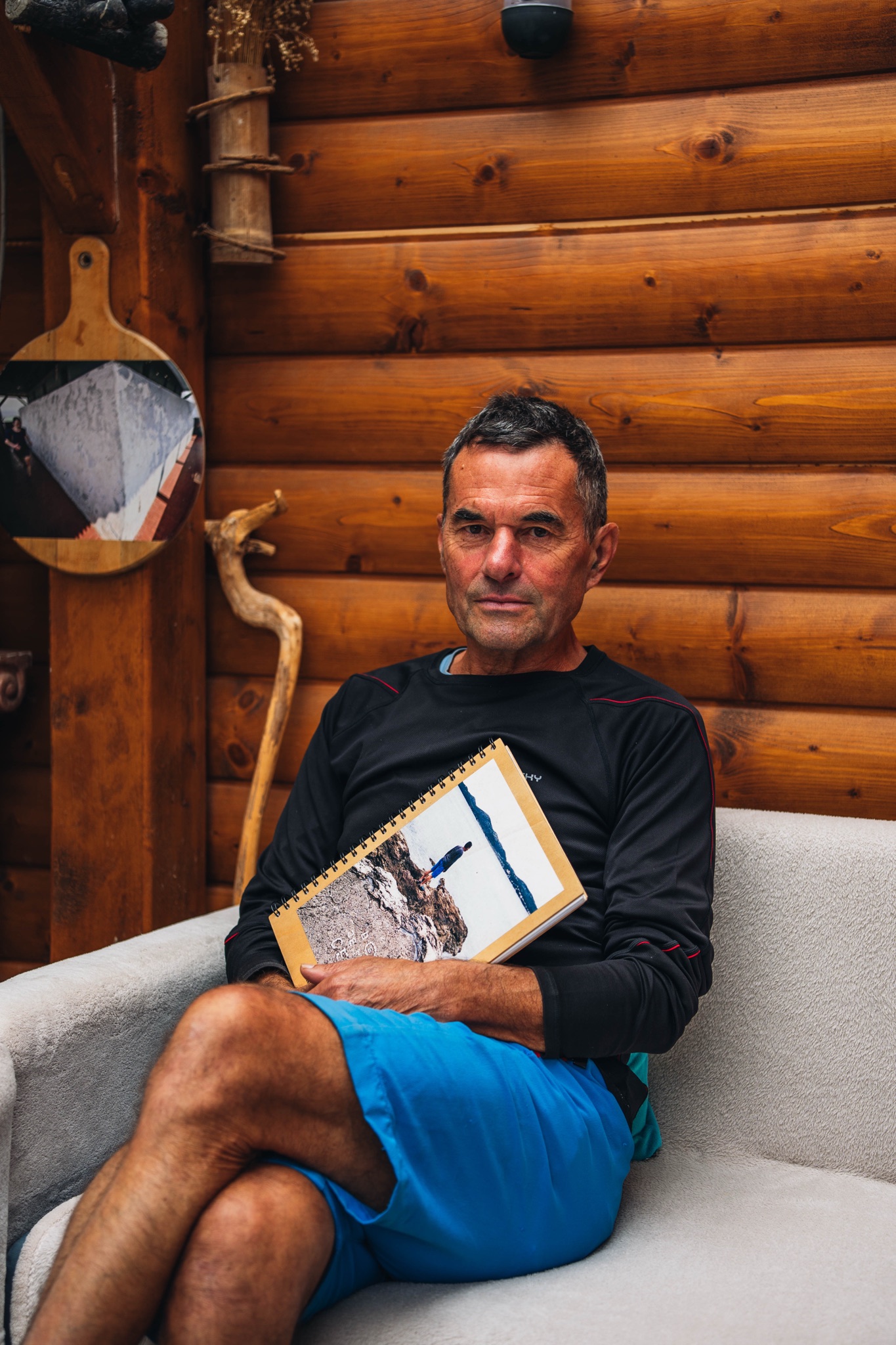
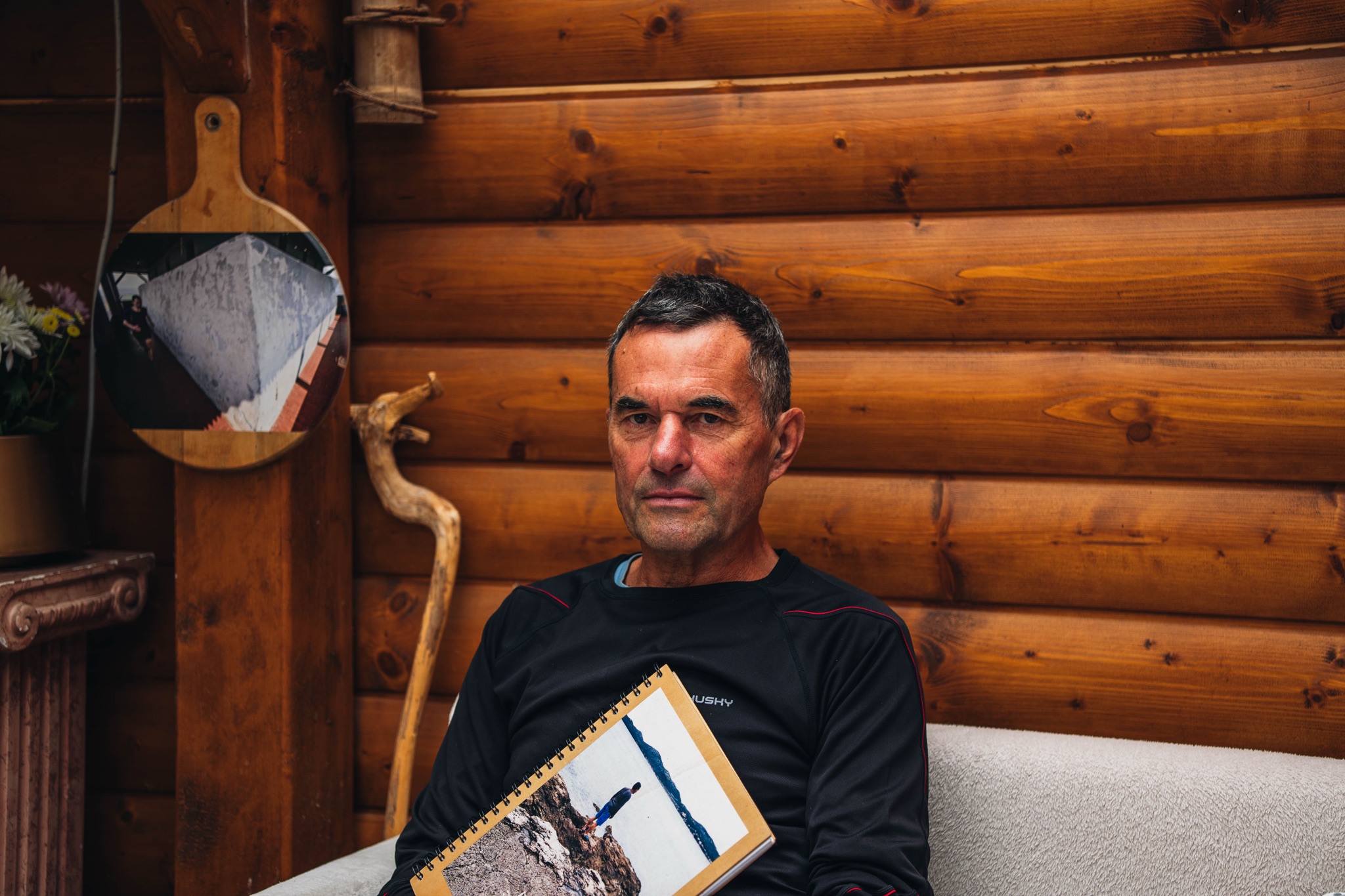
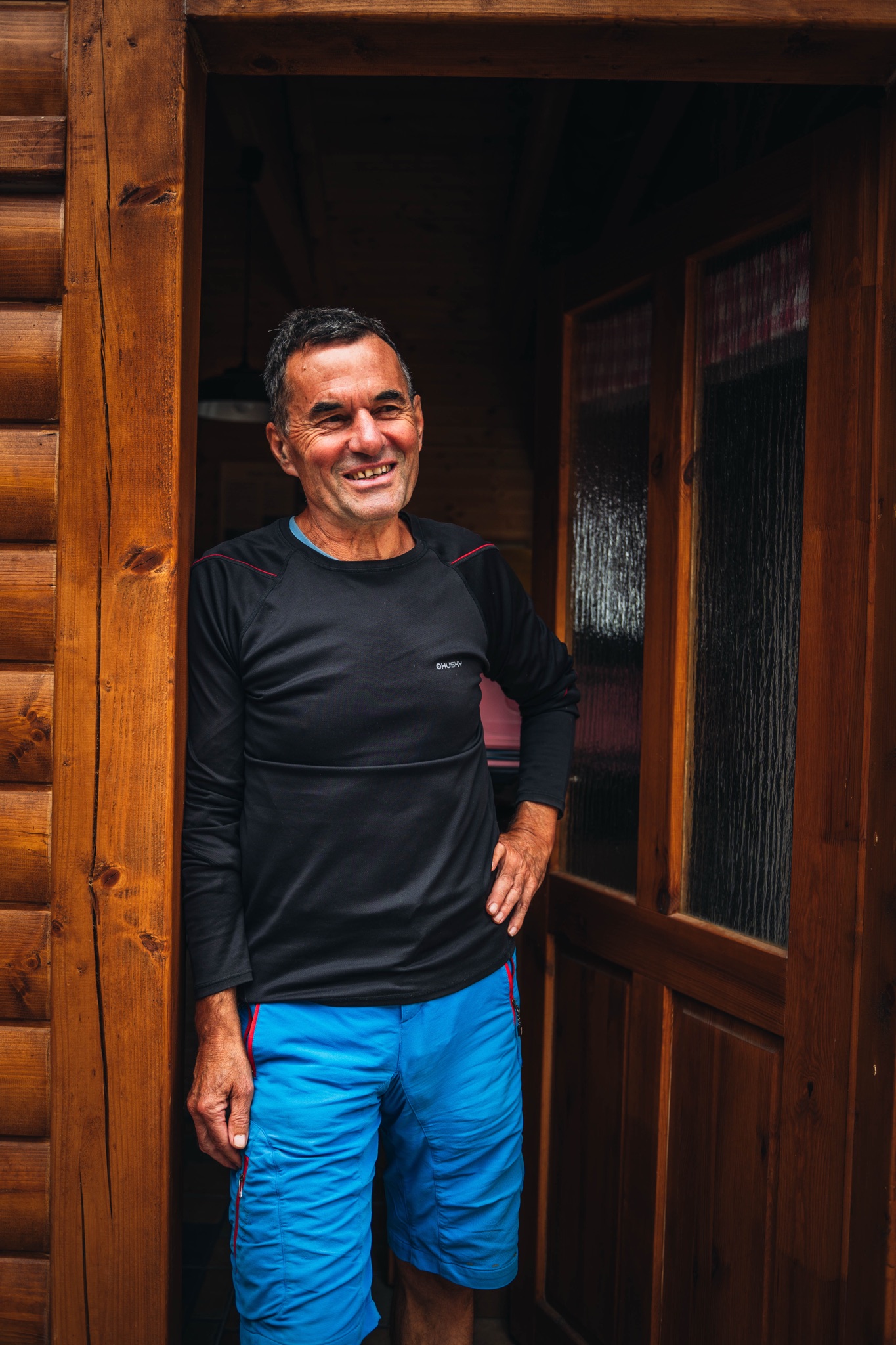
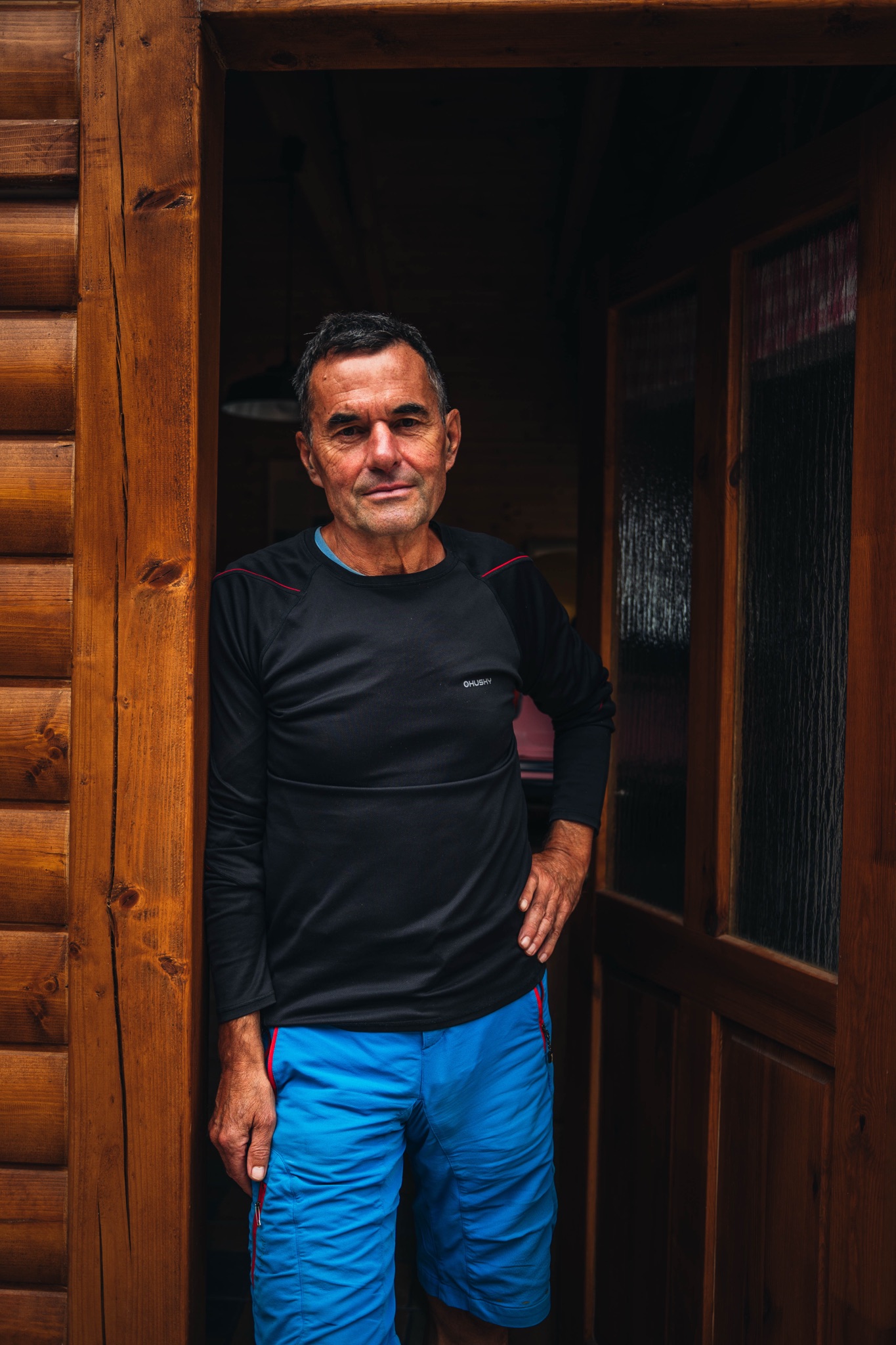
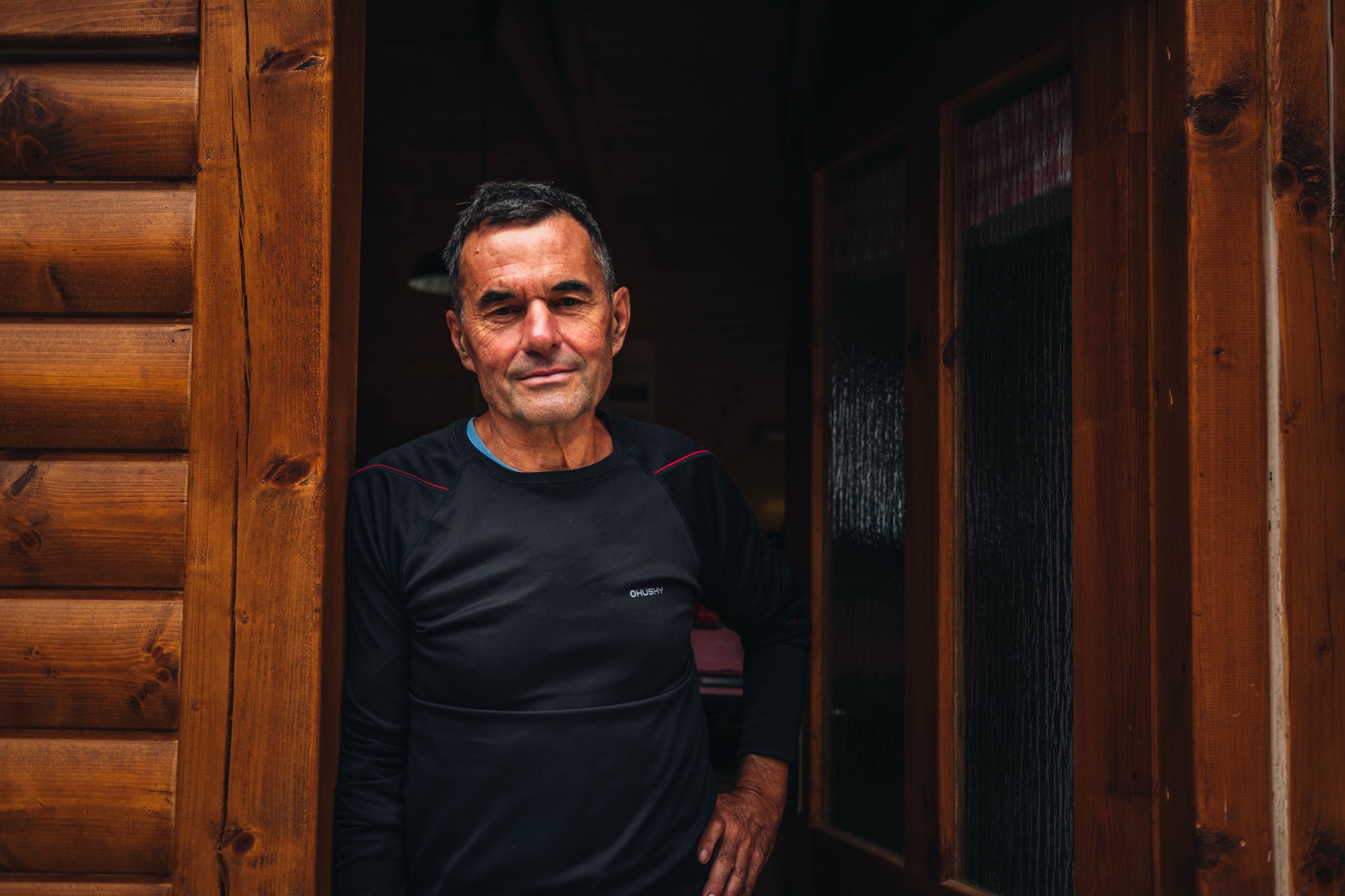
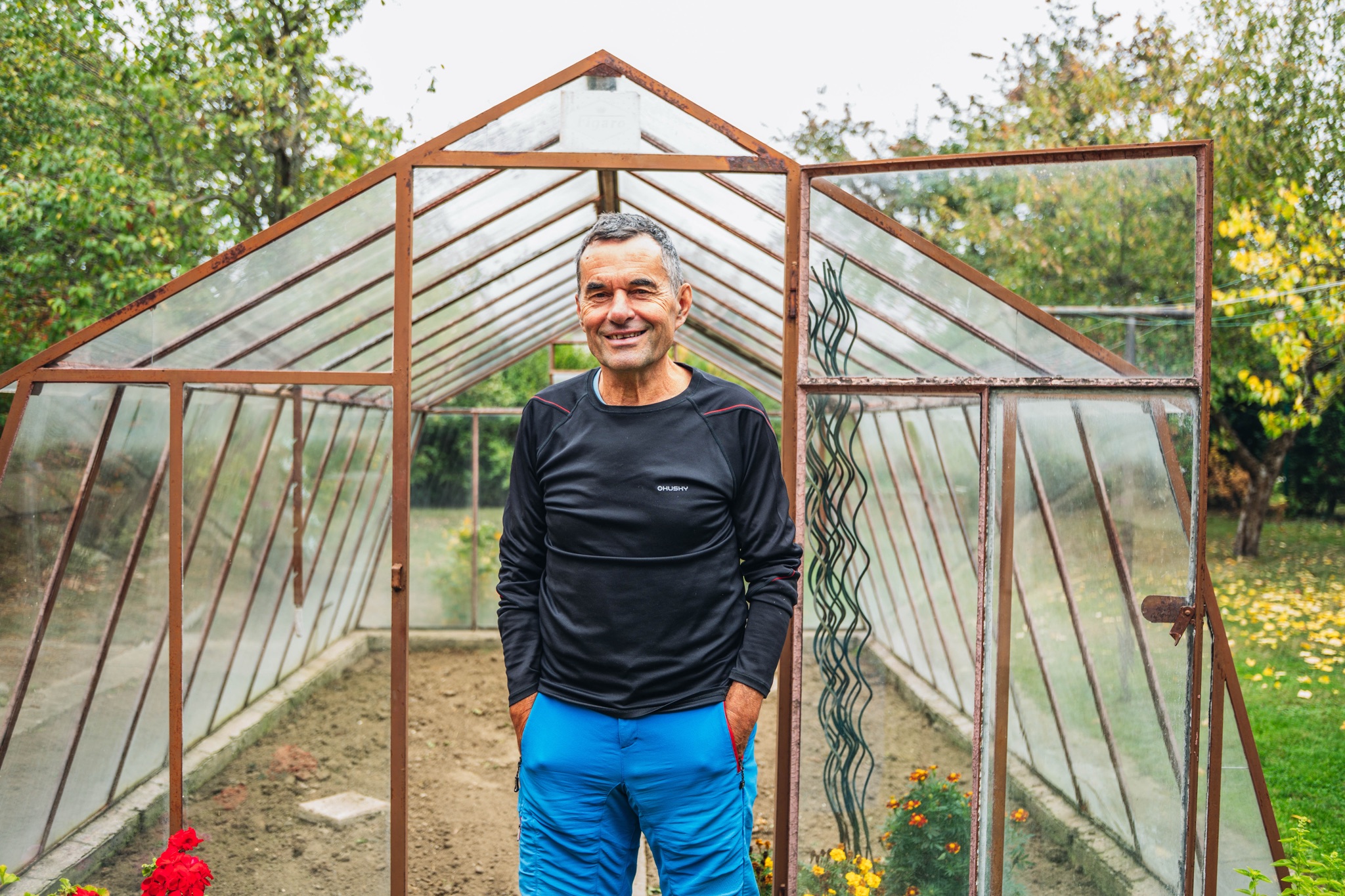
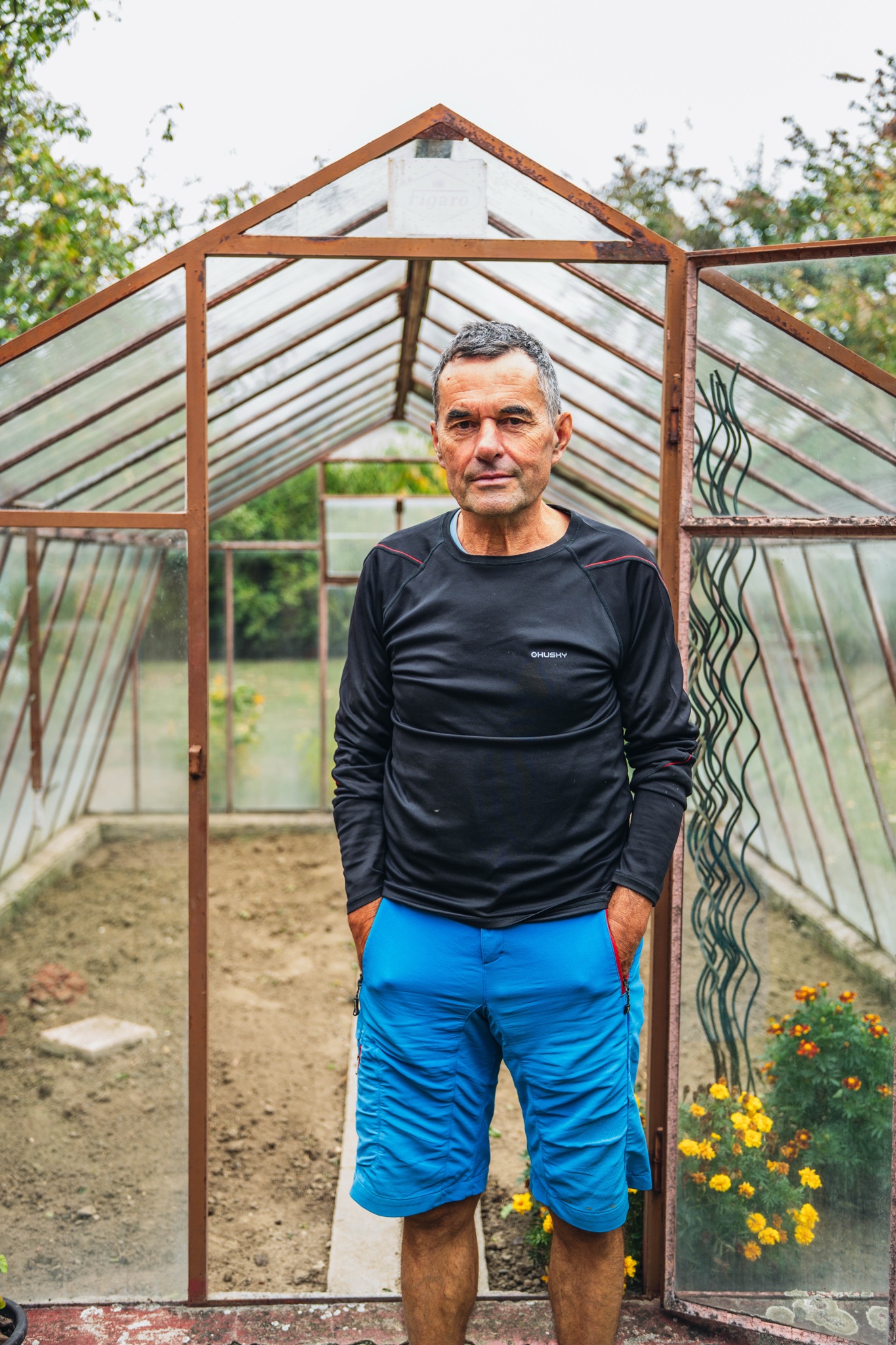
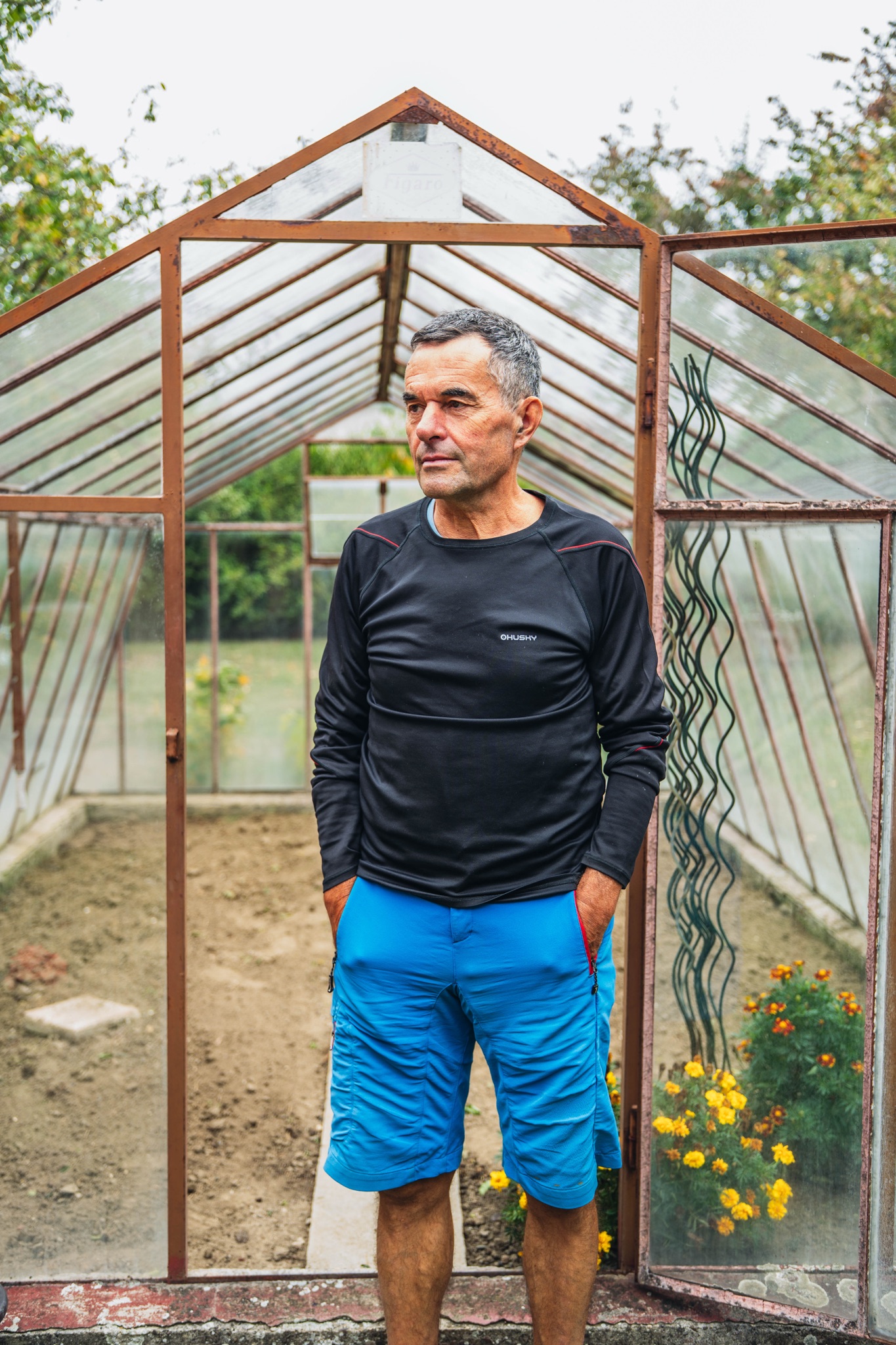
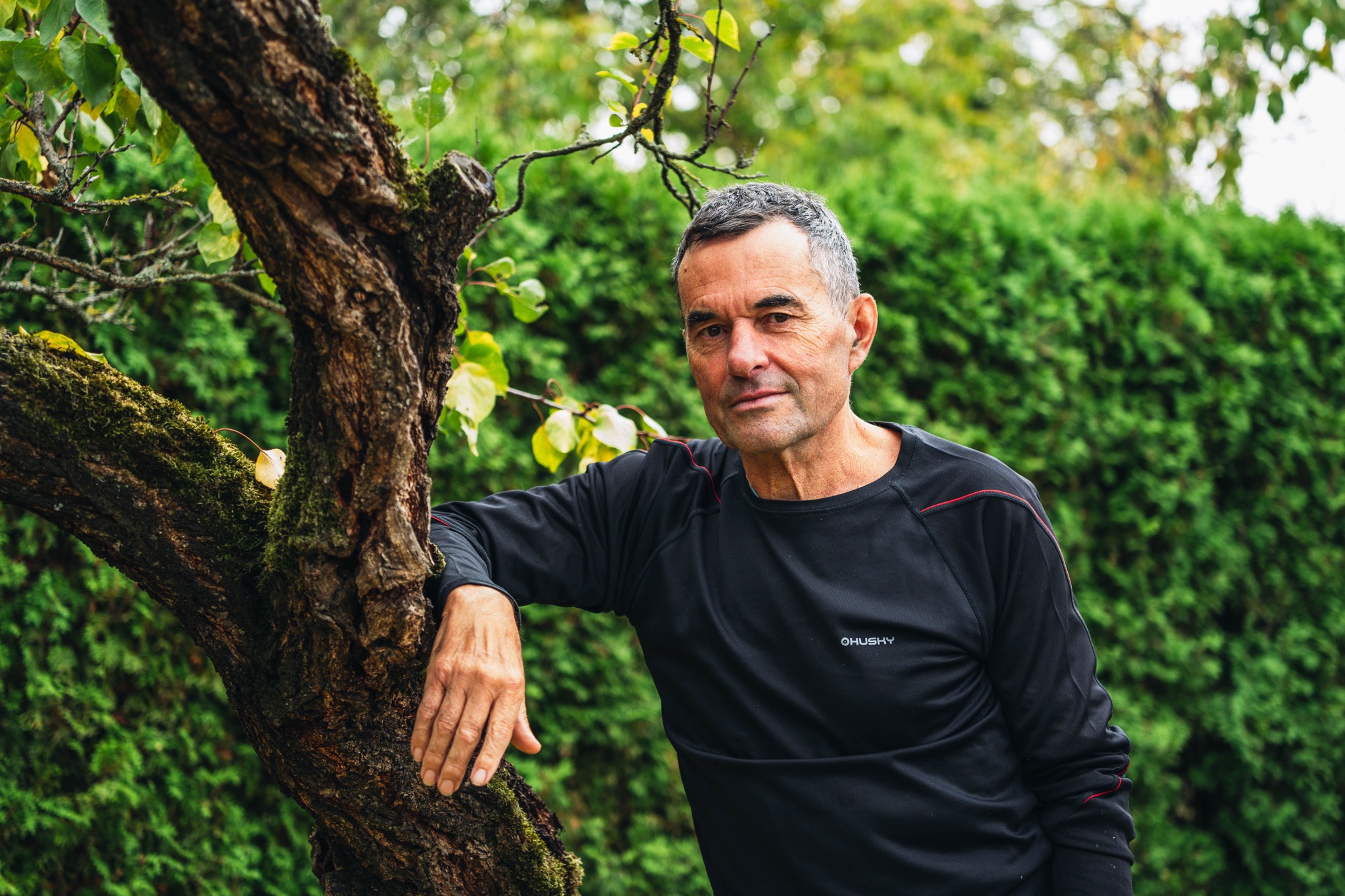
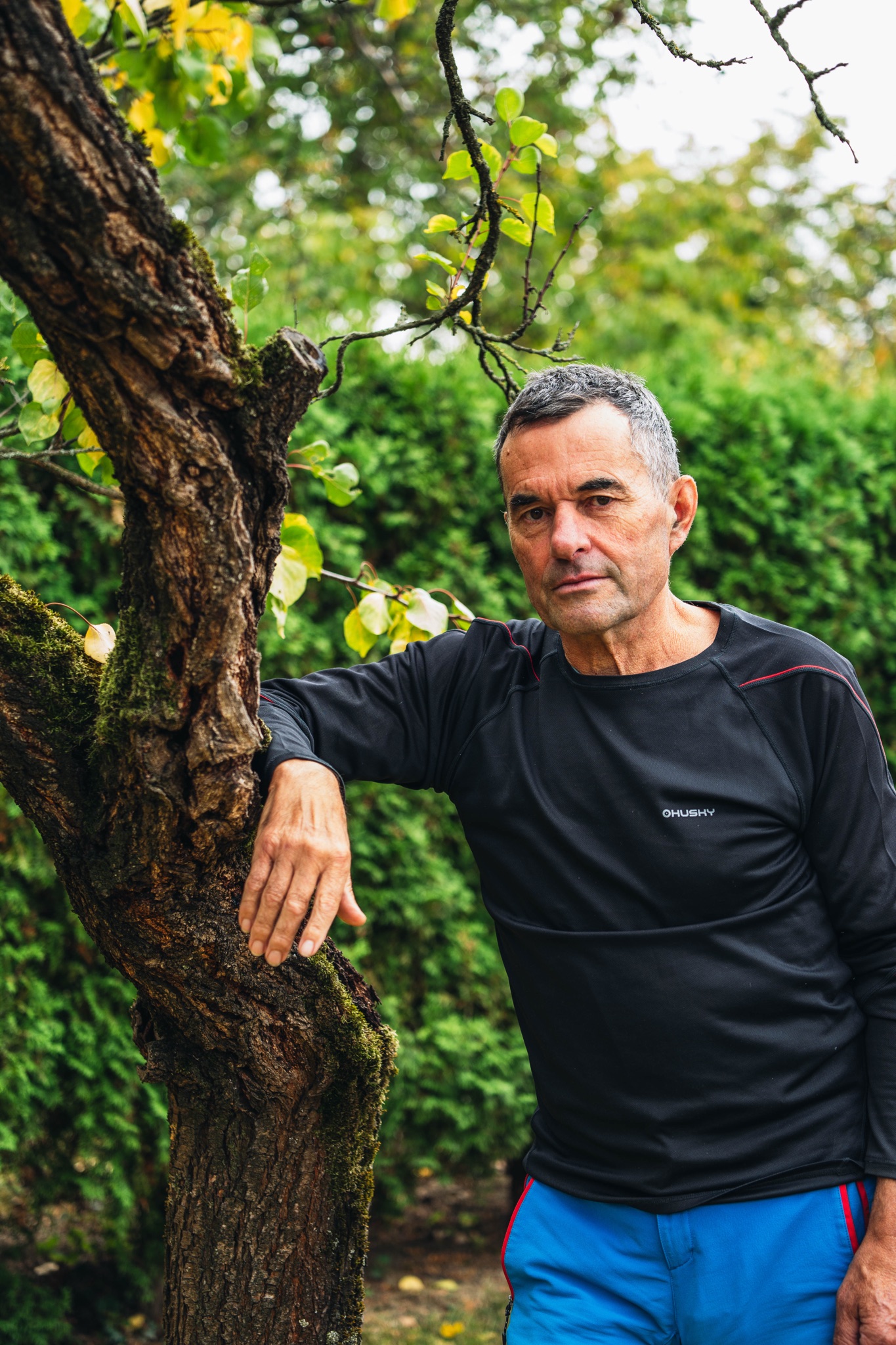
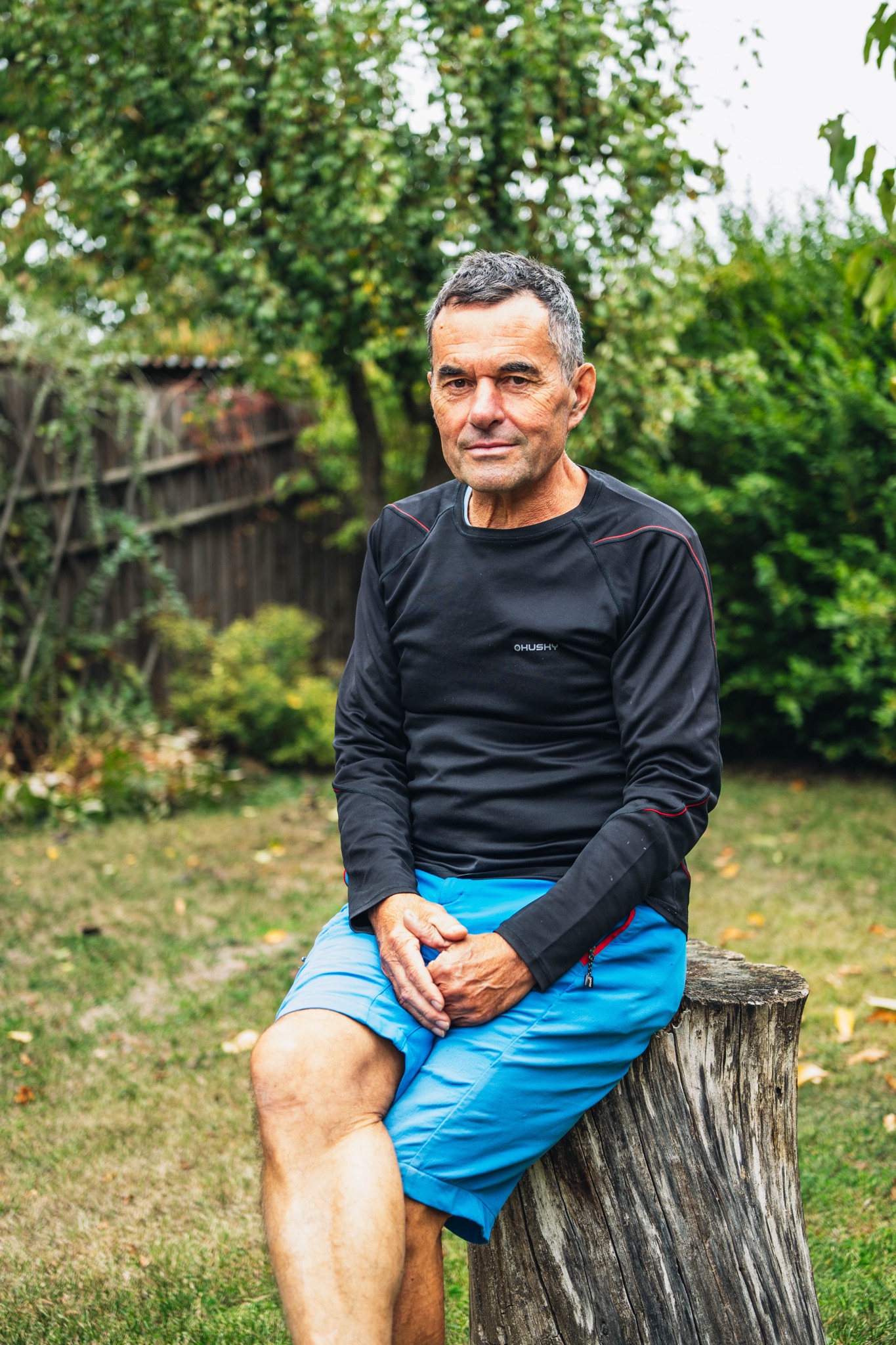
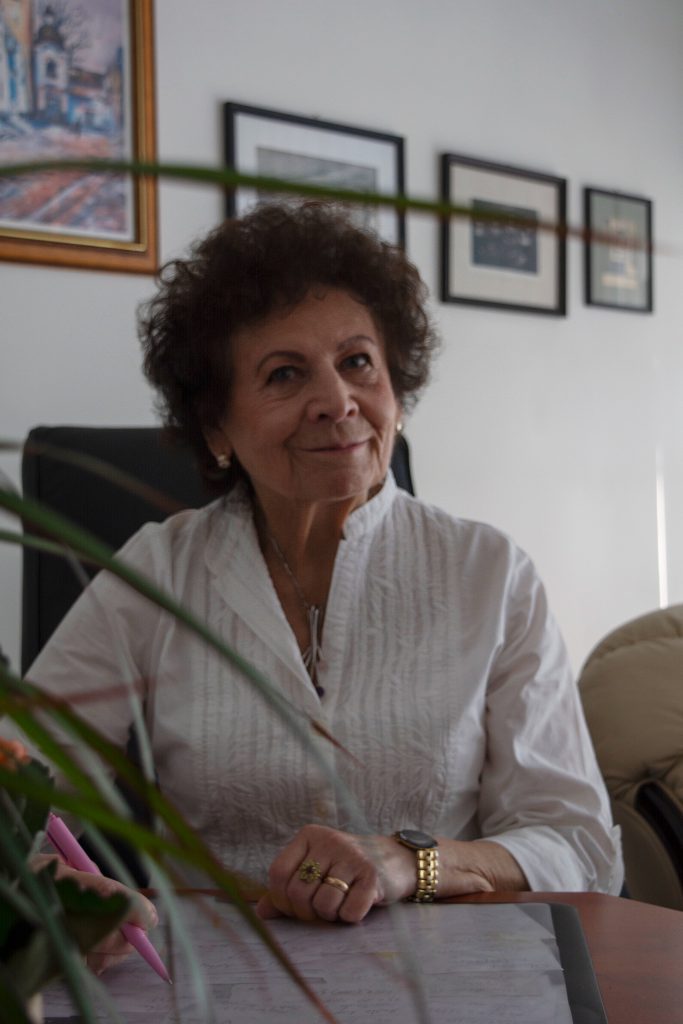
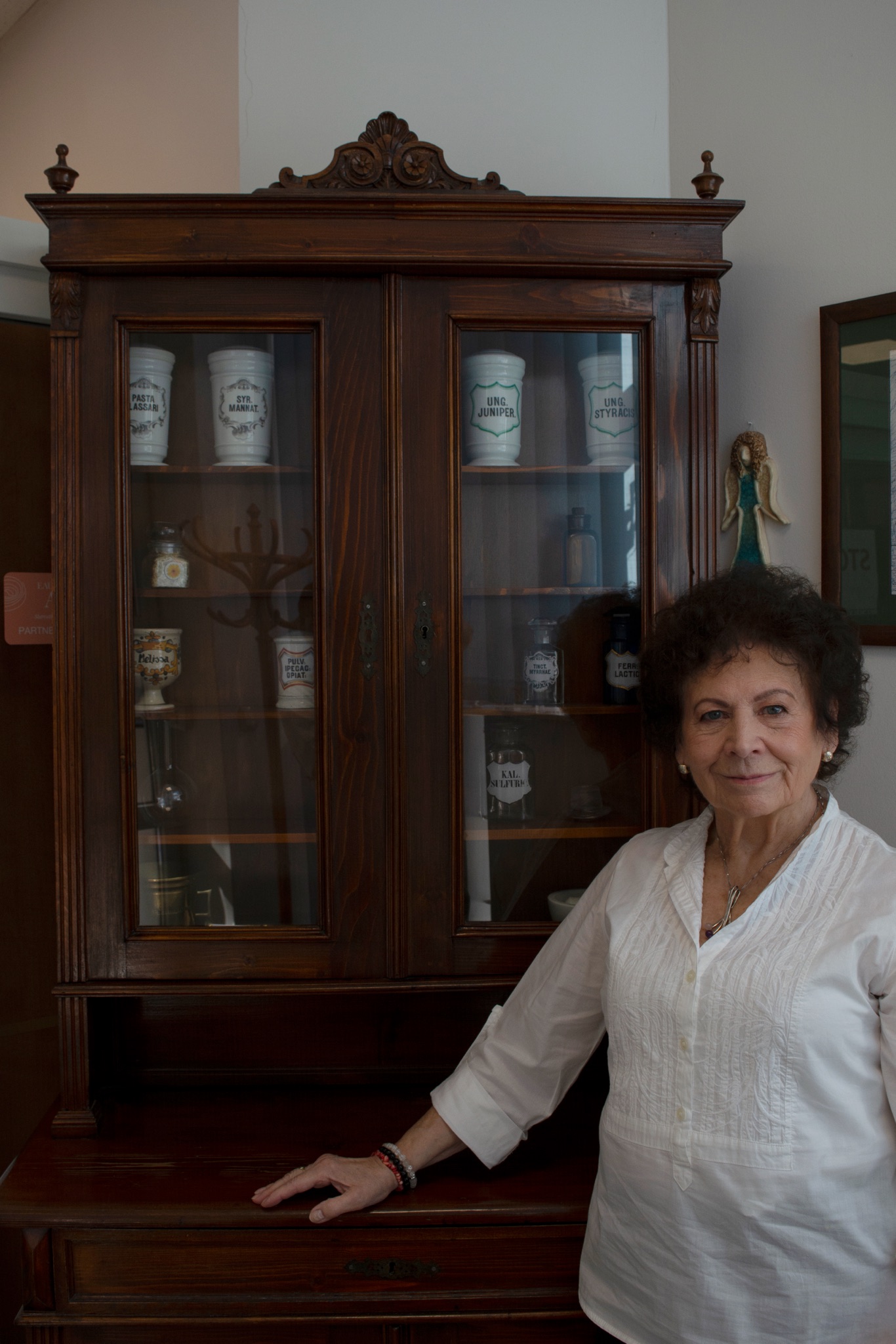
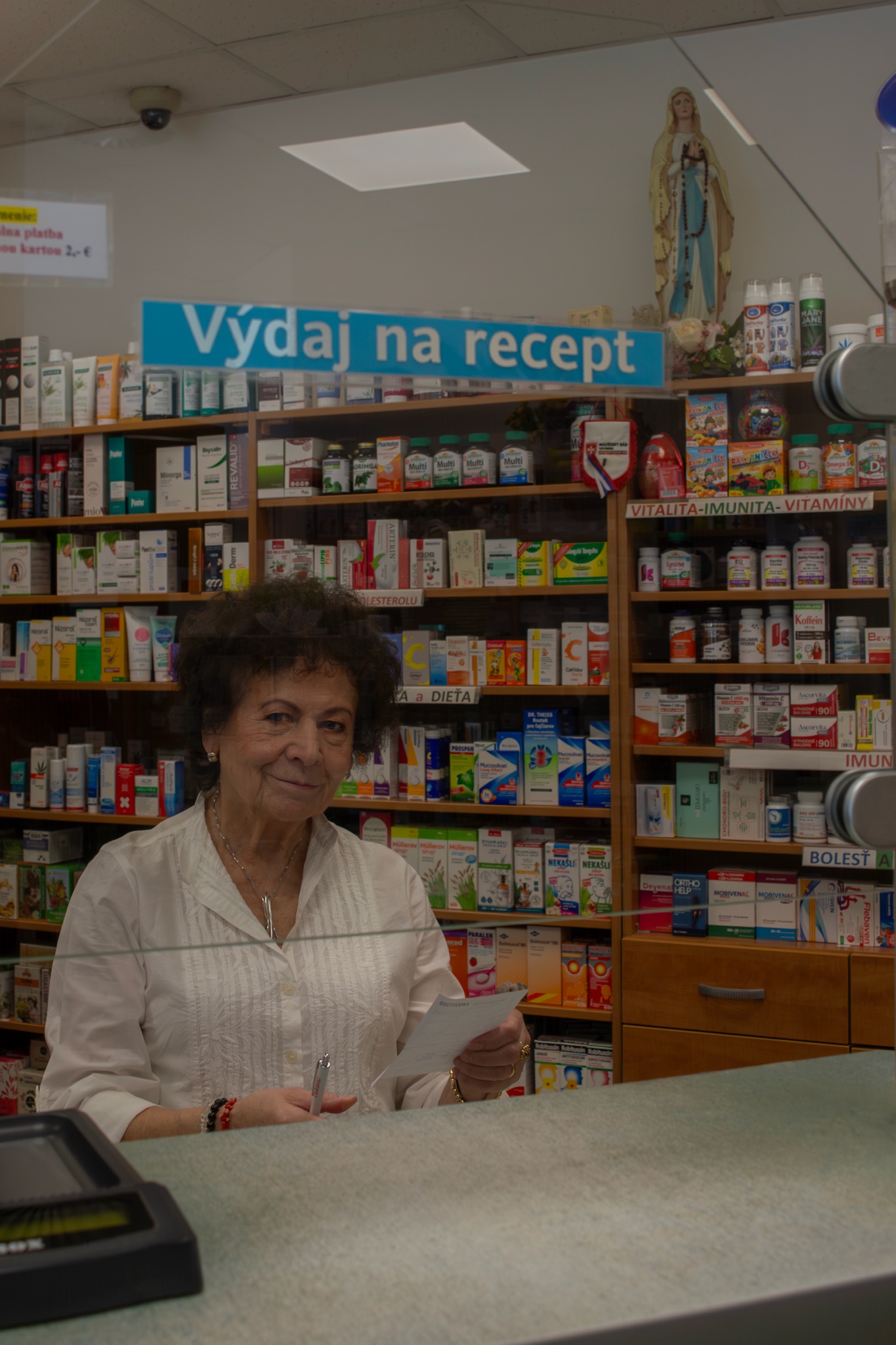
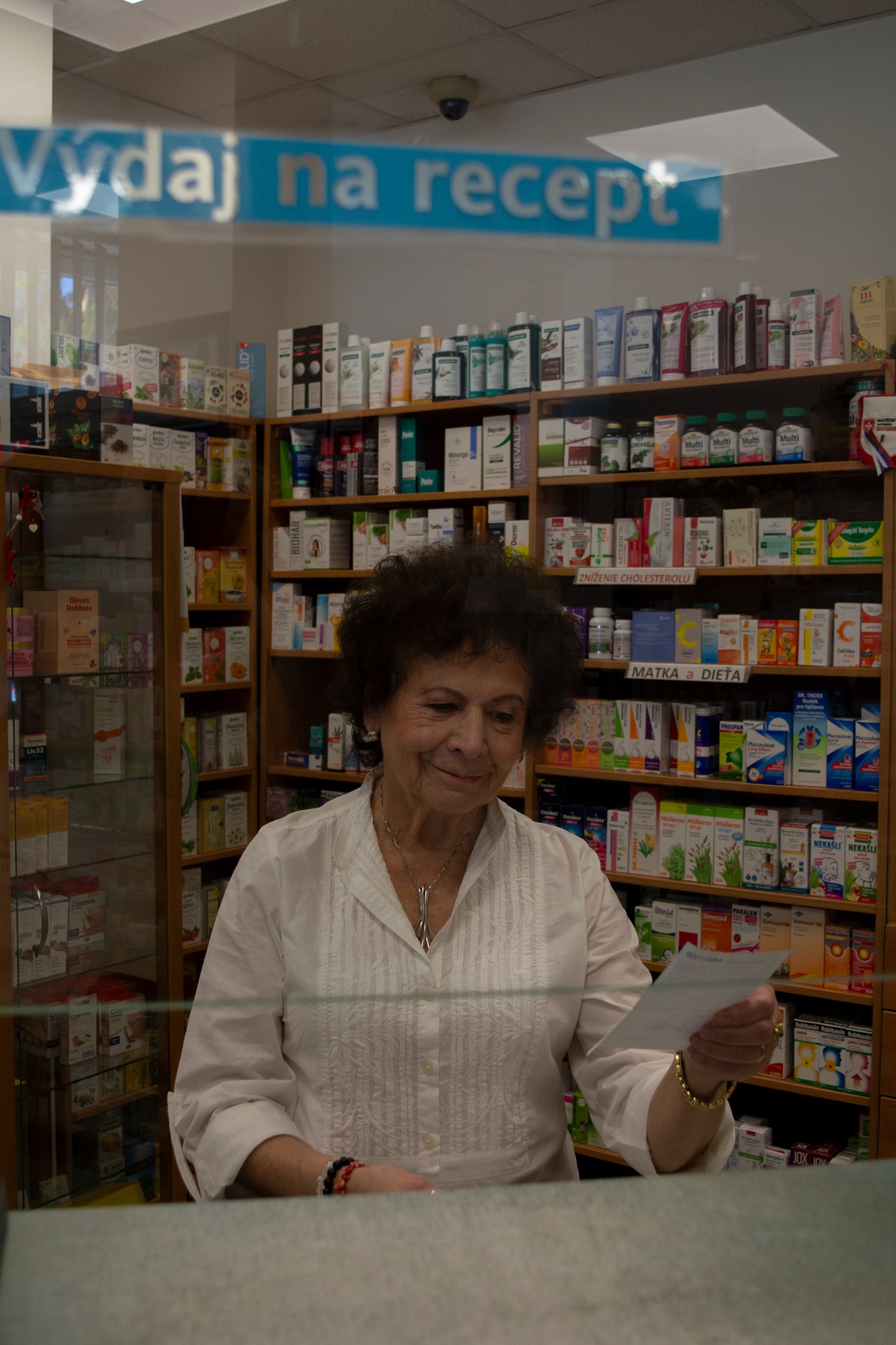
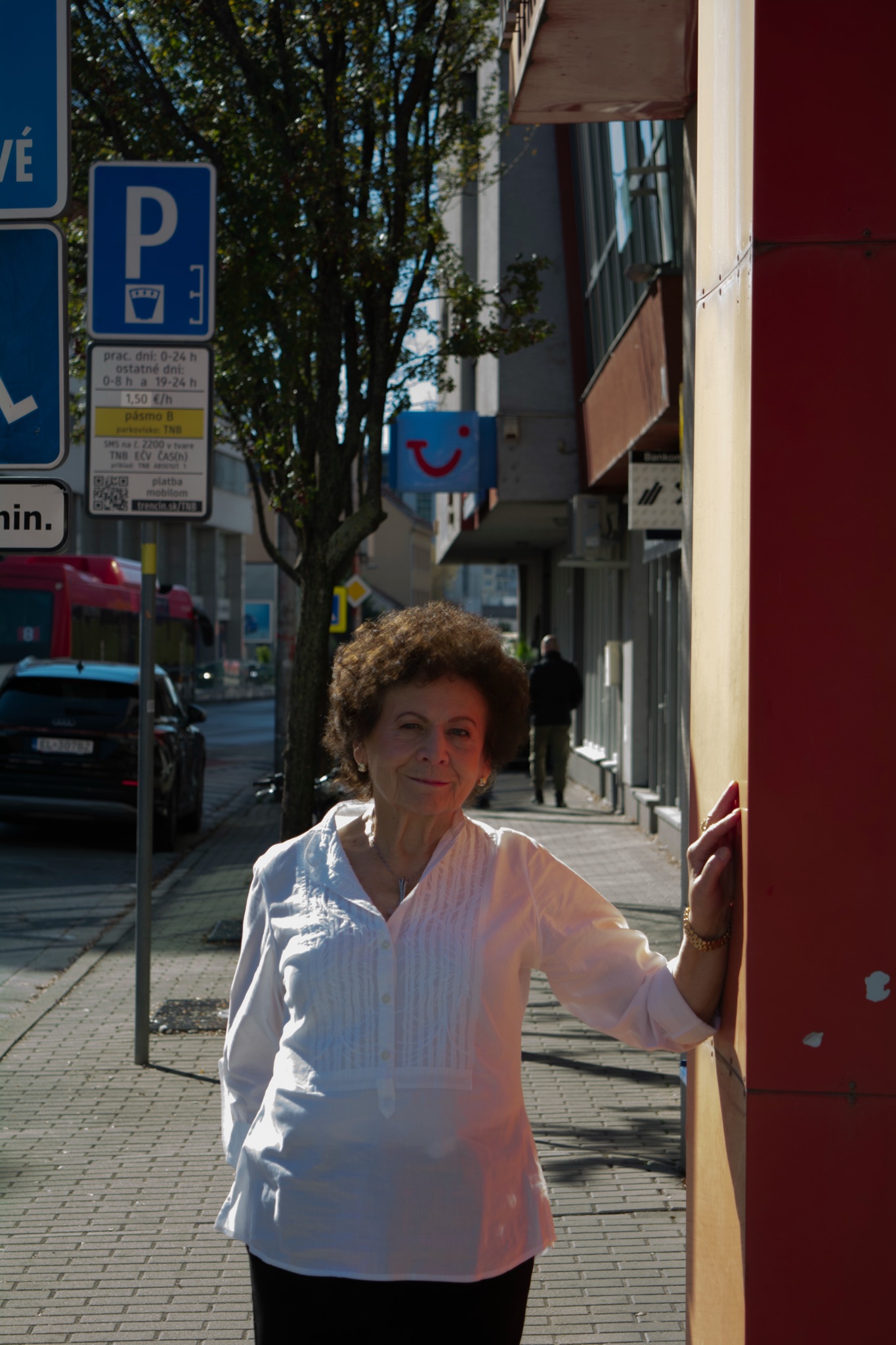
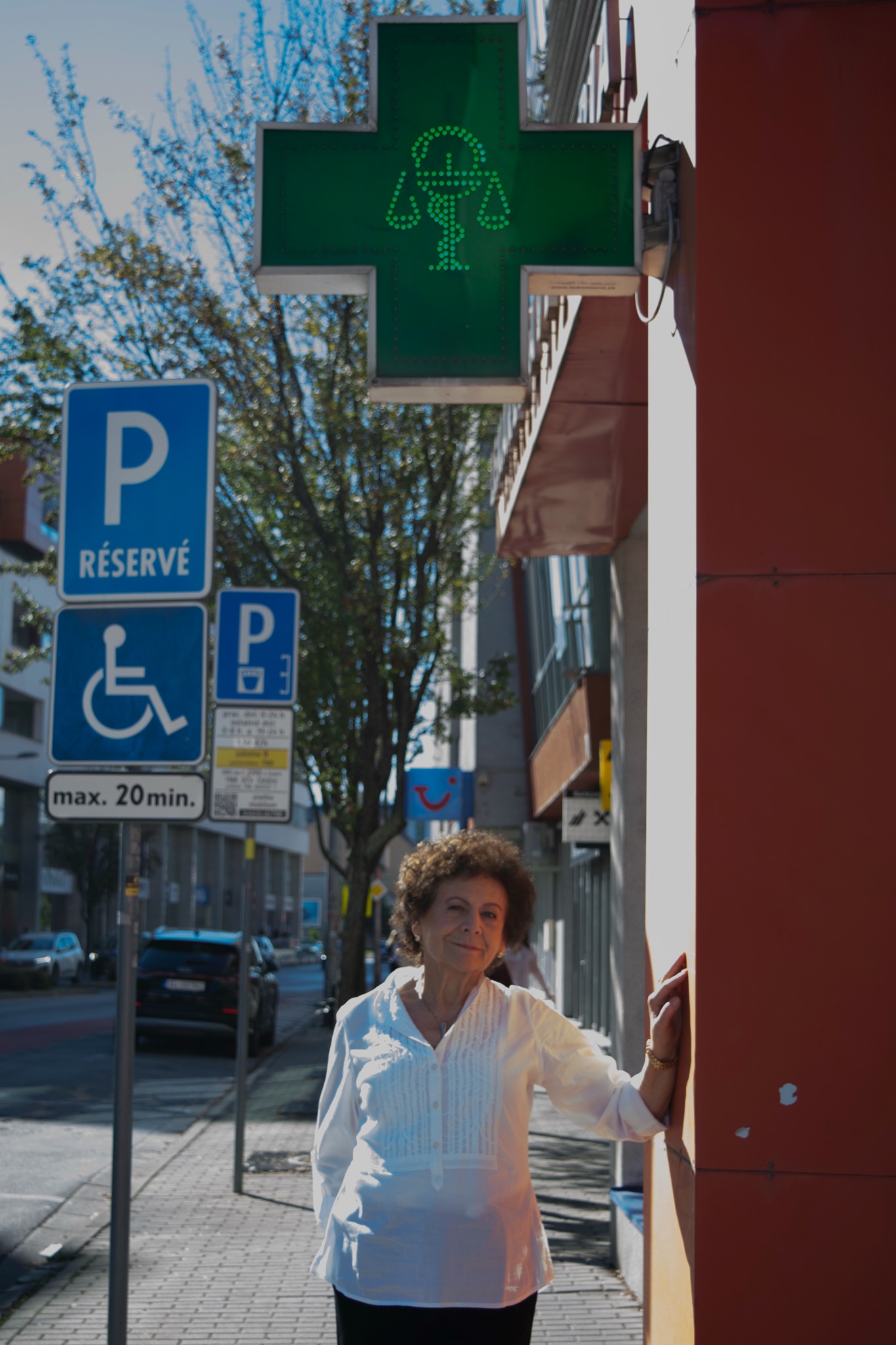
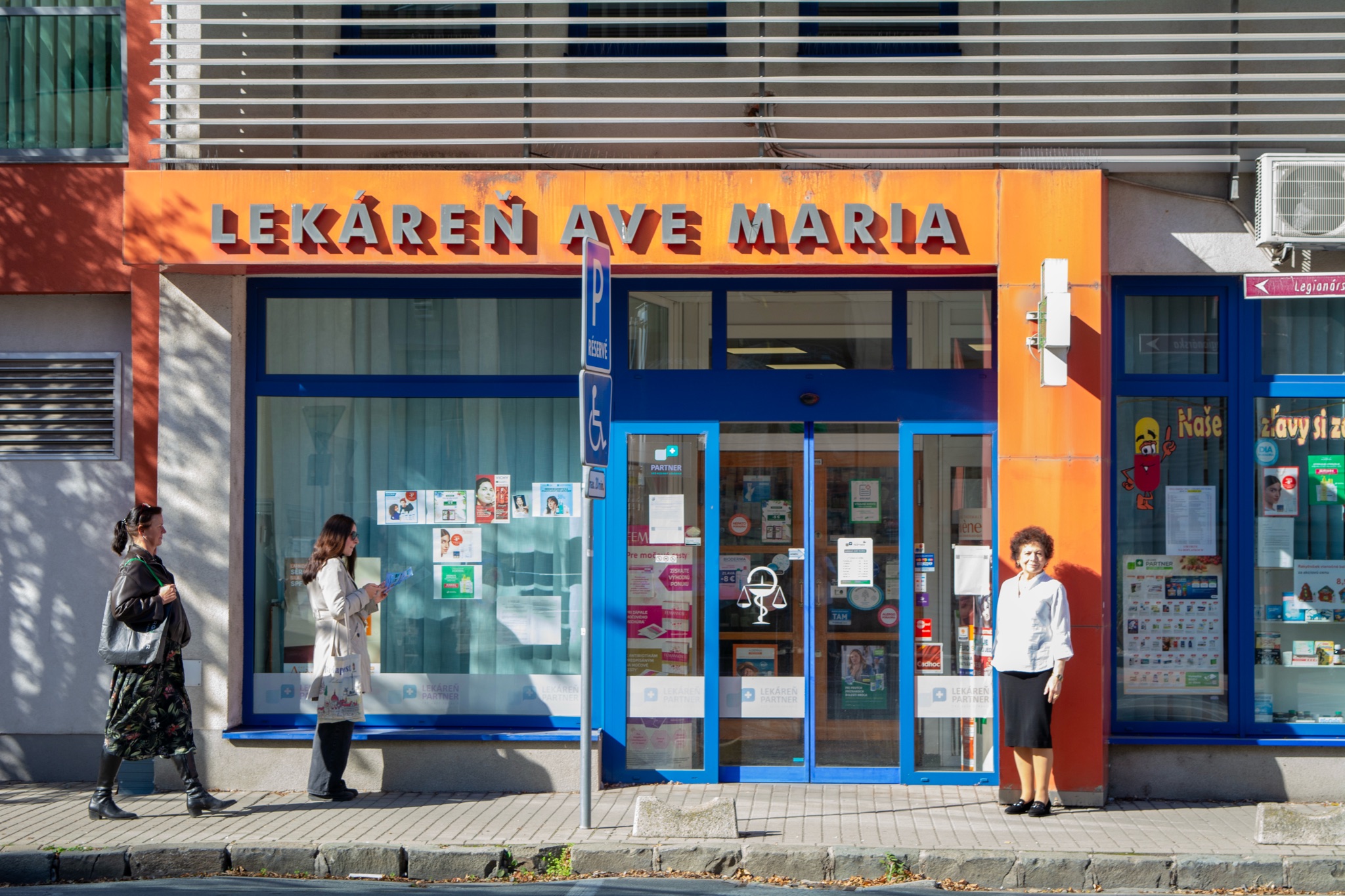
An angel in a pharmacist’s coat
Mária Pafčugová is a pharmacist almost every second of her life and with every cell of her being. What drew her to this work, whether she still enjoys it, and the experiences you never forget – she’s the best person to tell us about all that herself.
What led you to become a pharmacist?
I became a pharmacist by chance. Originally, in 1961, I was going to study Egyptology. They wrote to tell me the course wouldn’t open for another two years and that it was a field that mostly took men. At school we had to put down three choices of where we’d like to go, and a friend advised me to put down pharmacy. I asked her what on earth pharmacy was, and she told me it meant being a chemist. So I put it down and moved my application over to the faculty of pharmacy – and, by an irony of fate, the friend who’d wanted to be a pharmacist didn’t get in. My mum asked me: “And do you know, my child, what kind of stump you’ve sunk your axe into?” I didn’t, but once I’d sunk it in, I had to chop right through. Little by little I discovered that pharmacy is beautiful – it thrilled me so much that they were afraid to let me into the exams in case I set the bar too high [laughs].
Do you remember any interesting stories from work?
Behind you on the wall there’s an angel hanging that I was given by a little boy. When I was working at the pharmacy opposite the nursing school, there was a building nearby with big nails sticking out of it, and right by that wall a boy was standing astride his bike, head bowed, so I said to my colleague: “Why on earth is that boy standing there like that?” She told me they were probably just chasing each other about, but I couldn’t let it go, so I went over to him, stroked his head and was about to ask him what he was doing there, when I suddenly noticed that his head was impaled on that nail. I didn’t hesitate – I pressed a towel to his head and pulled him free. I drove to the hospital as fast as I could, while my colleague tried to find out who the boy even was. I went straight to surgery with him, then to X-ray, and they took him into theatre right away. I comforted his parents, telling them he’d be all right – and he was. When the boy was 18, he brought me an enormous bouquet of roses and that angel, and thanked me for the fact that he’s alive.
Another story is from 1992. I’d passed state exams in several languages and used to go on tours with clients. Once, when I’d got back from as far away as Venice, my husband told me someone had called. It was the head consultant from the infectious diseases ward, saying she needed 1,200 doses of rabies vaccine. In Mníchova Lehota, the children at school had been playing with a little dog that was very tame and was drooling, so they had it tested for rabies – and it did have it. At the time these vaccines were made in Russia, and it was my job to get hold of them as quickly as possible. I phoned round lots of places: I started in Bratislava and eventually got through to Karlovy Vary. I asked them for the doses there, and I had them by Tuesday. Nobody’s life was in danger.
What obstacles did you come up against while running the pharmacy?
For quite a while now we’ve been coming in on Saturdays as well to back up the disk, because it’s already happened to us once: one Friday morning a colleague came into work and there was a black zero glowing on his computer screen. It was a horrible feeling to have no information available and to have to redo the whole thing from scratch. And we weren’t the only ones – another 200 private outlets were knocked out that same night. But we survived; the whole team got stuck in and wrestled with it, staying at work until nine to get everything back up and running.
Do you take your work home with you?
No, no. I don’t take work home. Whatever needs doing, I do here, and at home I rest. Sometimes I get home so tired that I even fall asleep in front of the telly [laughs].
How do you feel about your award?
I really appreciate it. This year it’s exactly 60 years since I started working in this field, and I’m immensely glad that I still enjoy it, and I hope I’ll have the strength to keep going.
You mentioned that you have a garden and like to relax there.
In Sihoť we have a garden laid out like a park. You’ll find greenery there, flowers and one tree. Everyone stops and says that when they look into our garden, they practically come alive. I really love going there, with my husband too.
Thank you very much for the interview. I really admire the work you do, and how cheerful and optimistic you are through it all.
Interview by Veronika Vaneková, student at Ľudovít Štúr Grammar School in Trenčín
Photos by Nina Okkelová, student at the School of Applied Arts in Trenčín

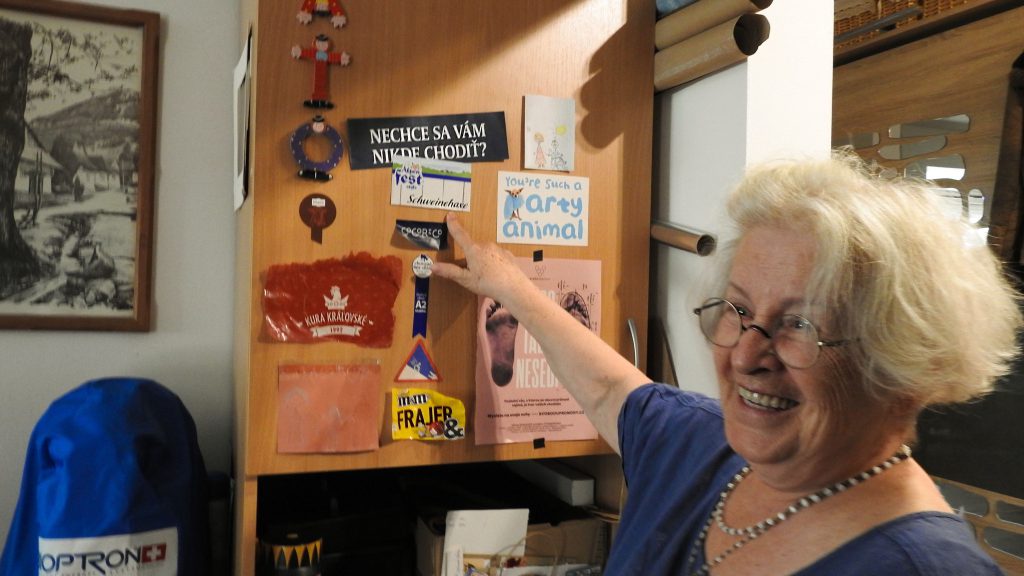
“My life is beautiful. The only thing I worry about is what Maťo will do without me.”
All her life she worked with children, organised sporting events and brought people together. For more than three decades now, Mariana Kuhlöffelová has been caring for her disabled grandson, Maťo. Despite the obstacles they face every day, they haven’t lost their sense of humour or their zest for life. Quite the opposite, in fact. We talked to her about the past, family, relationships between people, and how our society treats people with disabilities.
You spent your whole life working with children and in sport. How did it all work, and how do you look back on that time?
I worked at a children’s centre, where I was in charge of sports activities across the whole district and the region. We organised long-running competitions, leagues, sports clubs, training camps and all sorts of events. At one time there were more than sixty a year. We did swimming, we went skiing, and lots of other activities on top of that. But the best thing about it was the relationships that grew out of it. We still meet up with many of the children – grown-ups now – and their parents to this day. We still have several groups of friends and we do all kinds of things together. That’s the greatest reward for me.
What is life like for you and Maťo together?
Maťo and I have been together for about thirty-three years now. I have to be with him practically round the clock, because he needs help with everyday tasks. But our life is cheerful – sometimes demanding, but definitely never boring. We go to concerts, talks and on trips; we used to travel to the seaside, too. Actually, we do everything together. About the only thing I do on my own is the shopping. I try to make sure we experience as much as possible and that Maťo has beautiful memories.
You also have Kubo, your little dog, for company. He clearly doesn’t want to leave your side even during the interview. How did he come to you?
Thanks to Maťo, actually. When he came to live with me, I was still spending a lot of time at training sessions. I didn’t want him to be at home on his own, so we decided to get a little dog. We wanted a small, cuddly one that would fit on a lap. And so along came Kubo. With one blue eye and one brown. He’s been with us for sixteen years now and absolutely adores Maťo. He doesn’t lick me, for instance, but he’s only too happy to lick him!
What are the biggest obstacles that people with disabilities come up against?
The biggest problem is accessibility and the lack of opportunities. Maťo is an intelligent young man who wants to learn and develop. He wanted to study psychology, for example, but he couldn’t freely choose a university, because many buildings… simply have stairs. And they often aren’t accessible for his wheelchair. Even when we were choosing his earlier schools, we had to think first and foremost about whether he could get into them at all. And surely that shouldn’t decide a person’s future. In this respect we still lag behind the Nordic countries.
Have you ever taken the initiative yourself to help improve these conditions?
Yes, we managed to raise about a million Slovak crowns – roughly thirty thousand euros – and set up a centre in Trenčín for children with similar disabilities. The city gave us premises, which we renovated and furnished. The problem, though, was long-term funding. You need specialists to work with the children, and they have to be paid. As long as I had the strength to do a great deal myself, it worked. But later, without enough support, the centre couldn’t carry on, and we had to close.
What worries you most about caring for Maťo?
That’s a question that troubles a great many parents and carers. What will happen to our loved ones when we’re no longer here? Maťo needs another person’s help, and I know I won’t be here forever. That’s exactly why I’ve already cut back on some of my activities, so as not to take unnecessary risks. I’d like to be immortal, but I probably won’t manage that. I have a beautiful life; I’m not complaining. I just want to know that Maťo will be well looked after even without me.
And finally, what message would you like to leave the younger generation with, to finish?
Above all, that you should respect one another. I respect young people, because I know they’re capable and can do a great deal. There’s no point grumbling about the young just because they live differently from us. We were different from our parents, too. We should help each other more and realise that nobody knows what tomorrow will bring. Any one of us may one day need someone else’s help. That’s why we should treat each other with respect.
Interview by Andrej Izreal, student at Ľudovít Štúr Grammar School in Trenčín
Photos by Lucia Omastová, student at the School of Applied Arts in Trenčín
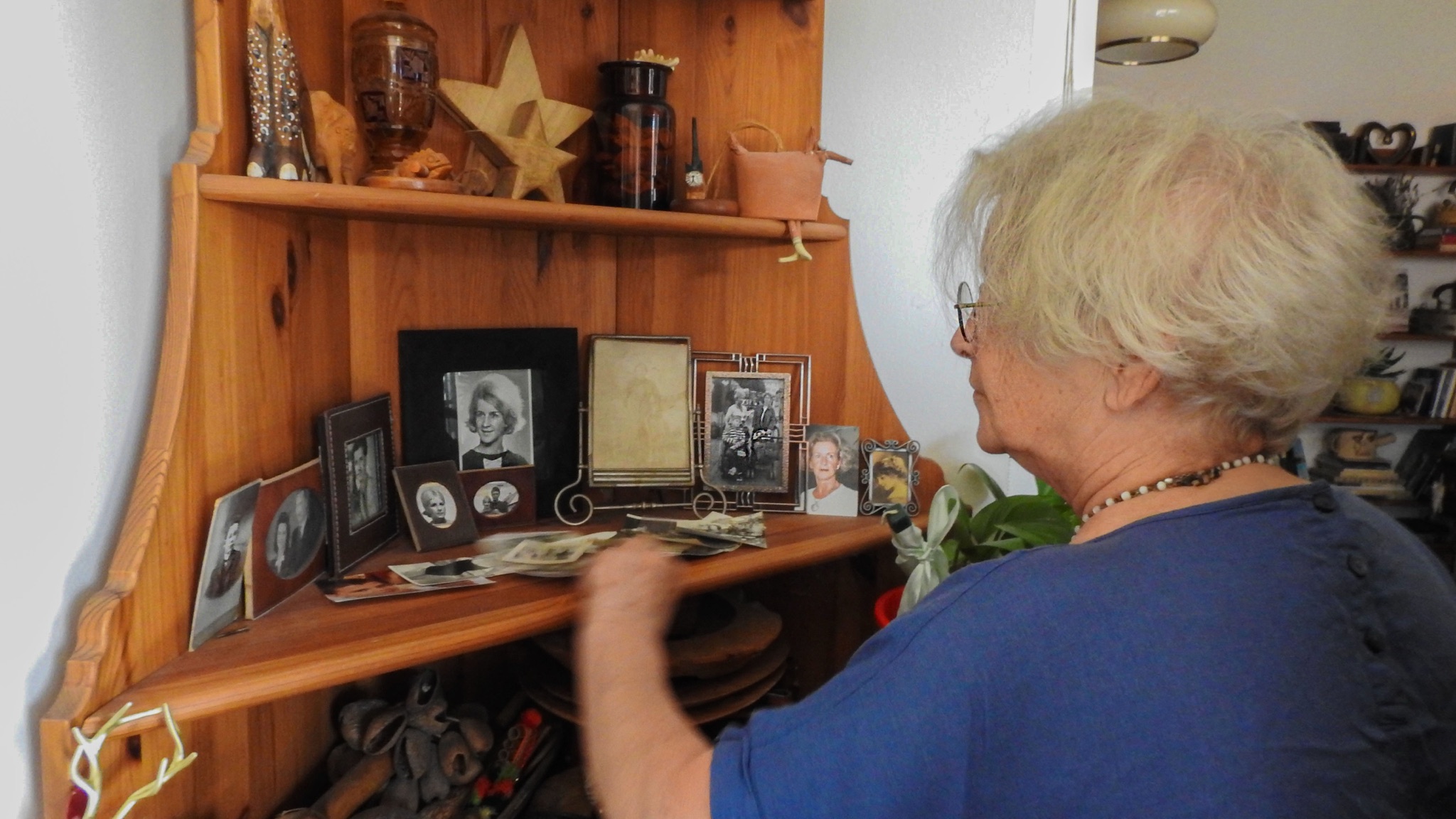
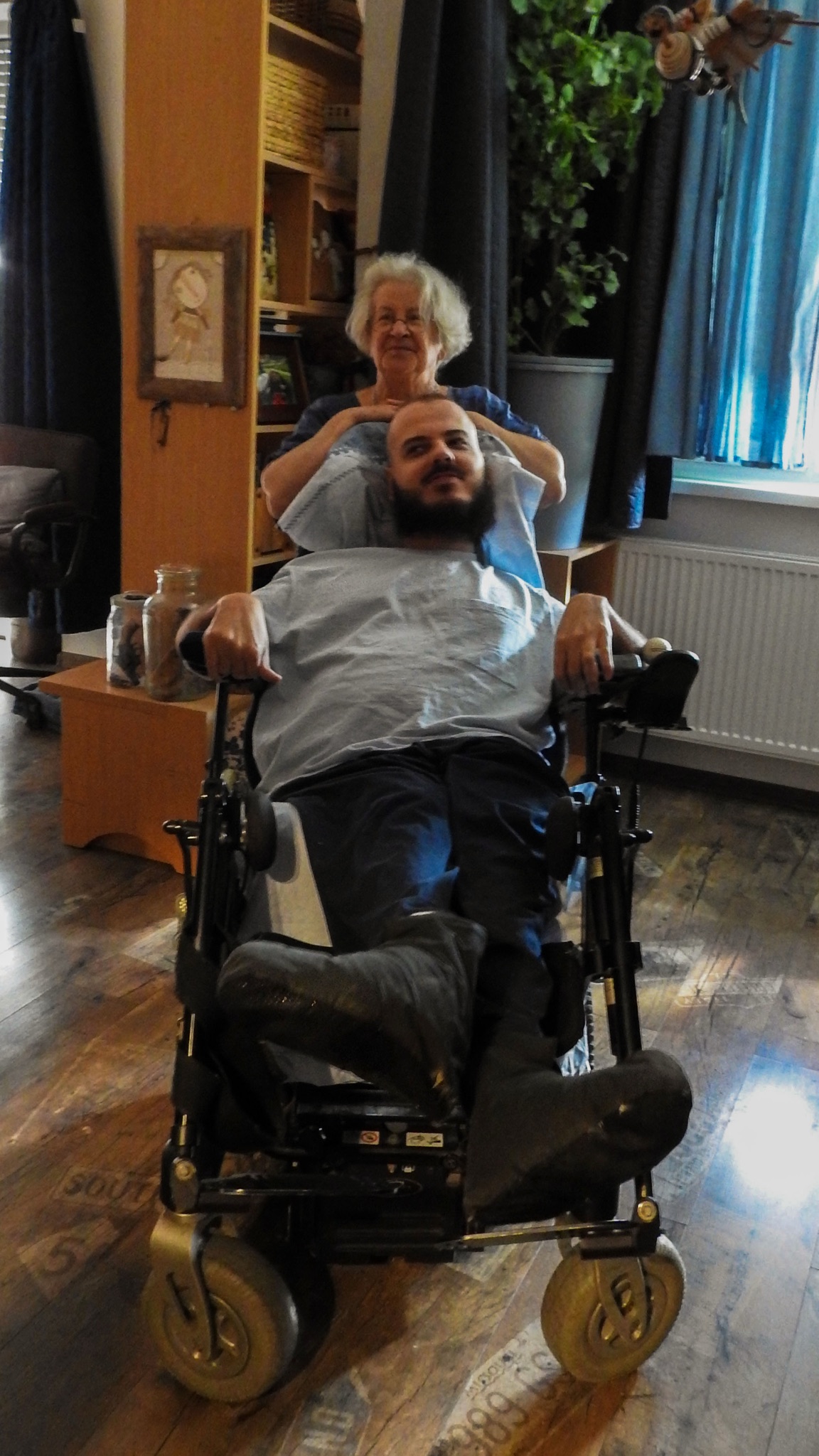
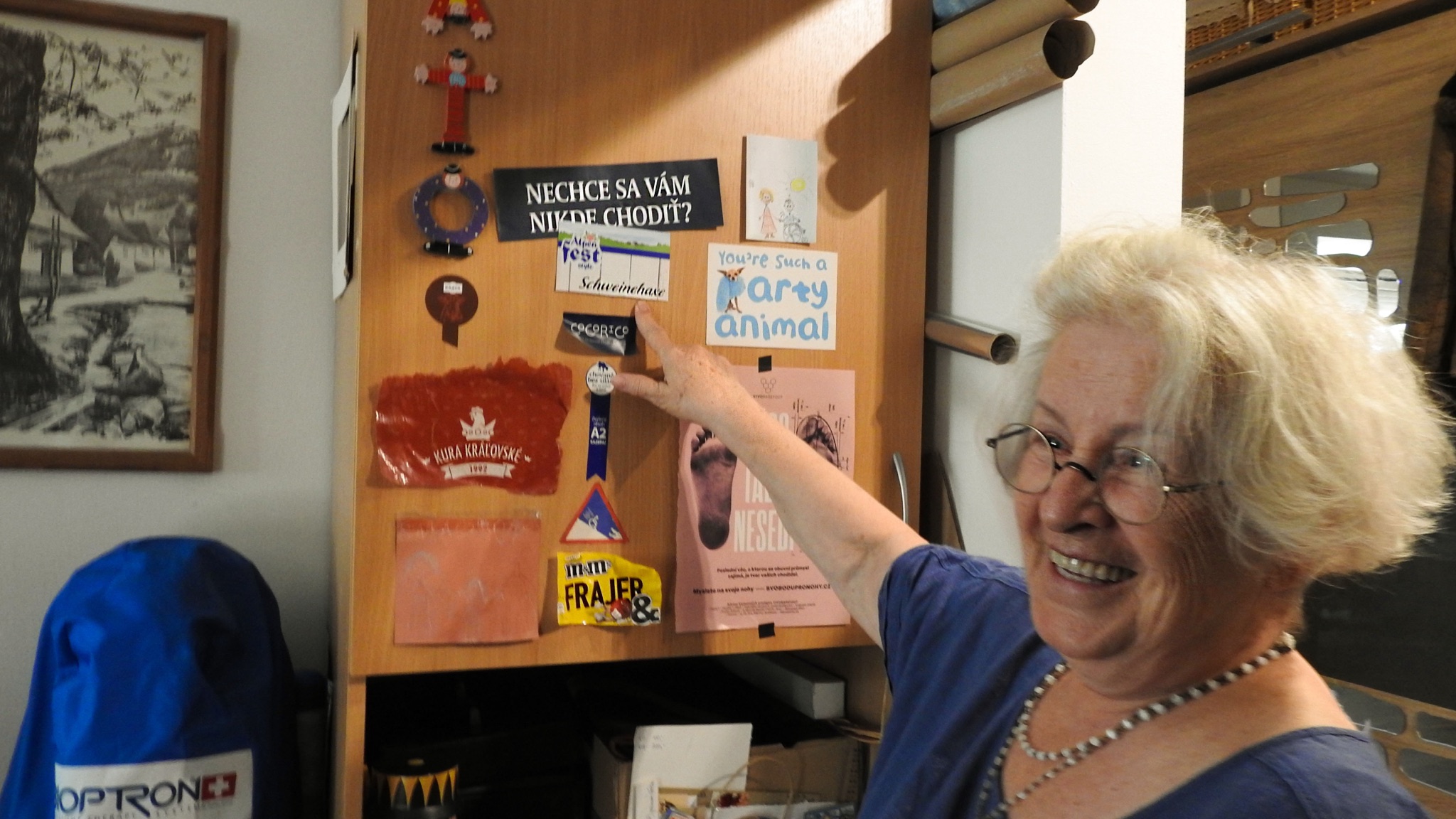
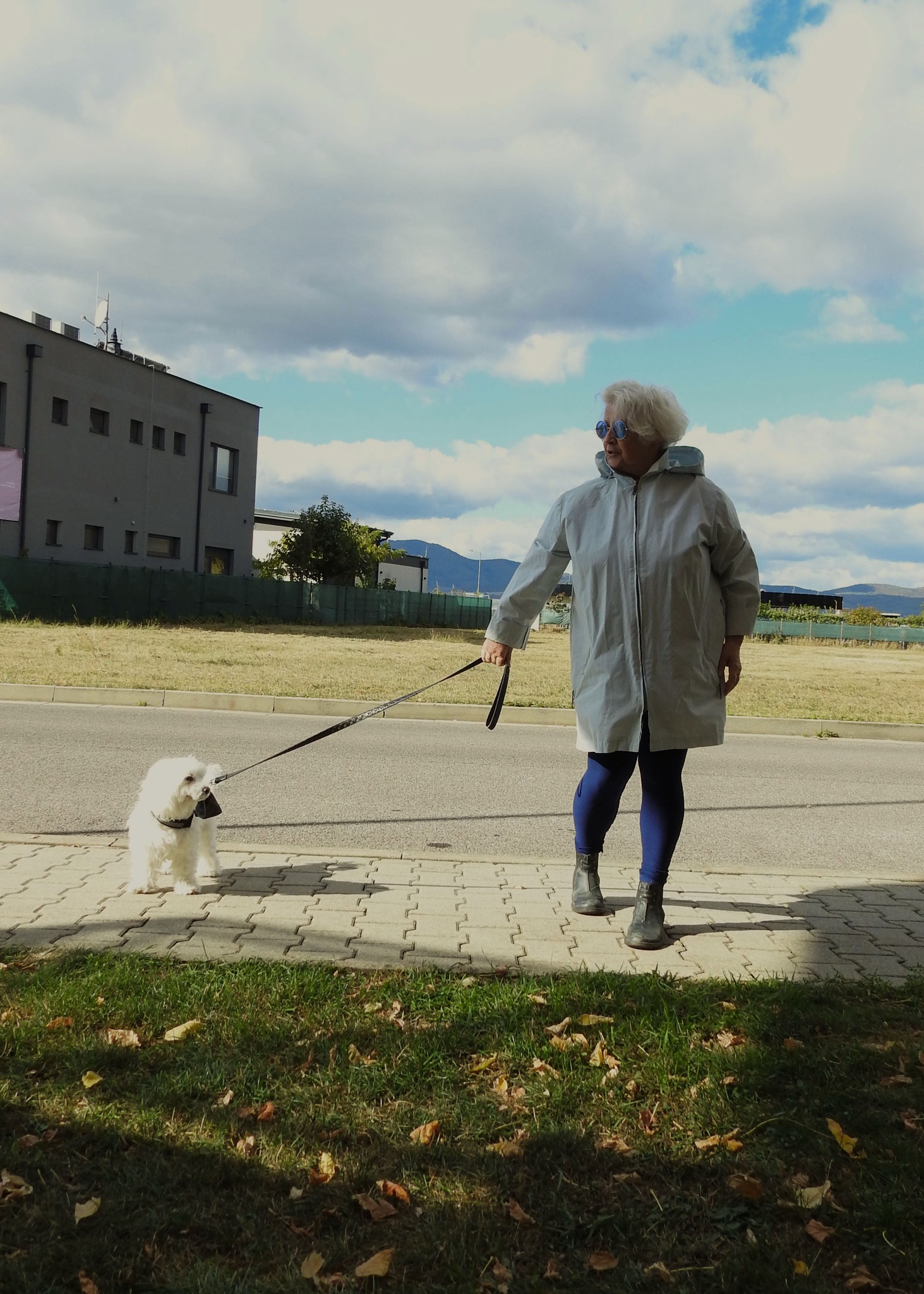
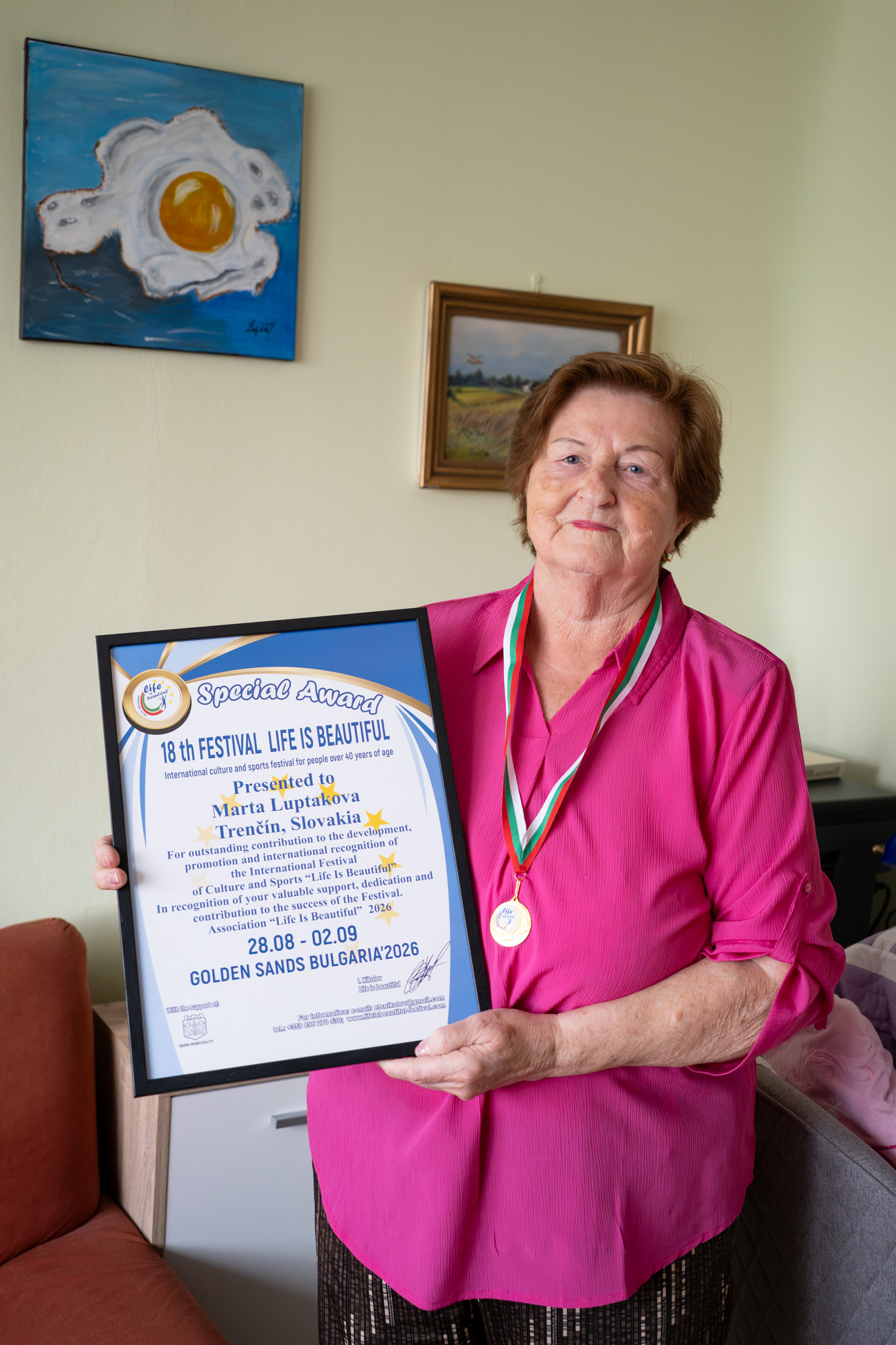
How to write your own life
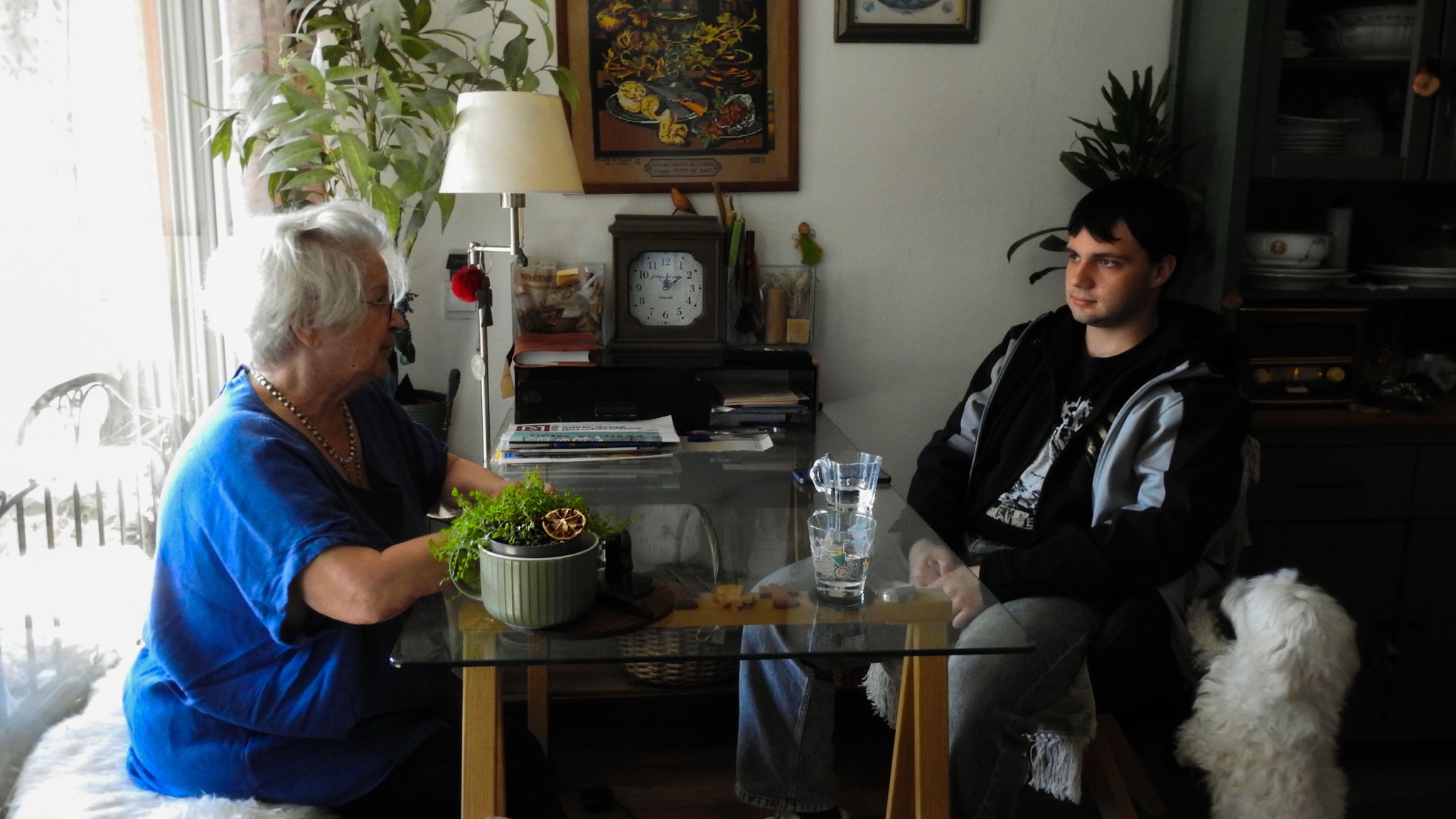
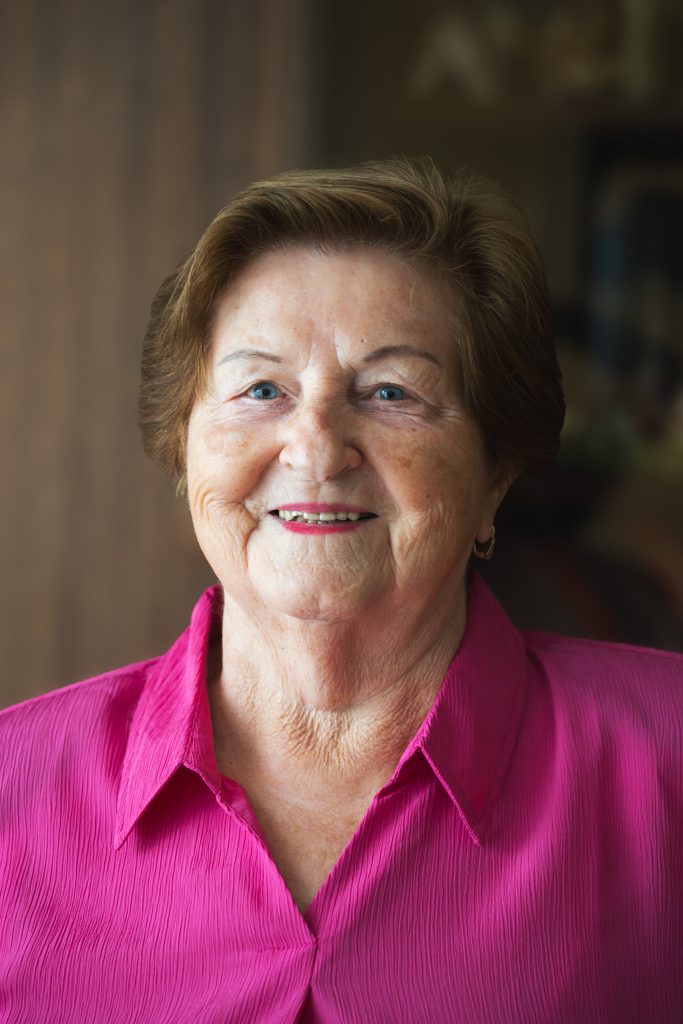
Mrs Marta Luptáková, a charming retired lady, gradually told me her life story – a story full of strength, honesty and love for the people around her. Life put all kinds of obstacles in her way, and she always overcame them. As she says herself: “I never knew the words CAN’T BE DONE – I always thought about how it could be done.”
Thanks to her specialism, and to Trenčín’s tradition in the textile industry, she made a new home in our city. She is the eldest of five children. She came to Trenčín from Partizánska Ľupča after finishing her studies at the textile technical school. Straight after school she started working at Merina Trenčín. It was here in Trenčín that she and her husband settled. In those days, employers provided flats for their staff. They moved into theirs with their one-year-old daughter, and she still lives there today. Alongside her job, she furthered her education by studying computer science at university, where she earned a bachelor’s degree. At Merina she worked in research and after a while moved to the technical department. Later she moved to a private company, from where she retired. She has two children and three grandchildren, and today she also delights in a little great-granddaughter who often comes to visit.
“Why fret over what was and what will be? Deal with whatever comes your way that day.” – a motto from her grandmother that she has always lived by.
Merina was a world-famous textile company that made woollen fabrics for women’s and men’s suits for export. It processed wool from Australian sheep because of its superior qualities, which was exceptional at the time, as imports from abroad were not common. Production at Merina ended in 2009, and with it came the end of the textile industry in Trenčín. Mrs Luptáková’s life was bound up with Merina for several decades, and today she can only note sadly that all that’s left of Merina is the chimney.
“Whenever you need to leave somewhere, put down your pen, pick up your things and walk away with your good name intact.” – as her father always used to tell her.
Her job as a technician also required a knowledge of German, which came in useful later in life. She tutored both children and adults in German. While she was teaching carers who worked in Austria, she ended up working as a carer herself, originally just to stand in for someone. In the end she worked that way for 6 years – 2 weeks at home, 2 weeks in Austria. At home she looked after her parents and her grandchildren. Her husband was always a great support to her; they spent 63 wonderful years together.
“You should always know how to fill your time and not dwell on silly things.”
Her life today is still very active. She may be retired, but as she says herself, she has never stopped working. For 17 years now she has looked after their block of flats as the owners’ representative. She has also
led the senior citizens’ choir “Sihotiar” for 17 years. In between, she paints and writes, loves reading and does the odd crossword too. She and her husband were keen hikers and walked all over Slovakia together, as well as the neighbouring Czech Republic.
As a founder and active member of “Sihotiar”, she has travelled all over Slovakia and abroad. This year they flew to Bulgaria for the international festival “Life is beautiful”, where they took 3rd place, and last year they brought home 2nd place from Greece. This year she came up with the idea of adding a winter festival to the spring and summer ones, and she is already helping to organise it. The festival will take place right here in Trenčín and will be open to the general public.
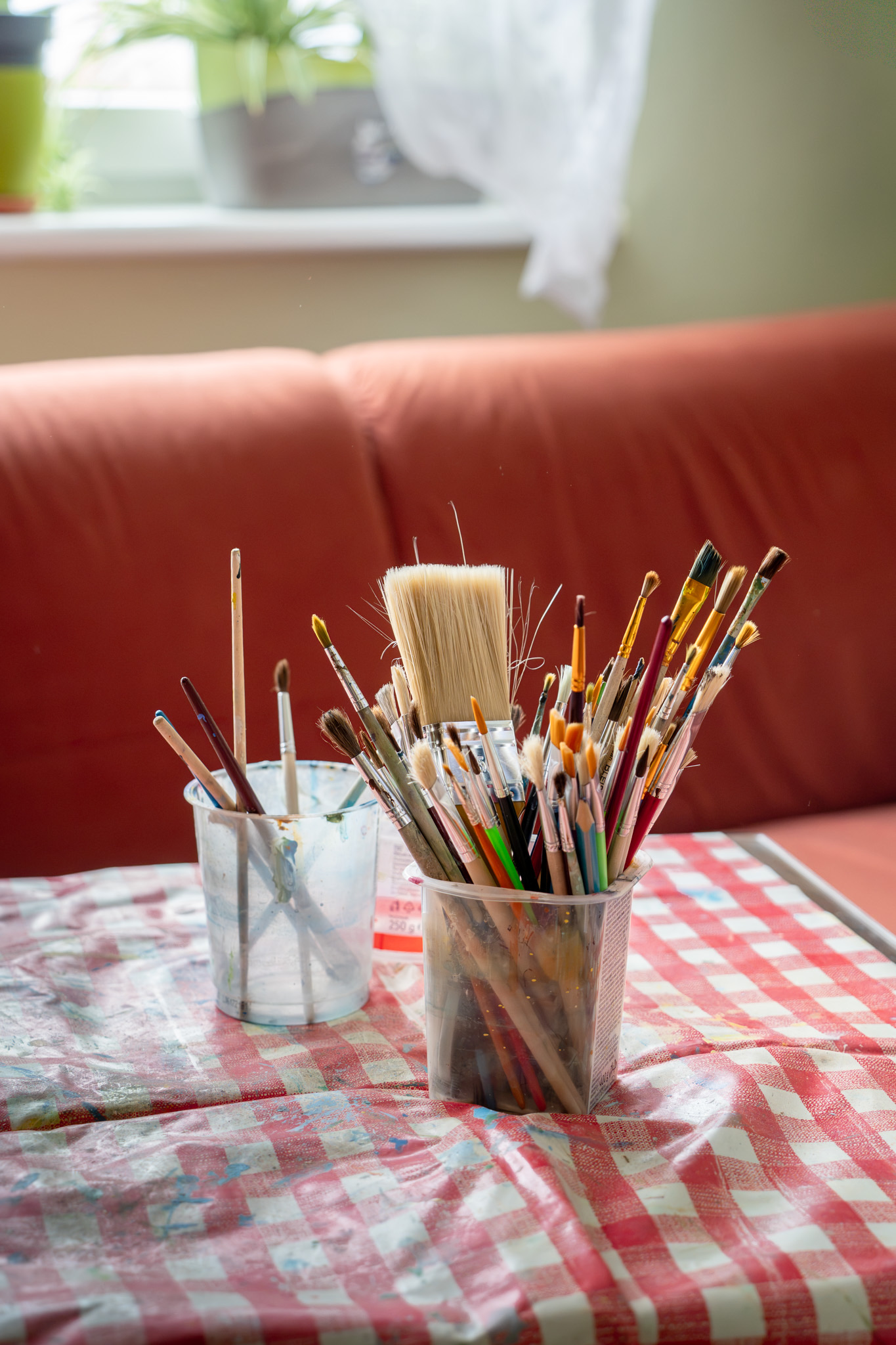
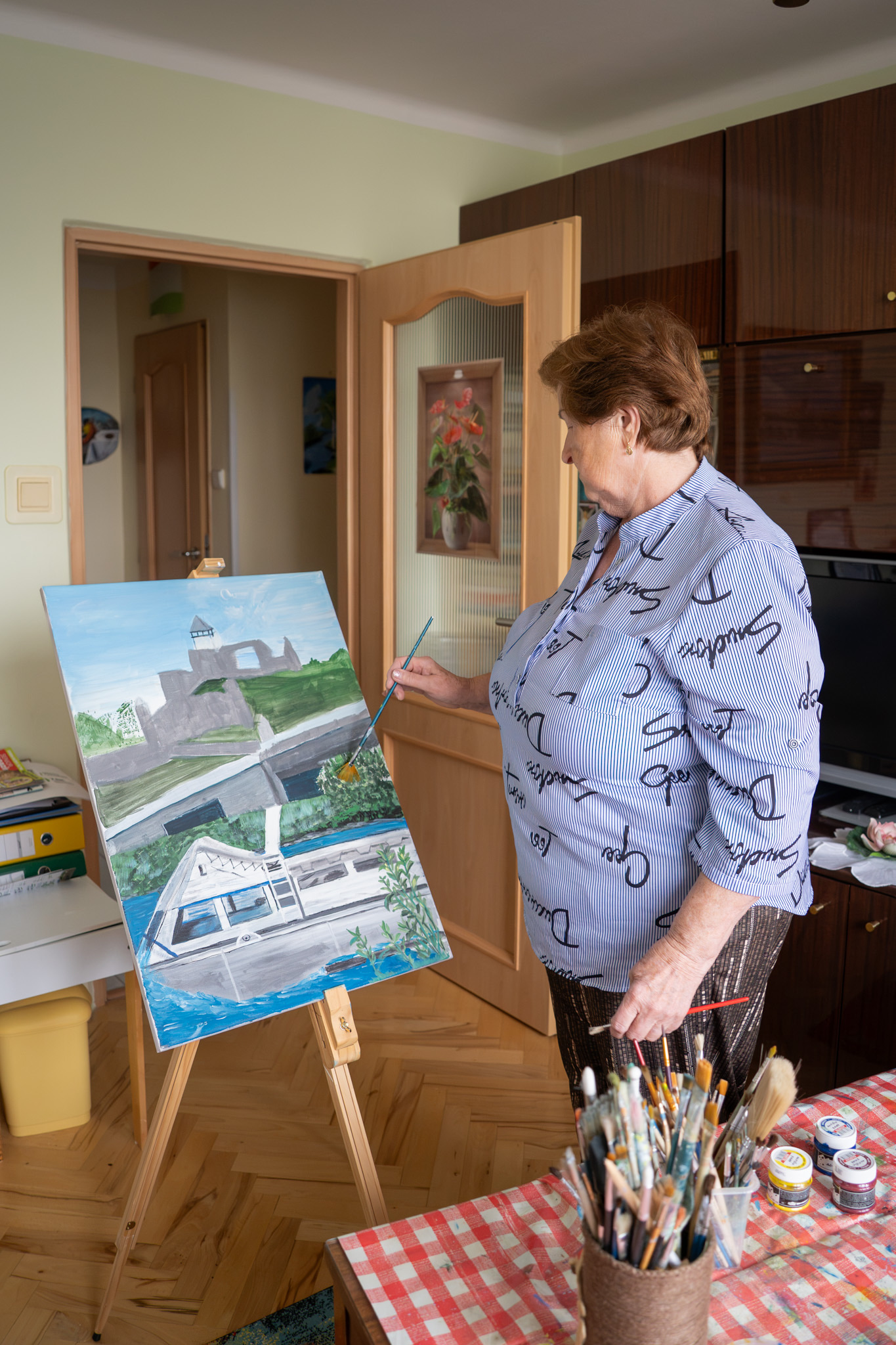
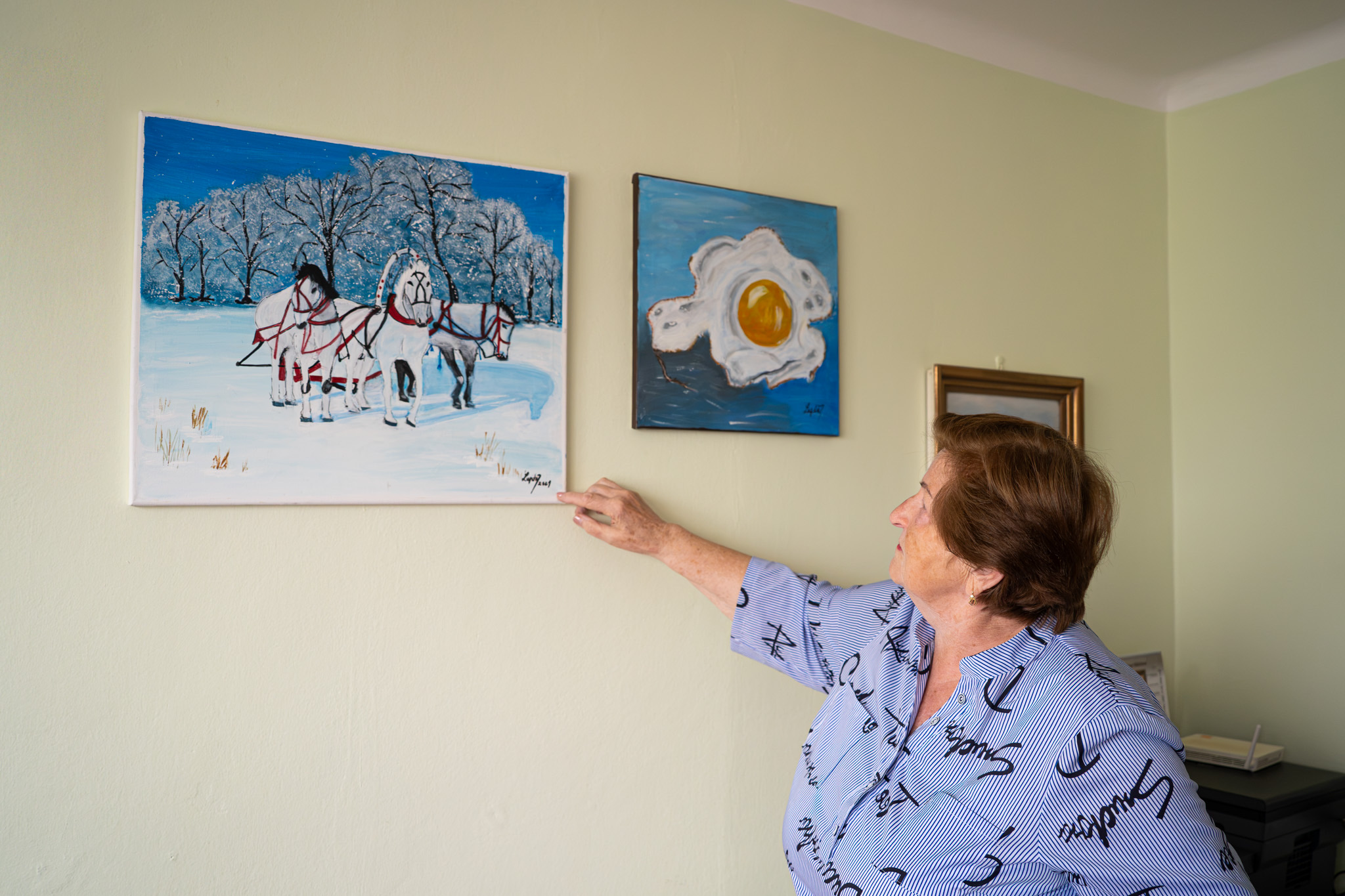
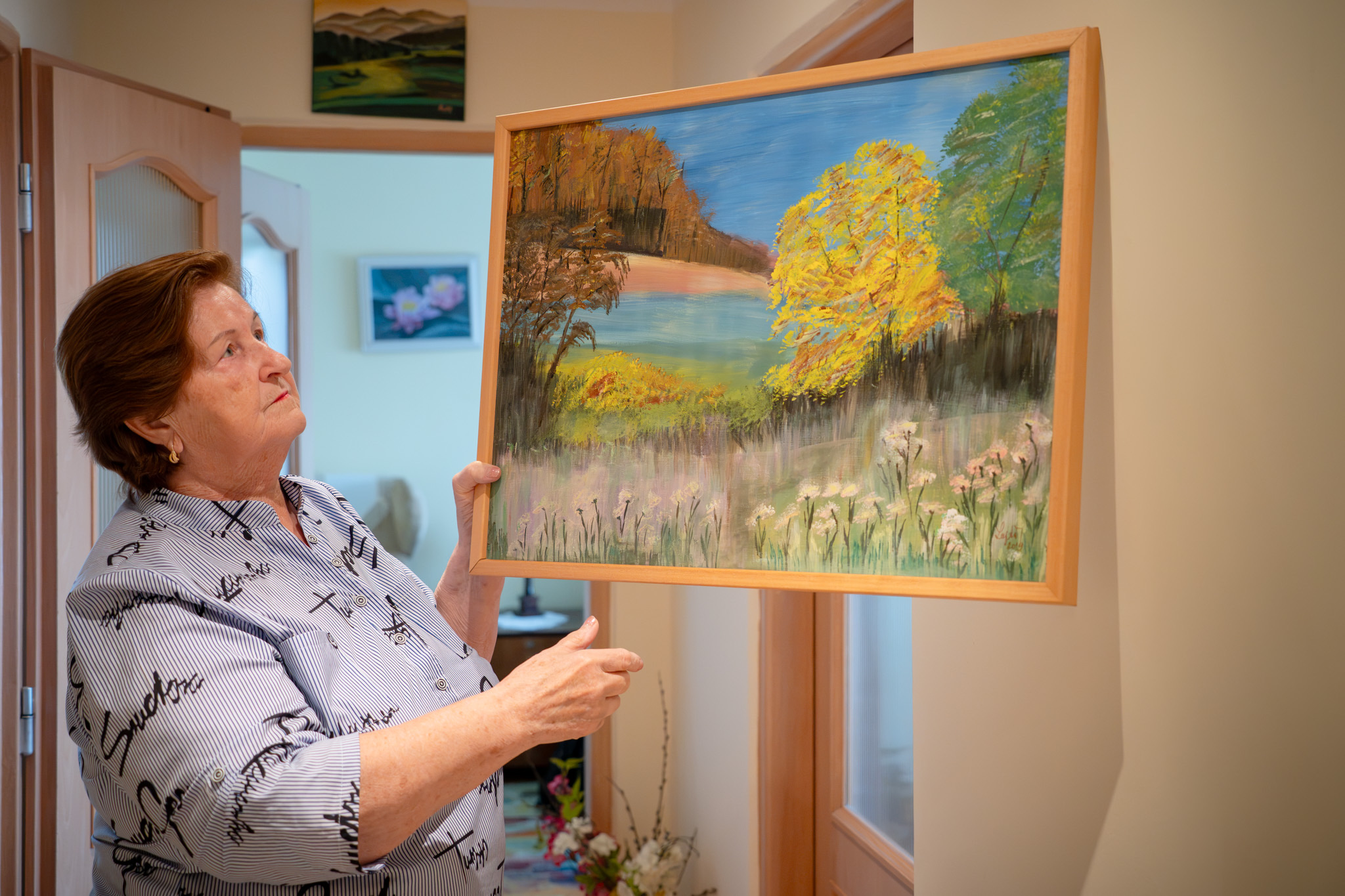
In her flat, I was struck by beautiful paintings of landscapes and flowers. She only took up painting
in retirement, when a friend took her along to a painting course at a gallery, where she gave it a try. She had a knack for it – as a technician, she had developed an eye for perspective through her work. In the end she went back once, then again, and painting became a long-standing hobby that she also pursues at home. She keeps some of her paintings, but mostly gives them as gifts to her loved ones.
Her life has been rich, and she would like to pass on her memories and experiences to the next generation of her family.
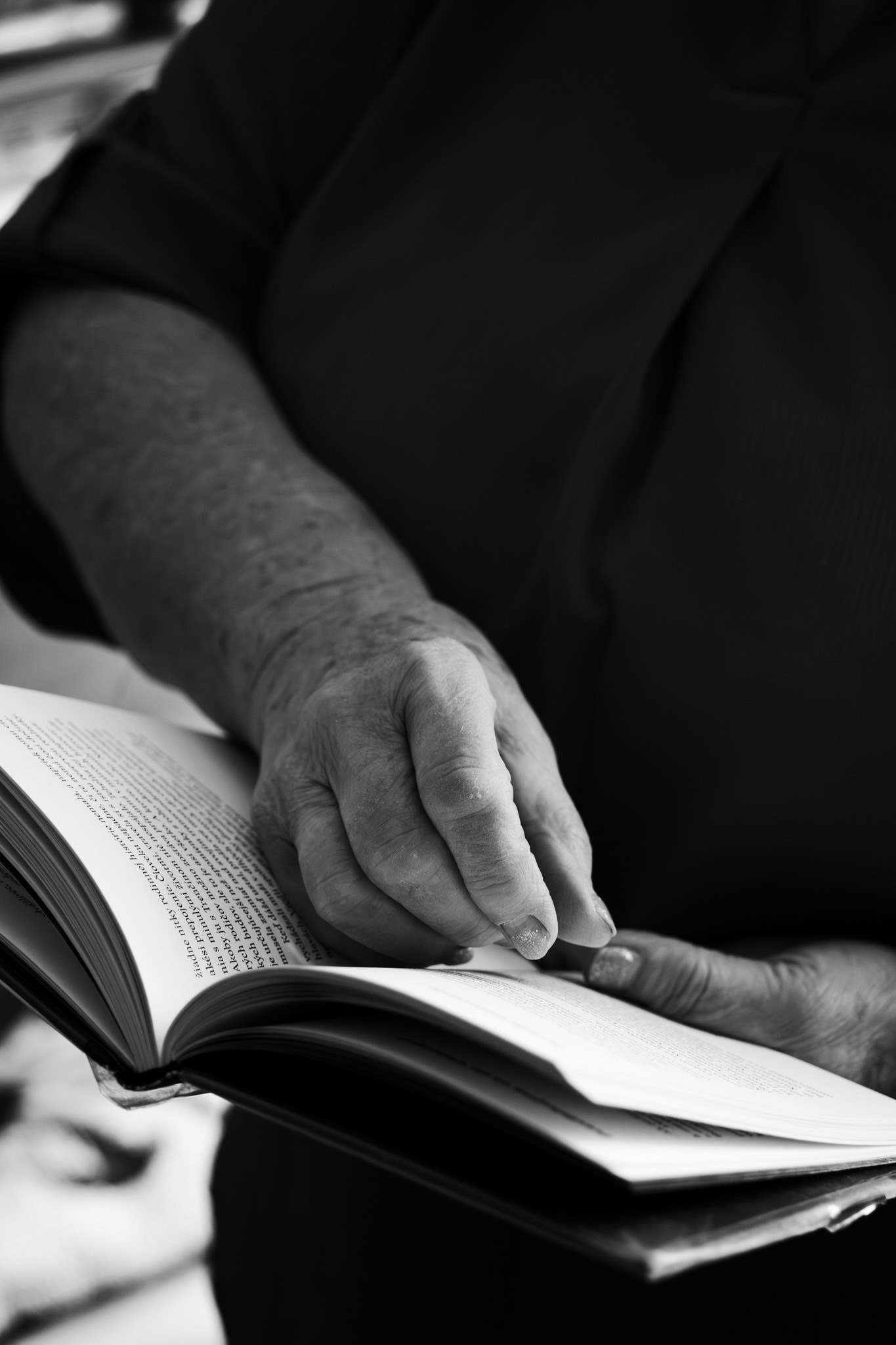
That is what led her to write a book. Whether it’s a biographical novel, short stories from her time working as a carer in Austria, or a collection of poems or songs, these are wonderful texts just waiting for their chance to appear in book form.
Our interview – or rather, the storytelling of a kind and sincere lady – can’t all be summed up on a newspaper page. Her insights and wisdom about life are an inspiration to me. The warm-hearted Mrs Luptáková said goodbye to us with this piece of wisdom: “Whatever love you give to others, that same love will come back to you in time.”
Text by Júlia Nemečková, student at Ľudovít Štúr Grammar School in Trenčín
Photos by Karin Križovenská, student at the School of Applied Arts in Trenčín
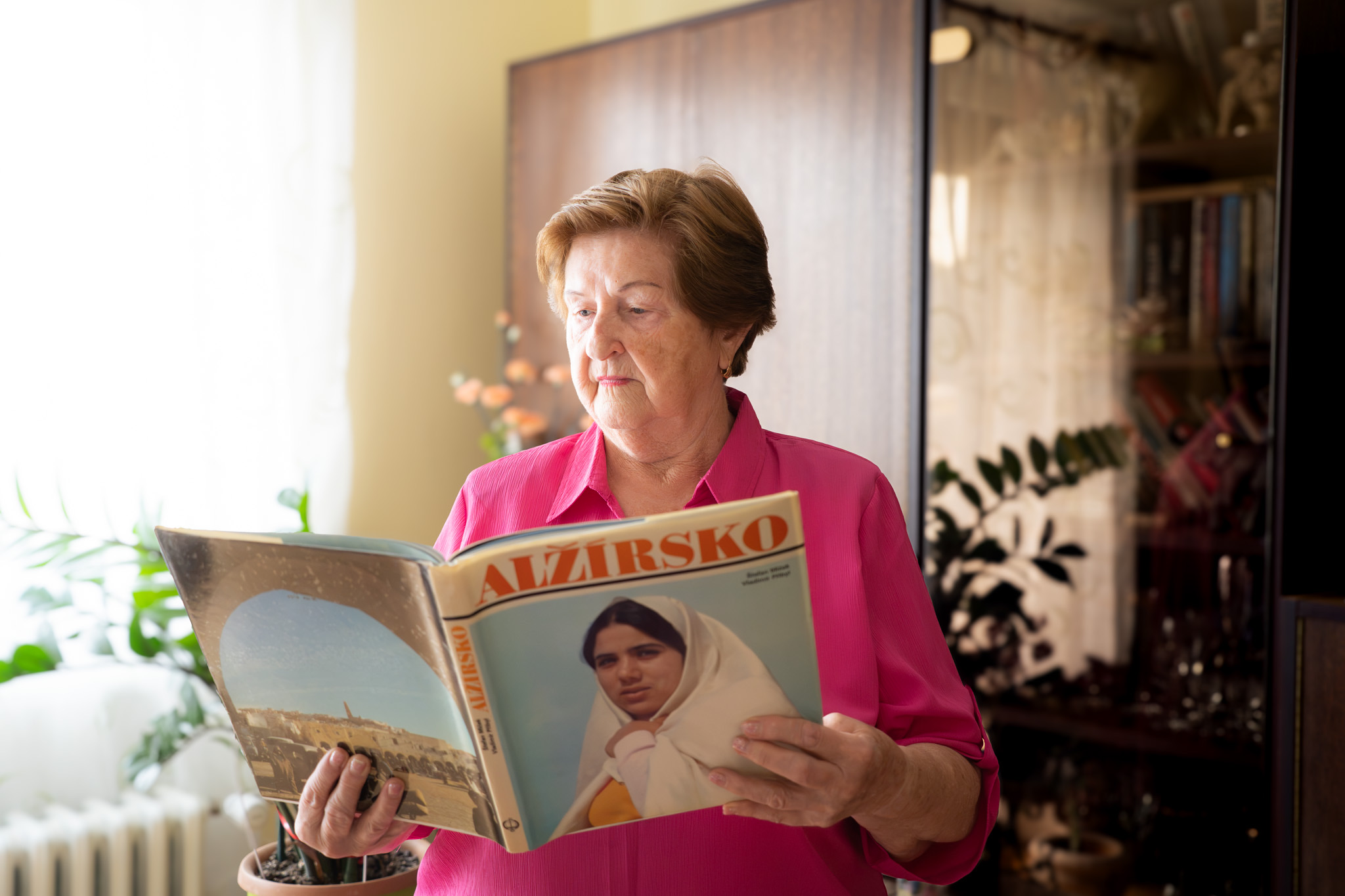
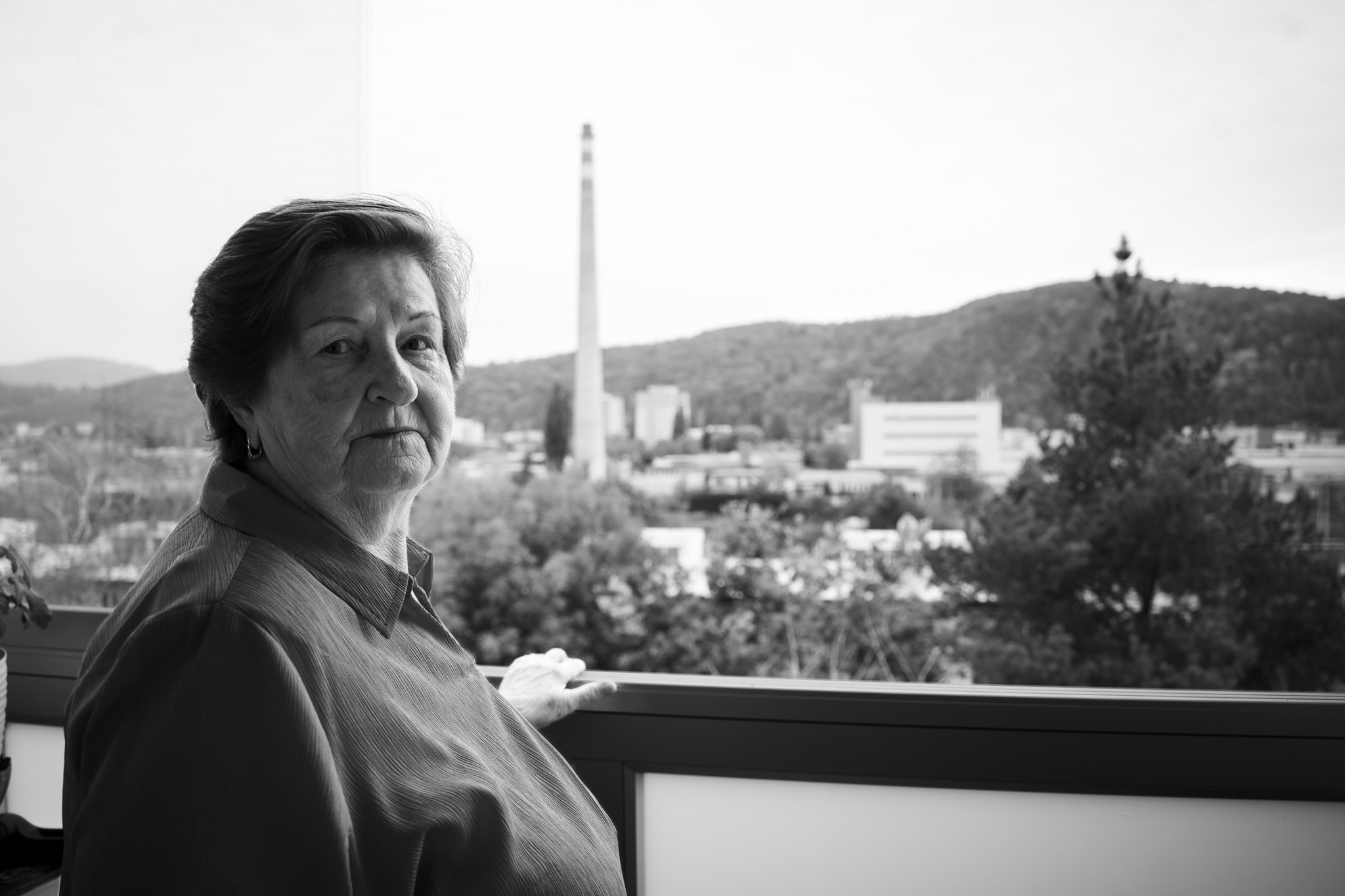
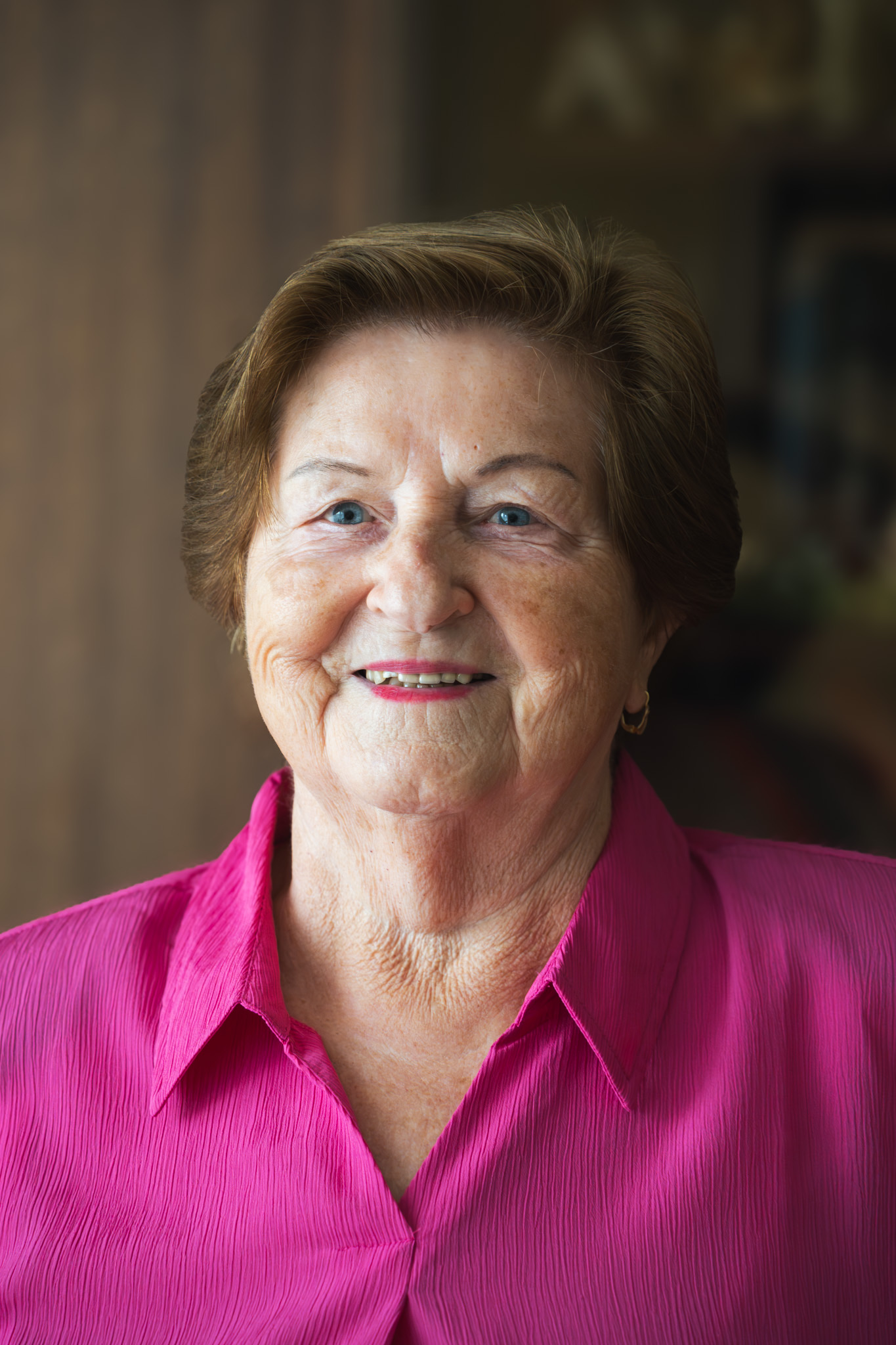
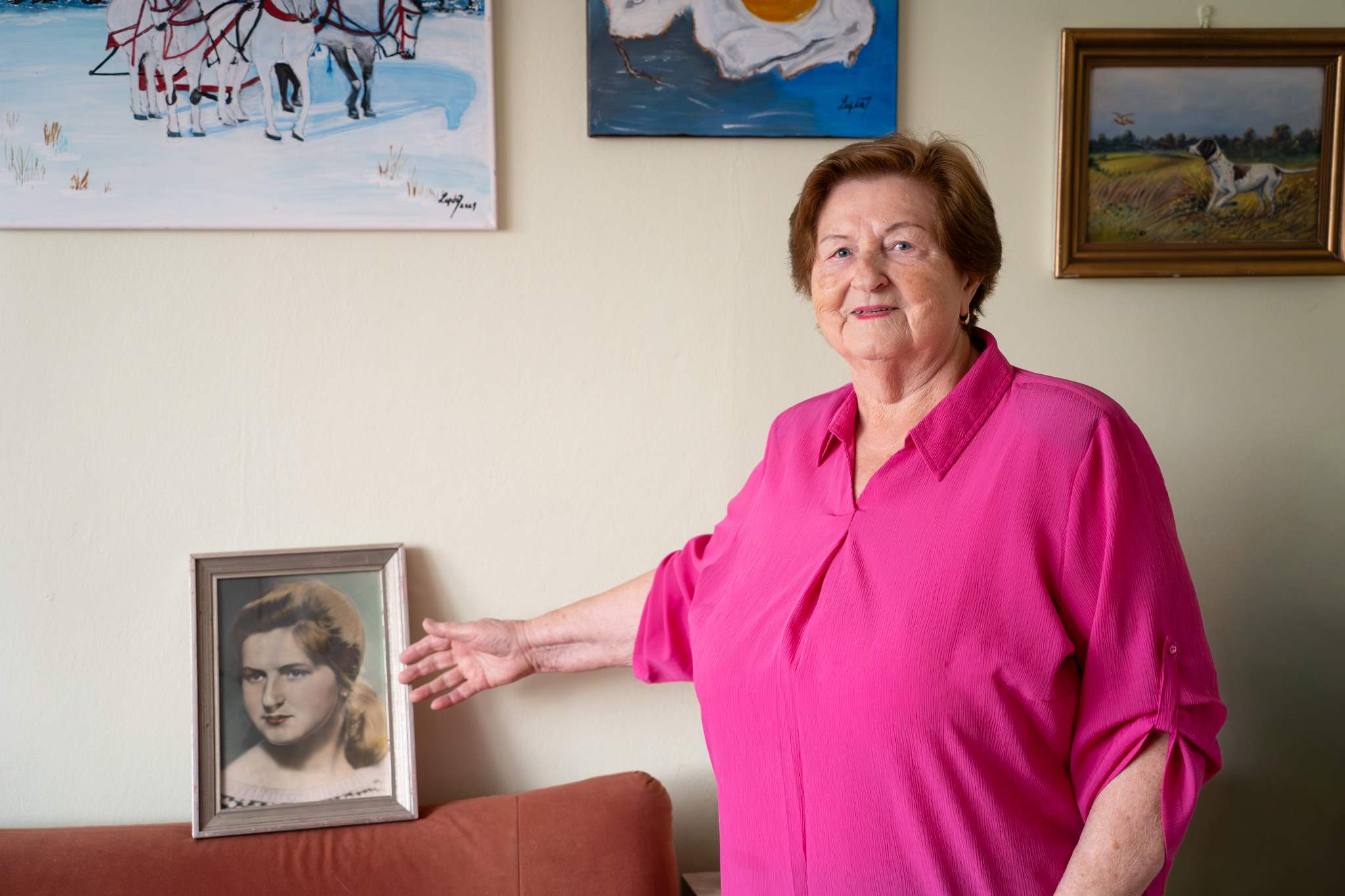
20 years in the church
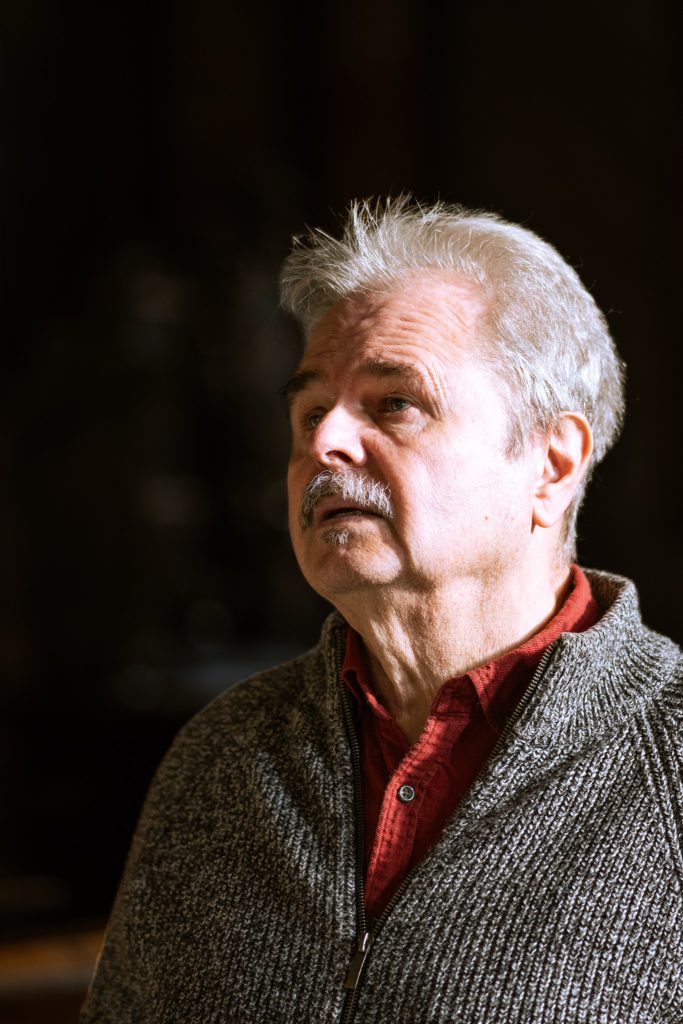
“Everyone at the parish house said the statues were stone. I kept telling them that I know what carved wood looks like and that it was definitely wood. And in the end I was proved right.” With these iconic words Juraj Krajčo welcomed us in front of the statues of the Piarist Church of St Francis Xavier. Restoring historic monuments like these is not just about art, but also about patience, responsibility and respect for history. We talked to Juraj Krajčo – who, among other things, has devoted more than two decades to restoring the interior of the Piarist church in Trenčín – about his work, his extraordinary experiences and his relationship with art.
When we arrived, you were already telling us a little about your studies – but how did you actually get into restoration?
Originally I wanted to be a sculptor. I went to the Academy of Fine Arts to study sculpture restoration. But in the end it was restoration that won me over, because it covers a much broader range of work. A sculptor can redo his work if he doesn’t like something. A restorer, though, mustn’t make a mistake, because there’s no going back. With historic monuments, some mistakes can never be put right. You have to know the techniques, the materials and the history, and at the same time have that artistic feel for it.
In what other ways does a restorer’s work differ from ordinary art-making?
Responsibility. If you want to restore cultural monuments like this church, you have to be a member of the Chamber of Restorers and abide by its rules and code. You bear personal responsibility for the result of your work. It’s not enough for it to look more or less nice. Even if it were beautiful, it still has to be technically correct and durable.
You’ve been working on this church for more than twenty years now. What have you managed to do in that time?
I’ve restored practically all the sculptural decoration, apart from the murals. I’ve worked on the capitals, the confessionals, the facade, the stone features and the wooden statues. Of course, there were breaks between the individual phases. I’d still like to finish some other parts. It’s something very close to my heart.
It’s absolutely clear to me that this church is the project closest to your heart. But is there another lifelong project you’ve devoted yourself to?
Another one that’s close to my heart is the church in Nové Mesto nad Váhom. That one is even older – it was originally a small Romanesque church, later rebuilt in the Gothic style and then remodelled in the Baroque style. Its stucco decoration is completely different and extremely rare; on that scale, there’s essentially nothing like it in Slovakia.
Did you experience anything unusual while restoring – some exceptional incident that has stuck in your memory?
There were lots of incidents. Once, while we were cleaning the decoration, we found a bundle of papers, roughly A5 size, up in the gallery. They were tied with string, written in Latin and dated to around 1730 to 1740. I handed the find over, but the priest at the time apparently lost it later. To this day I regret not scanning it. There would have been interesting things in there. Oh well, we’ll never find out now.
Alongside restoration, you also create your own work. How do you combine the two?
It’s not easy. Restoration is on my mind practically all the time. I like to say I work twenty-four hours a day, seven days a week. So when I get to the studio, I have to switch gears completely, which can be pretty extreme. Sometimes I don’t paint anything for six months, and then comes a period when I work intensely, in bursts. I don’t depend financially on selling paintings. I paint only what I myself want to paint and feel.
And finally, what does this church mean to you after all these years?
It’s as if it were my own child. Everything here has passed through my hands. Some artists have their solo exhibitions, but I say that I actually have a permanent exhibition. All I have to do is come here. I can see the results of my work, and I know how much effort it took to make this space look the way it does today.
Interview by Andrej Izreal, student at Ľudovít Štúr Grammar School in Trenčín
Photos by Adrian Weiss, student at the School of Applied Arts in Trenčín
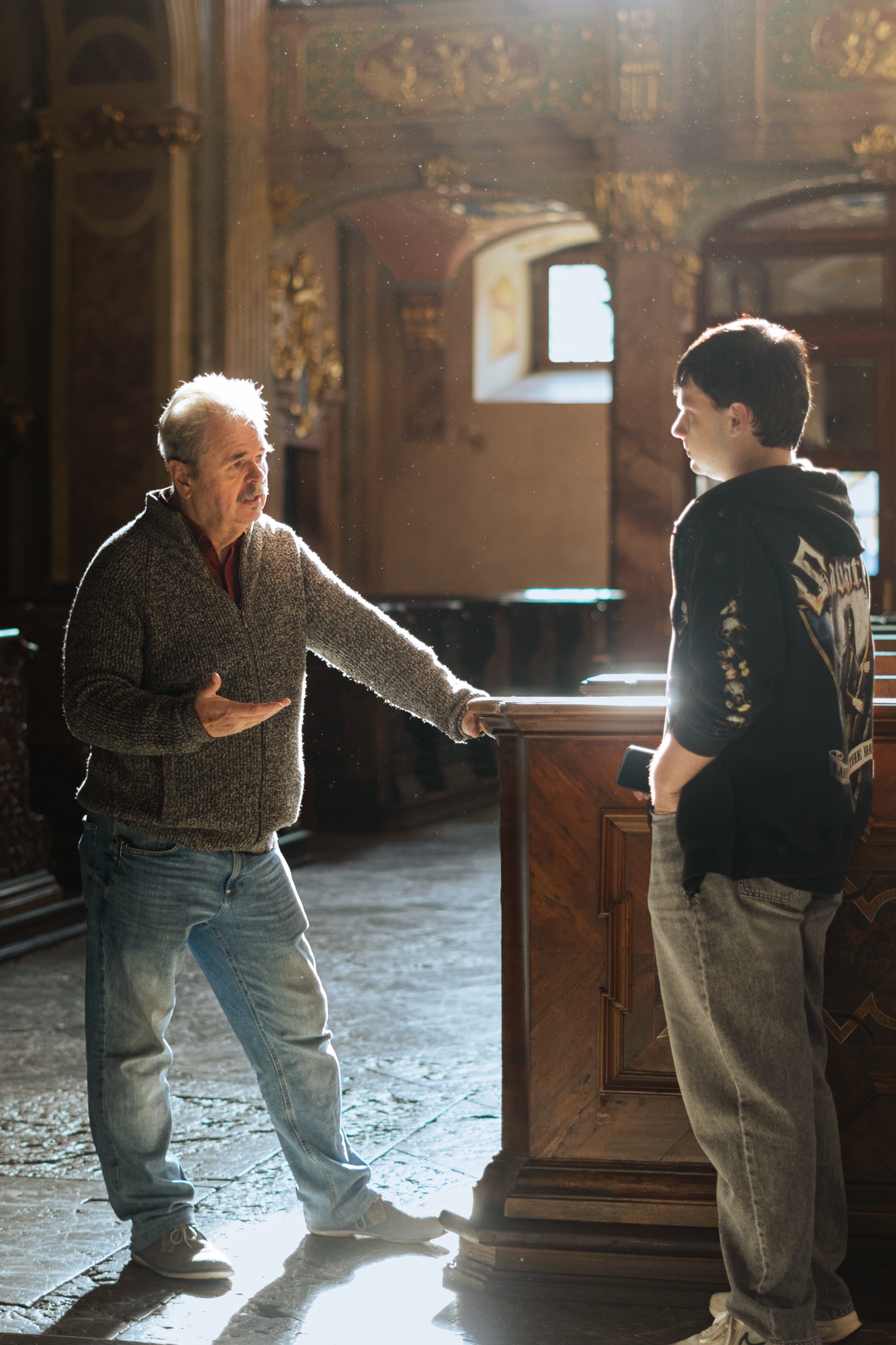
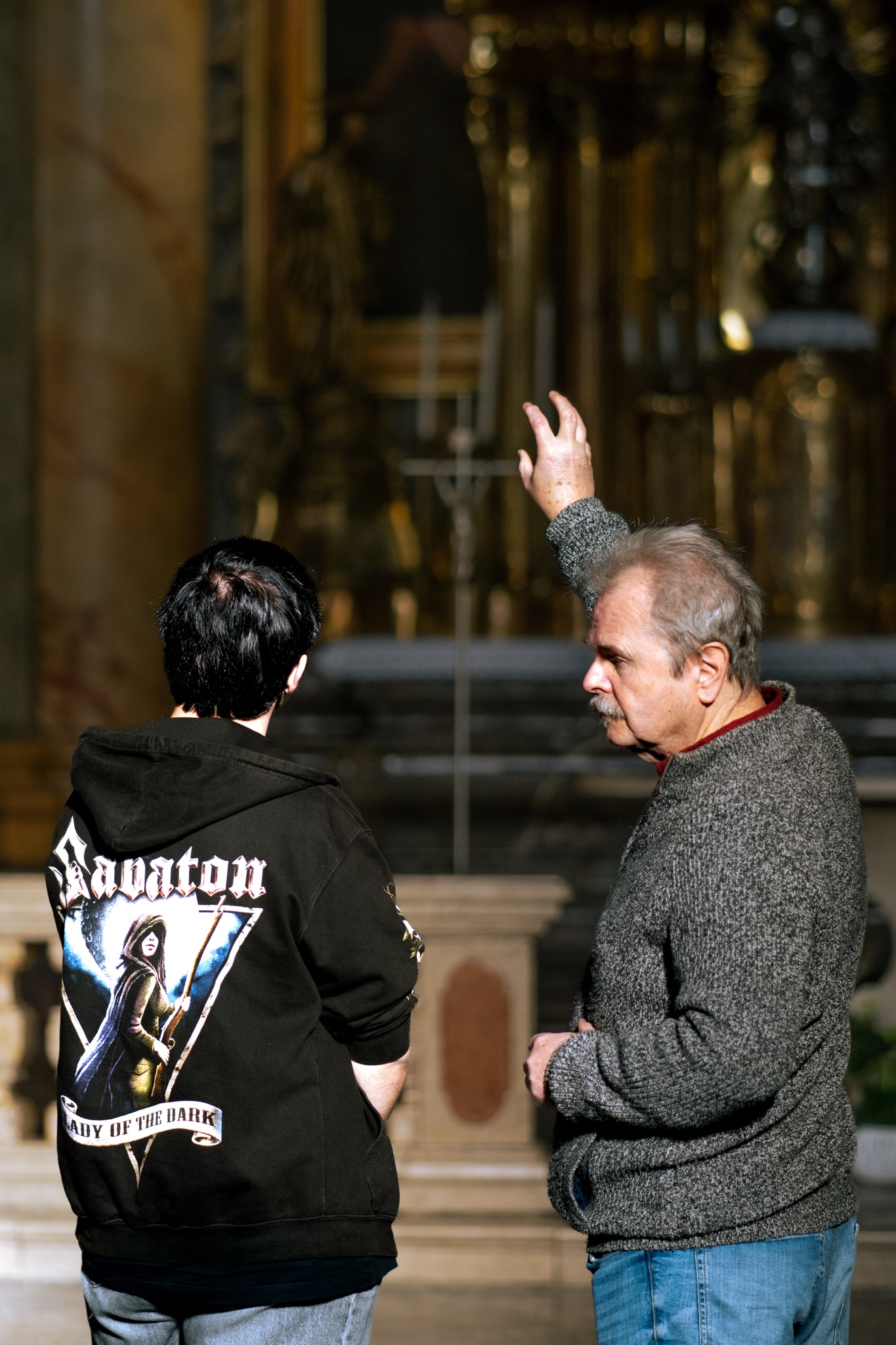
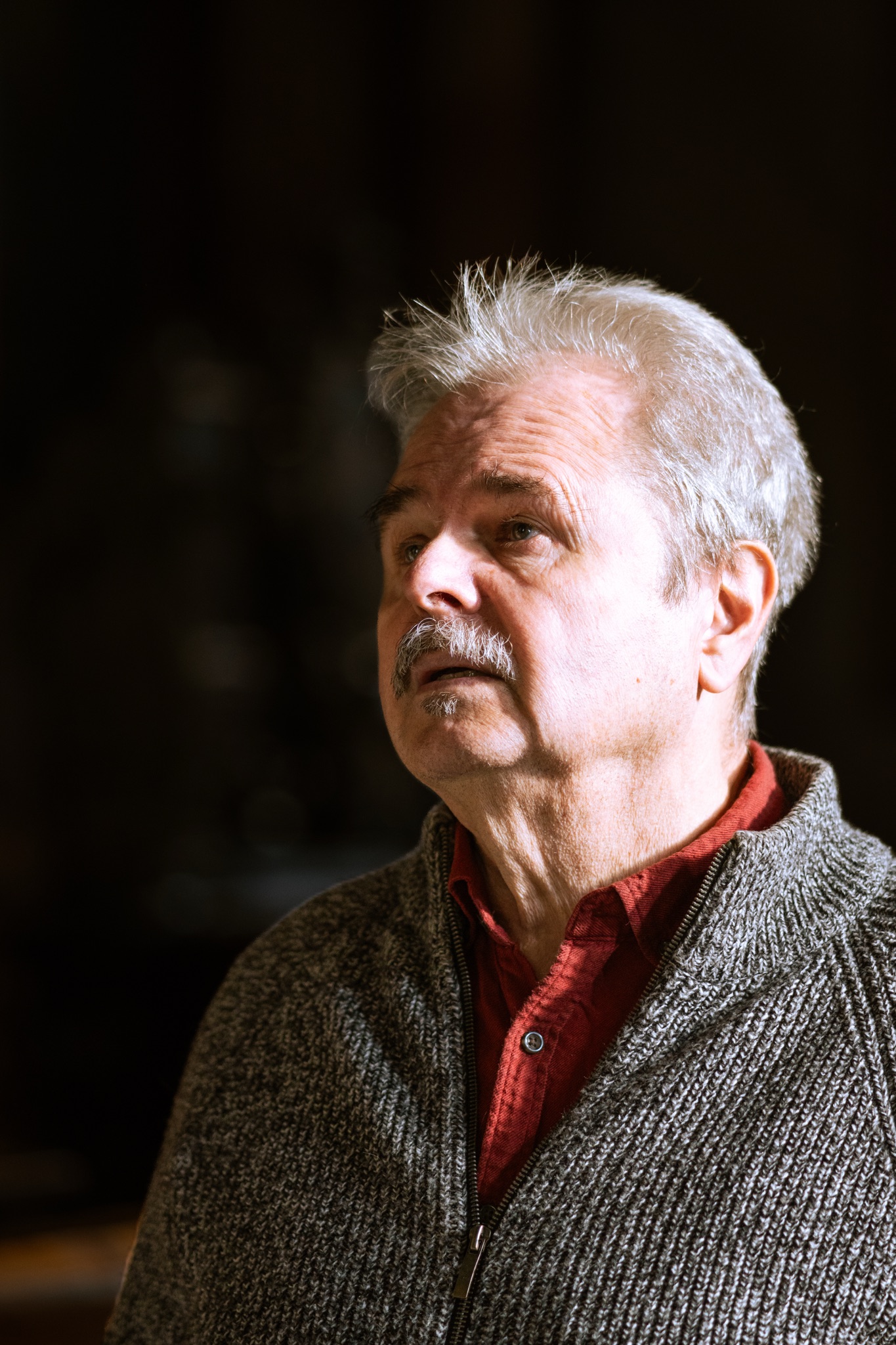

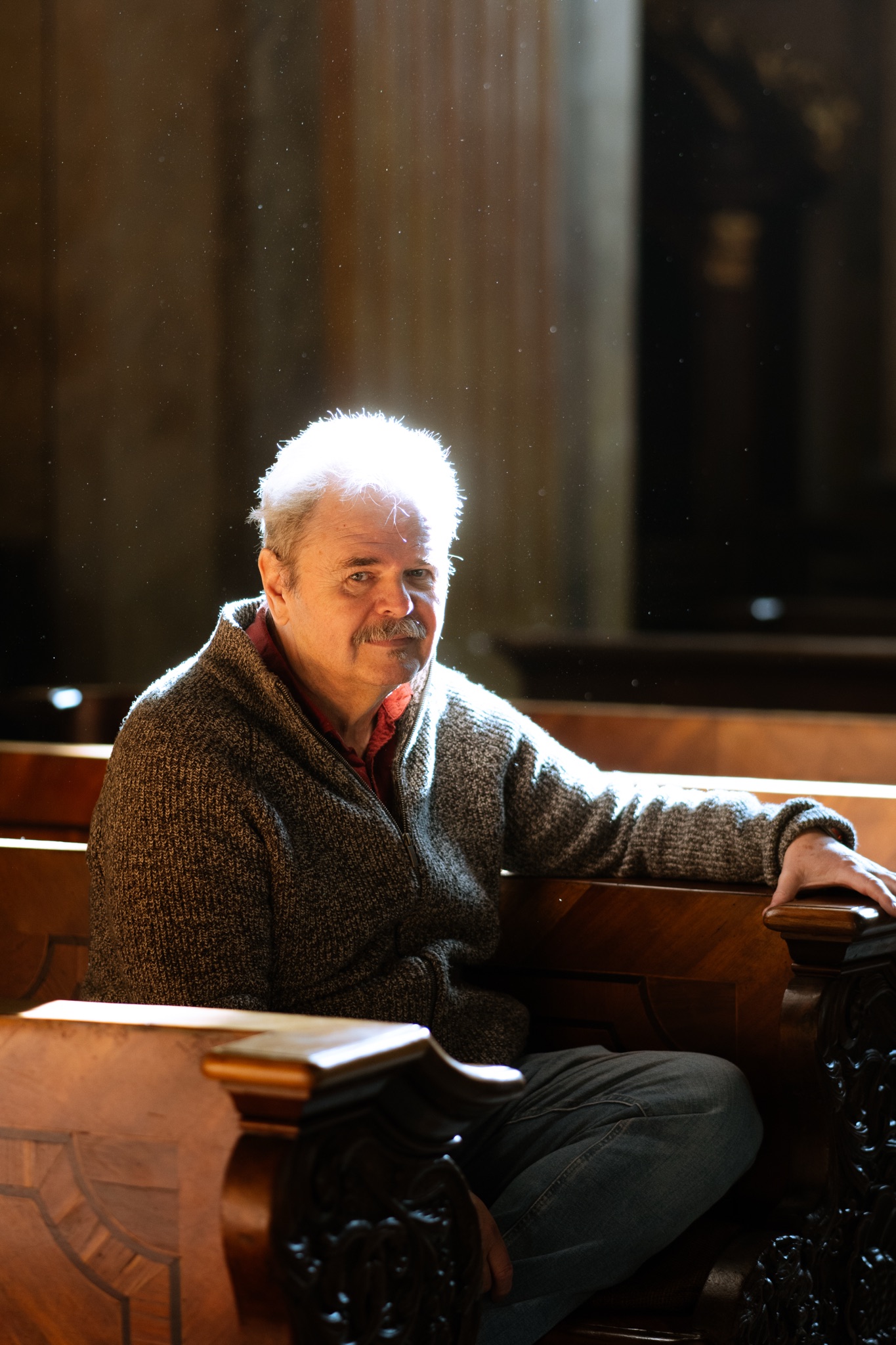
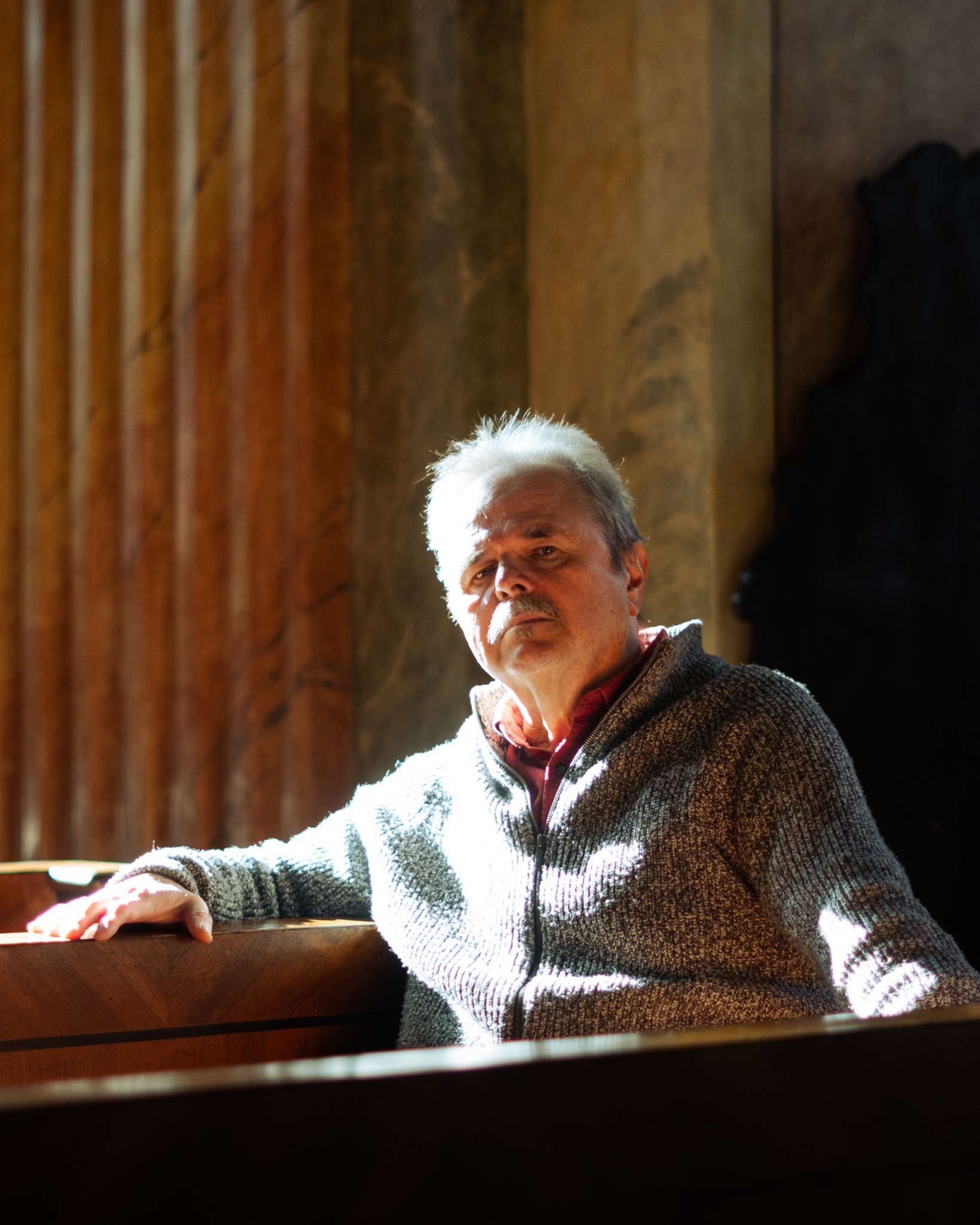
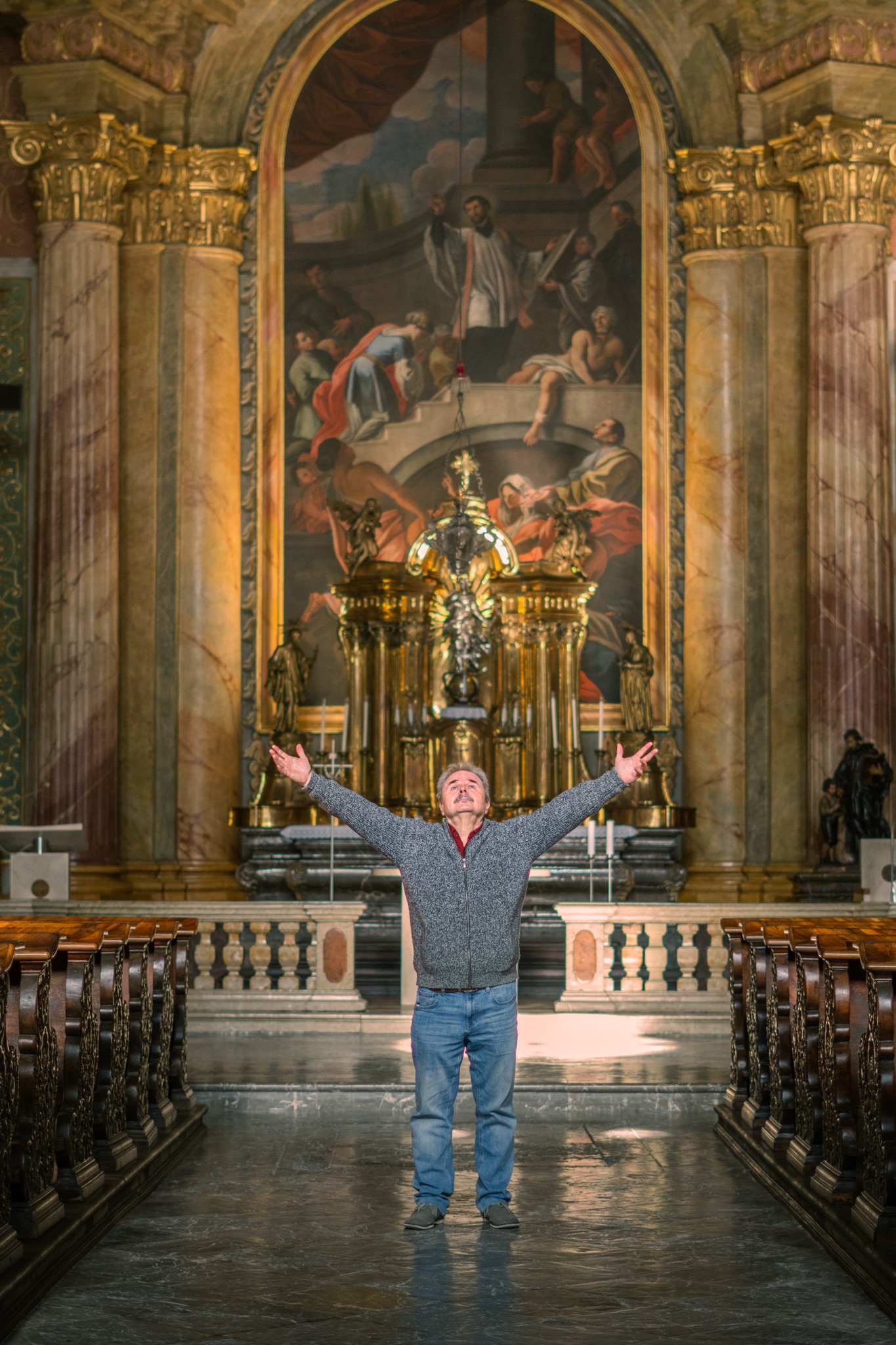
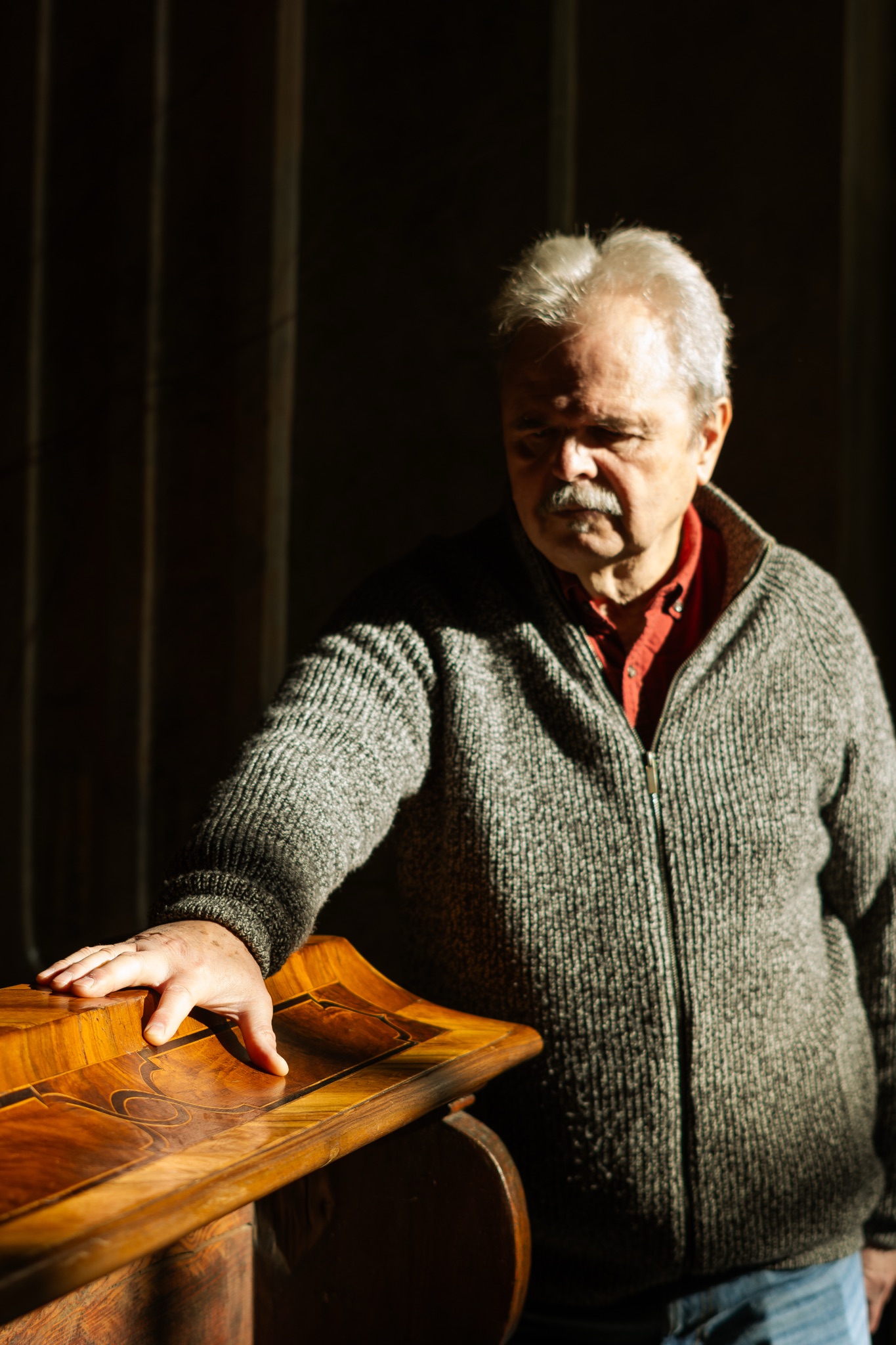
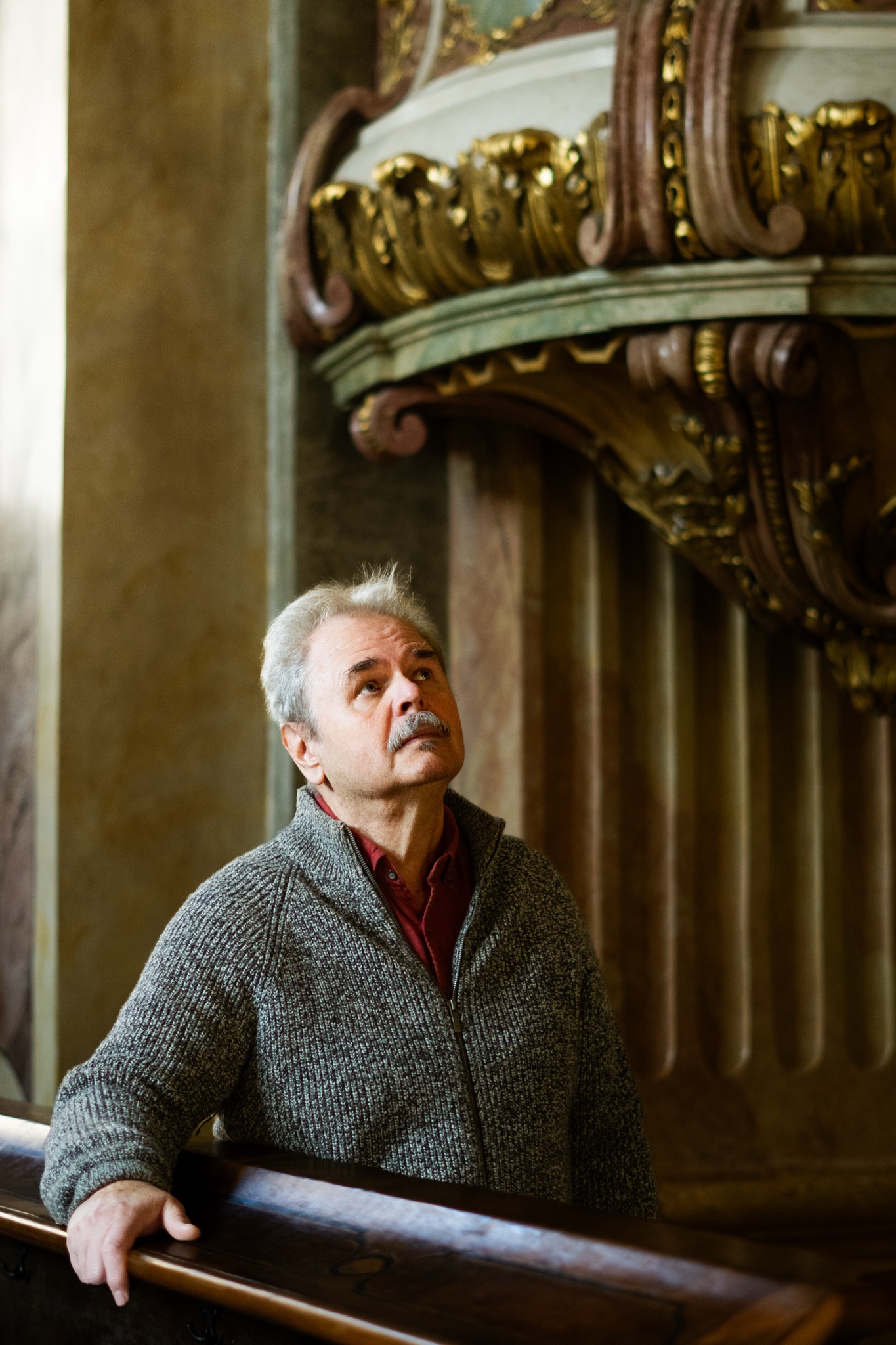
You’re living in wonderful times…
I read that your hobbies include nature, hunting and folklore. Do you know where these interests come from?
I was lucky enough in life to have a grandad who was a gamekeeper. Then, at 40, because of health problems, I started going on a hunting course. And the other thing is folklore – I remember when I was little, my mum took me out to a get-together and said to me: “Slávko, listen, the girls are singing ‘Ďura’.” And then our teacher, Mr Minárik, guided me towards folk art. Later on I led a folk ensemble for 12 years, and after me my wife took it over and kept at it until quite recently.
Do you know which has been your biggest trophy?
The value of a trophy lies in the experience that goes with it. Because the shot itself – that’s the least of it. The biggest experience for me was when I got my first stag. And with my very first shot, no less! The stag was running flat out, at full tilt; once it had been hit, it flew past me about as far away as I am from you now. And the poor thing had its head thrown back, its antlers lying on its shoulders, and an injured leg. And as it flew past, it was panting incredibly hard, with bits of moss and grass flying up. It only took 20 metres – it let out a heavy sigh, kicked its leg three times and fell. Something incredible. Like I say, that experience, seeing it run towards me over those hundred metres… amazing. I was really chuffed to get a stag on my very first outing. And I was 42 at the time…
But that wasn’t so long ago, was it? 42.
Well, I’m pushing eighty-eight (laughs)…
I hear you have a large collection of photographs. What are they worth to you?
Oh, a huge amount! For me, a photo has real value when it has the date written on it, where it was taken and who’s in it. I usually write that on the back. Because if I just put a photo somewhere labelled “Photo from Kubrá”, that won’t tell us anything. I file everything away in albums like these. (Points to one of the photos) Here, for example, I’m at Východná in ’57 – that was the 5th year of the festival. Východná has become something very close to my heart, too.
I hope you still have a dream or two.
I fulfilled my – I’d say – childhood dream when I published my little book Všetkých vás pritiahnem k sebe (I Will Draw You All to Me). And my dream now is this: every year I make calendars like these. Look, here are eight calendars. And right now I’m working on the ninth. That one will be about Professor Hlaváč – he’s our priest, who formed 44 priests who went to study under him at the seminary. I’m writing about him right now; I’ve got about twelve pages written.
And you write all of that out by hand?
All by hand, because – you know what, I’ll tell you – I never grew into this day and age. Computers and things like that – they mean nothing to me. So when I’ve written it by hand, some kind souls, girls (well, women by now, of course), type it up for me, it goes onto a USB stick and we put the finishing touches to it together.
You keep our folk traditions alive. Will they outlive us?
For now, our folk ensemble in Kubrá is still going. But everything that goes on here is just a pale imitation now. Because Kubrá isn’t Kubrá any more. You hardly know anyone here these days… When I was a boy, a young lad, this place was (as they say) paradise. These cottages weren’t here at all, not a single one. Most of the houses stood higher up, with a beautiful stream running through them – that’s gone now, because it’s been covered over… all of this has disappeared. If there were still young people who wanted to do it, it would survive, but otherwise it doesn’t stand a chance. People don’t live and breathe folk traditions the way we did.
Someone wise once said that tradition is not the worship of ashes, but the preservation of fire.
Yes, I agree with that – it’s true.
If you had to win over someone who isn’t interested in folklore, how would you do it?
You can’t. You have to have it in your heart. It doesn’t work without that; it just can’t be done. It’s the same with religion. You can talk to them as much as you like, it won’t help, because you have to have it inside you.
Rudolf Dobiáš said of you that you’re a walking chronicle of this village.
Rudko Dobiáš is a very good friend of mine. When we got to know each other, we started meeting up as a group of – I’d say – artistically minded people: him, Laco Moško, Rudo Moško, Jožko Vydrnák, and I was a sort of “dabbler” among them. But above all, we understood each other really well.
And you know what… a chronicle only because I’ve clocked up a lot of years. We used to say about one of our friends that he had “a memory like an elephant” – he remembered everything. My memory isn’t that good, which is perhaps why I kept notes. I’ve got eight notebooks like these put away. And now, if I need something, I leaf through and find out what I noted down and when. I started keeping diaries at 29, when our Russian “friends” came to liberate us in ’68. And I’ve done it ever since – in notebooks back then, and now in the calendar as well. Today I’ll write in here too – Young students from the grammar school and the art school came to grill me.
That’s lovely to hear. So, if I’m counting right, you’re a ’39 vintage. What memories do you have of your early life as a war child?
I remember a lot of things from the war, even though, as I say, my memory isn’t what it should be. What I mean is, I was about 5 when, during the air raids on Dubnica, they were dropping “gumovka”; when we’d run and hide in the ditches. Or how we slept in the cellar because a German military staff was quartered with us; once they pointed a pistol at my grandad because they’d lost some keys and thought he’d taken them – but luckily they turned up later. And things like that, where back then you could only tap your forehead and think Hitler couldn’t be right in the head.
What do you think of our generation? Do you have a message for us?
For young people?… That you educate yourselves. That you can tell good from bad, and fake news from real news. That you search for truth, for faith. And I’m writing just that here – that Tolstoy once said the greatest mistake of our time is that some people think they can live without faith. But you can’t. Well, you can – of course you can – but then you’re only half a person.
So Tolstoy said that back then about his own time, and it still holds true today?
Of course. Those are things that always hold true.
I’ve noticed that you’ve been given that exceptional gift I have in mind – a way with words.
Well, I wouldn’t even say I have a way with words. Because when I write something, it’s real hard labour. Say every now and then I have to write a speech – writing one page of A4 means 8-10 hours’ work for me. Or I can look at it from the other end – when I was keeping my hunting diary and I shot that first stag of mine, I wrote the experience down on about 8 pages. I sat down and it was written in an hour! Because it just rolled off like a conveyor belt… so that was a gift. But when I want to put across a message, so that it leaves something with people, I need to think about it long and hard.
Which period do you look back on most fondly? When did you feel happiest?
Somehow I’ve always felt good. I was surrounded by people who, I hope, liked me, and I liked them. I always had my hobbies. And I loved those gatherings of ours I mentioned, when we’d get together and the music would play. And when they knocked down our village hall in ’75, it started to fade after that… we only met in the pub or over a pot of goulash. You can’t imagine what wild times those were, in a valley like that – the sky above you, the stars shining, the bonfires too, the men sprawled out, 7-8 of them, so much singing… when there was singing, it started in the evening and finished at dawn… and singing the whole time. Besides that, there was a bite to eat, now and then a little tot – we called it “hriate” – a cigarette… wonderful things. There used to be such parties here… Now, at Shrovetide, say 30 people turn up; there used to be about 150, so you can see what a difference that is.
It looks as though you have that eternal optimism.
Maybe that’s part of it. And faith that, hopefully, everything will turn out well in the end. Even if it doesn’t look that way. Look at artificial intelligence, for instance. A remarkable thing. Just the other day I had these pages written by hand, and my granddaughter told me she’d try taking a photo of them with artificial intelligence and it would do it for me. Well, that’s a miracle – for me it’s something unimaginable. You’re living in wonderful times…
Interview by Jakub Vasko, student at Ľudovít Štúr Grammar School in Trenčín
Photos by Lucia Holejová, student at the School of Applied Arts in Trenčín